
Editor’s Note: Western North Carolina is rich with untold stories—many resting quietly in local cemeteries. In this Tombstone Tales series, we explore the lives of people from our region’s past whose legacies, whether widely known or nearly forgotten, helped shape the place we call home.
ASHEVILLE, N.C. — Riverside Cemetery is known for its monuments, the Southern writers who draw visitors from around the country and even a few ghost stories. But one of its most memorable inscriptions doesn’t belong to a famous name or legend. It stands quietly on a hillside, easy to overlook.
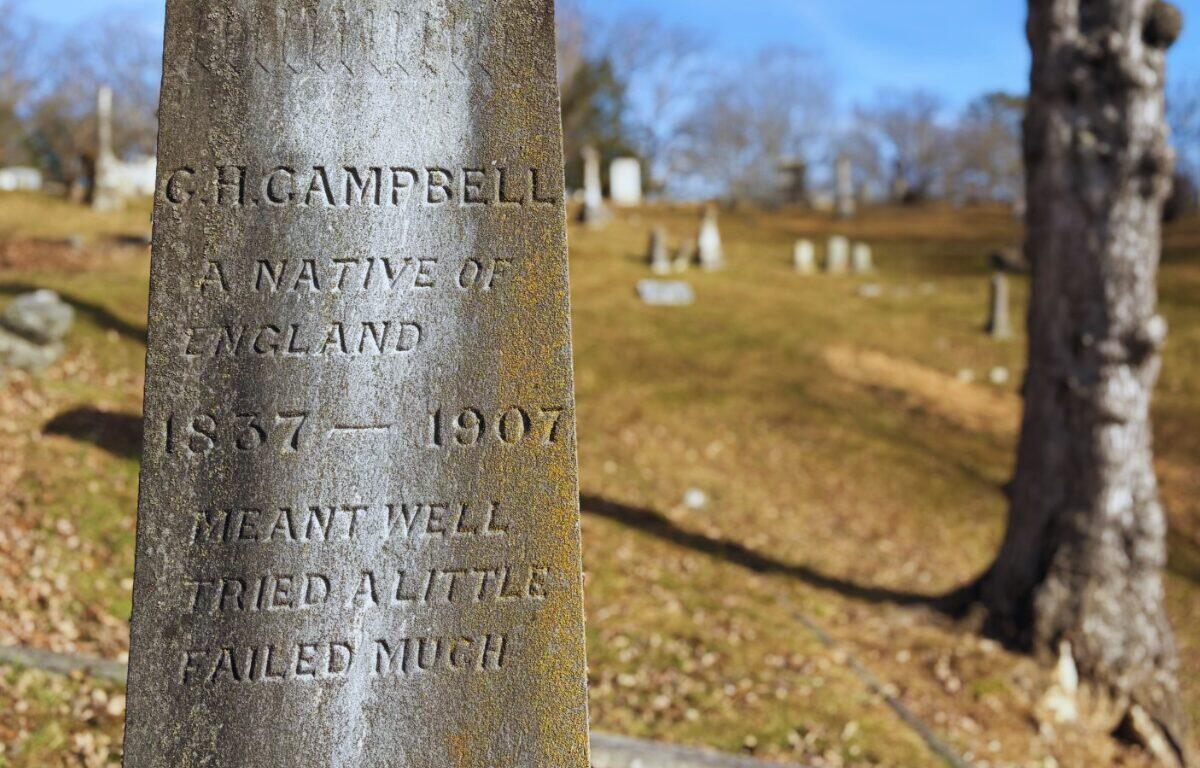
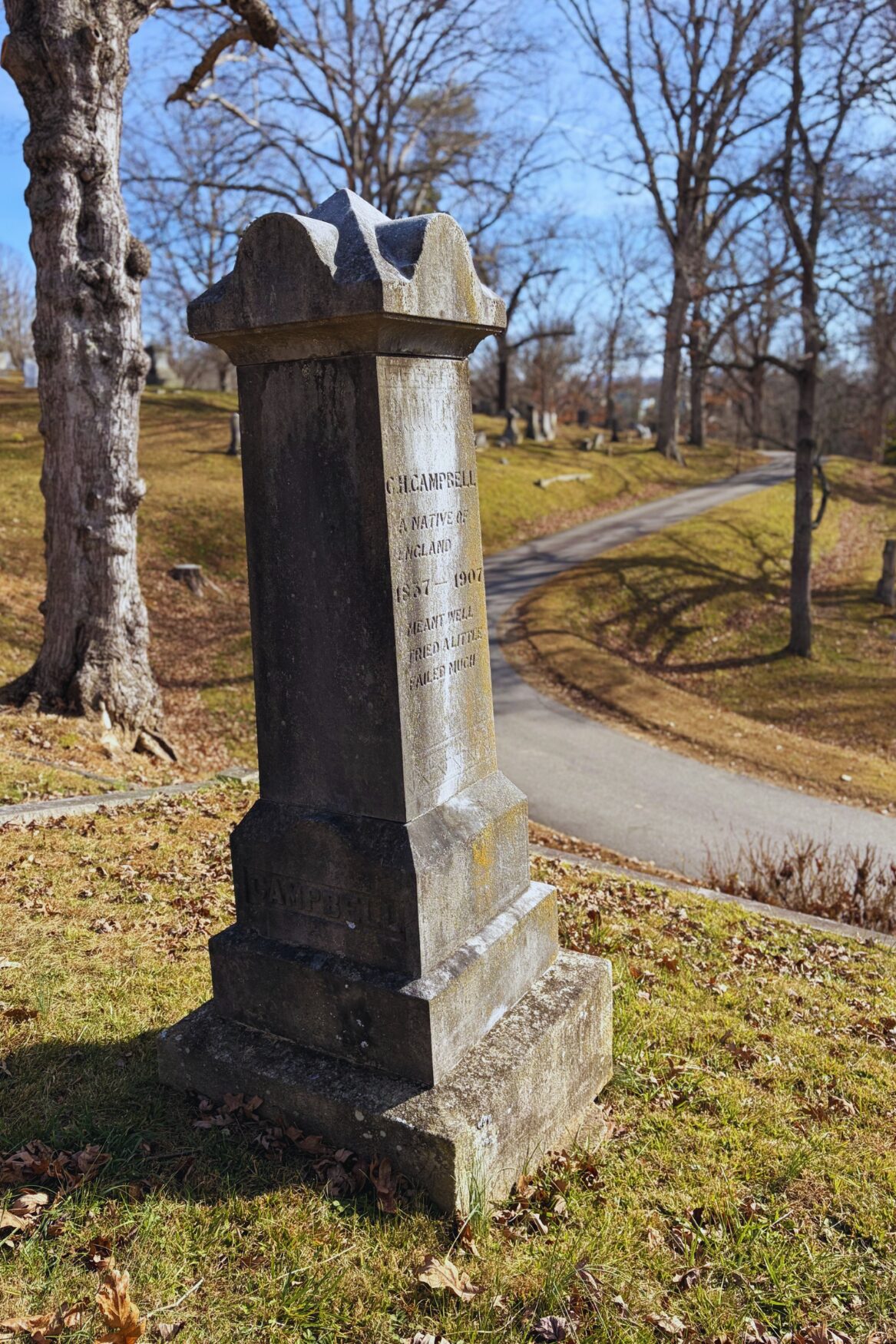
The weathered marker belongs to Charles H. Campbell, a native of England who lived his final years in Asheville and died in 1907. At first glance, nothing sets his monument apart from others across the cemetery. The carving is faint, the stone unassuming.
Those who have taken the time to look closer find an epitaph that stands out for its plainspoken tone: “Meant well, tried a little, failed much.”
The line is honest, humble and surprisingly witty in a place built on solemnity. The words weren’t Campbell’s.
The phrase comes from writer Robert Louis Stevenson, who suggested it in his 1892 essay A Christmas Sermon, included in his collection Across the Plains. Stevenson suggested the line as a fitting epitaph for any person, a reflection on the imperfect but well-intentioned nature of being human. Stevenson argued that life is not diminished by shortcomings. Good intentions, even small ones, matter in the end.
Campbell’s monument speaks to a life lived earnestly and imperfectly. The kind of legacy most of us leave in the end.
-
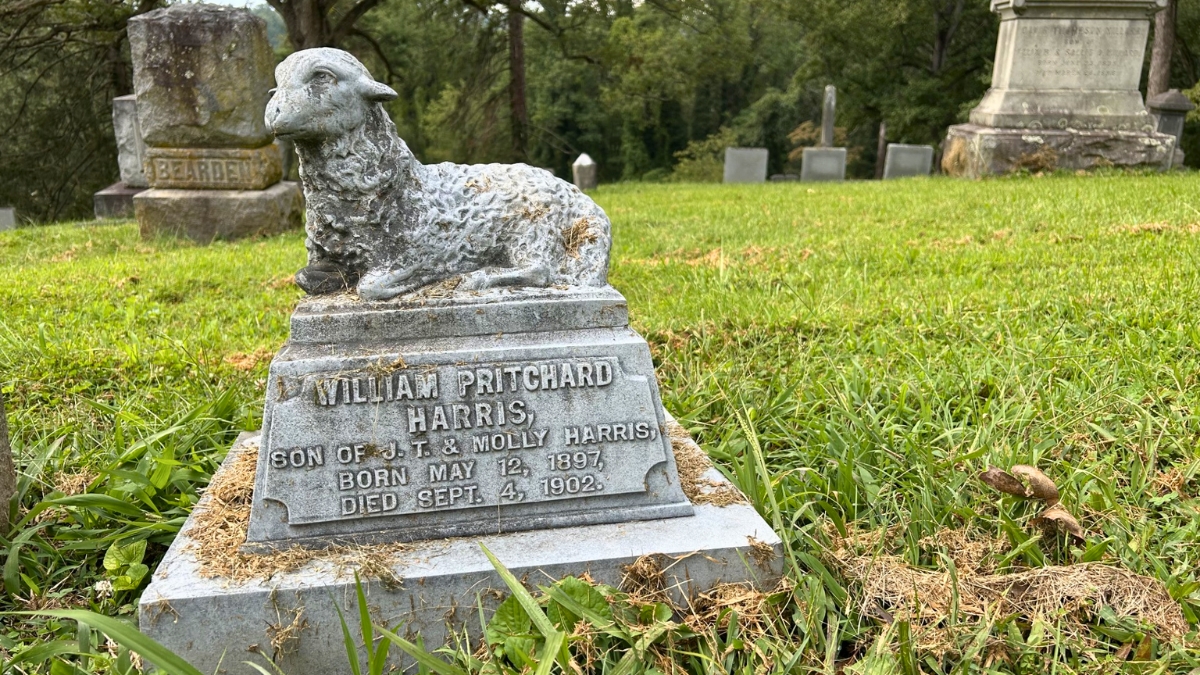
Tombstone Tales: After a dog attack in 1902, Willie Harris’ family raced to save him

After a dog attack in Asheville in 1902, 5-year-old Willie Harris was taken north for rabies treatment at a Pasteur institute, where hope briefly rose before ending in heartbreak.
-
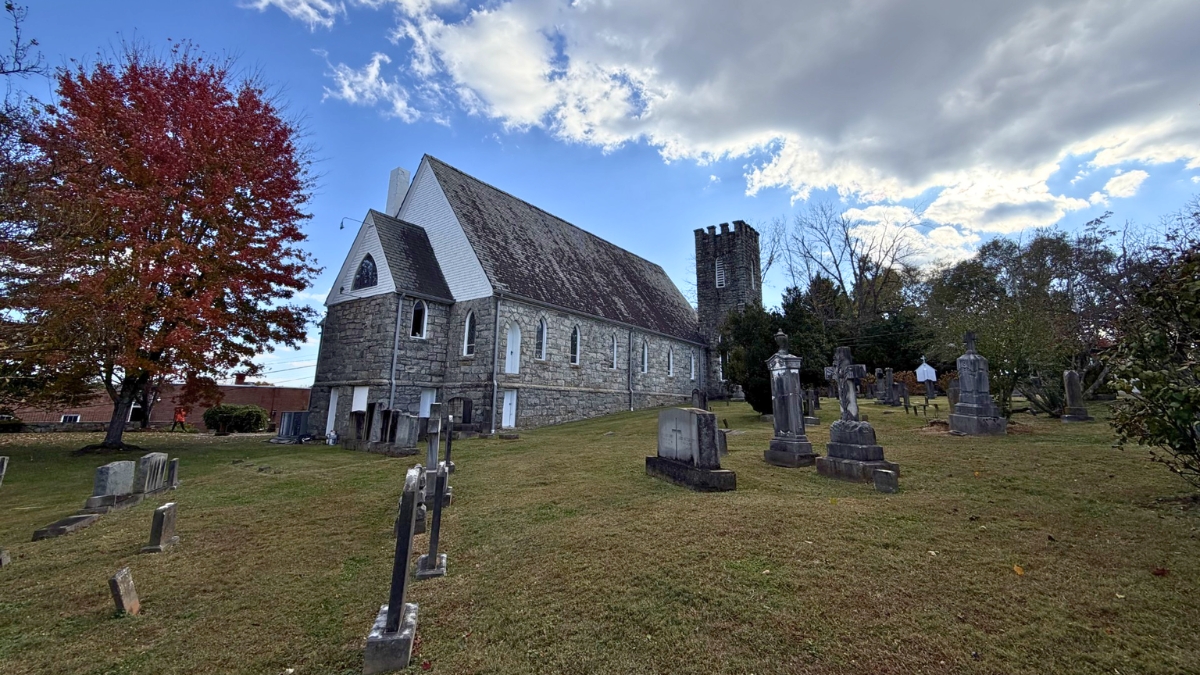
Tombstone Tales: The life and legacy of Dr. William Caldwell Tate in Morganton
His grave in Morganton marks the life of a nineteenth-century physician whose work carried him from country sickbeds to Civil War service.
-
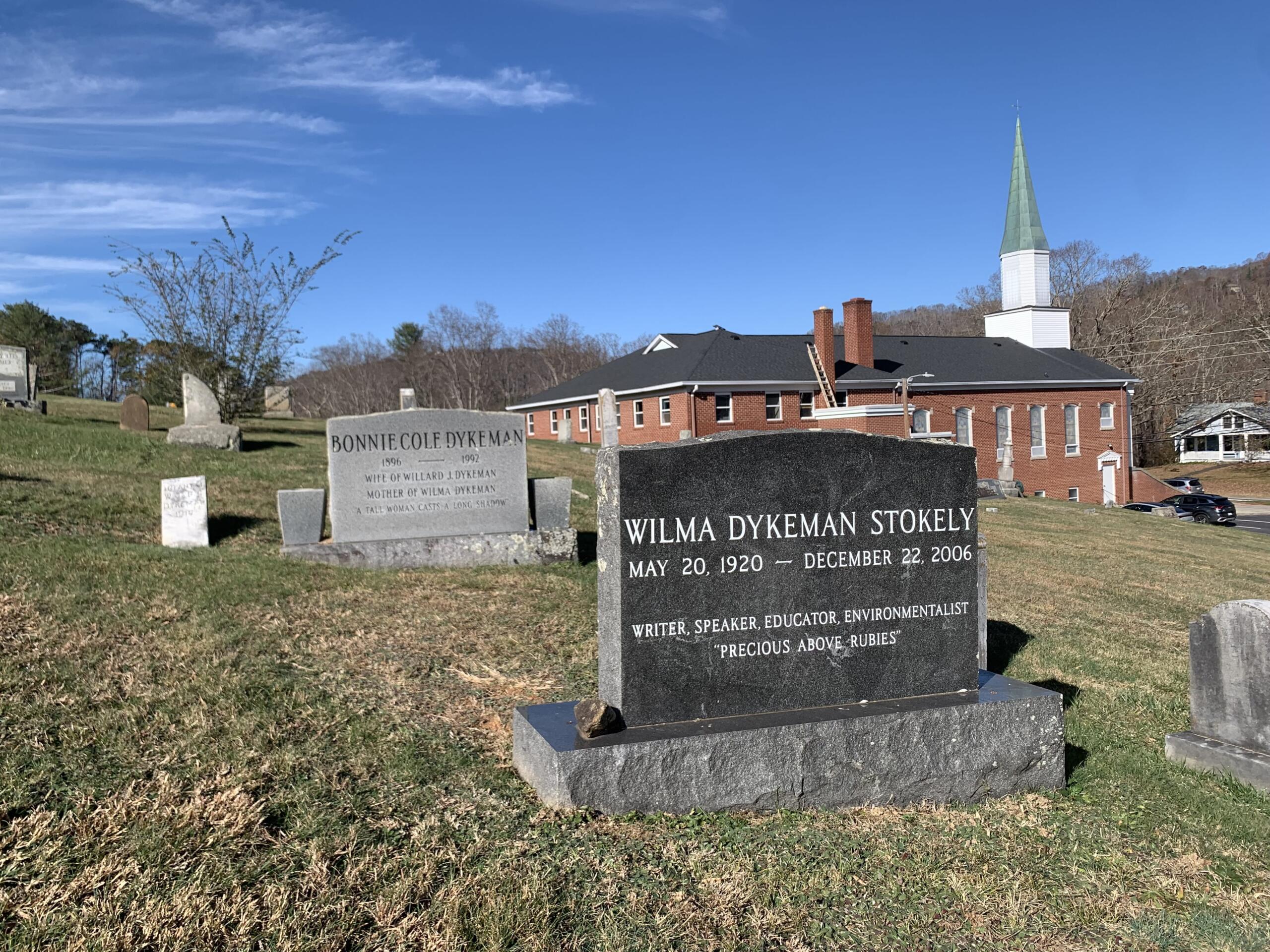
Tombstone Tales: Asheville’s River Champion, Wilma Dykeman Stokely

Wilma Dykeman Stokely, often called the “First Lady of Appalachian Literature,” helped shift public attention toward the French Broad River’s pollution and cleanup.
-
Tombstone Tales: Gig Young’s shocking murder‑suicide and his grave in WNC
Gig Young’s rise, fall and violent final act still echo from Manhattan to the mountains, where he’s buried under his real name.
-
Tombstone Tales: The man who helped light America

A Connecticut-born pioneer of electric lighting and his North Carolina wife rest in Asheville’s Riverside Cemetery, their stories entwined with industry, innovation and philanthropy.