Editor’s Note: Western North Carolina is rich with untold stories—many resting quietly in local cemeteries. In this Tombstone Tales series, we explore the lives of people from our region’s past whose legacies, whether widely known or nearly forgotten, helped shape the place we call home.
ASHEVILLE, N.C. — Riverside Cemetery is known for its monuments, the Southern writers who draw visitors from around the country and even a few ghost stories. But one of its most memorable inscriptions doesn’t belong to a famous name or legend. It stands quietly on a hillside, easy to overlook.
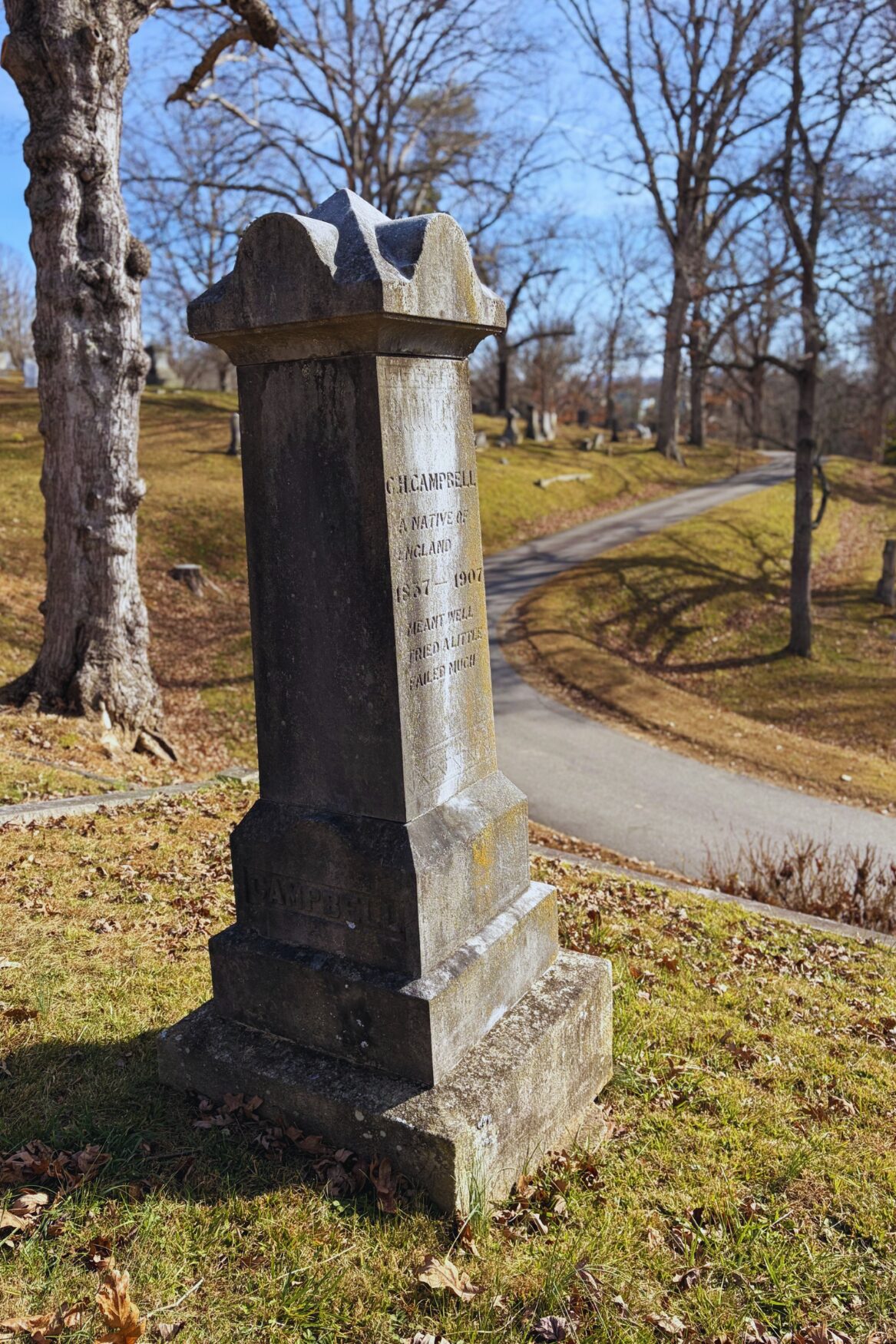
The weathered marker belongs to Charles H. Campbell, a native of England who lived his final years in Asheville and died in 1907. At first glance, nothing sets his monument apart from others across the cemetery. The carving is faint, the stone unassuming.
Those who have taken the time to look closer find an epitaph that stands out for its plainspoken tone: “Meant well, tried a little, failed much.”
The line is honest, humble and surprisingly witty in a place built on solemnity. The words weren’t Campbell’s.
The phrase comes from writer Robert Louis Stevenson, who suggested it in his 1892 essay A Christmas Sermon, included in his collection Across the Plains. Stevenson suggested the line as a fitting epitaph for any person, a reflection on the imperfect but well-intentioned nature of being human. Stevenson argued that life is not diminished by shortcomings. Good intentions, even small ones, matter in the end.
Campbell’s monument speaks to a life lived earnestly and imperfectly. The kind of legacy most of us leave in the end.
-
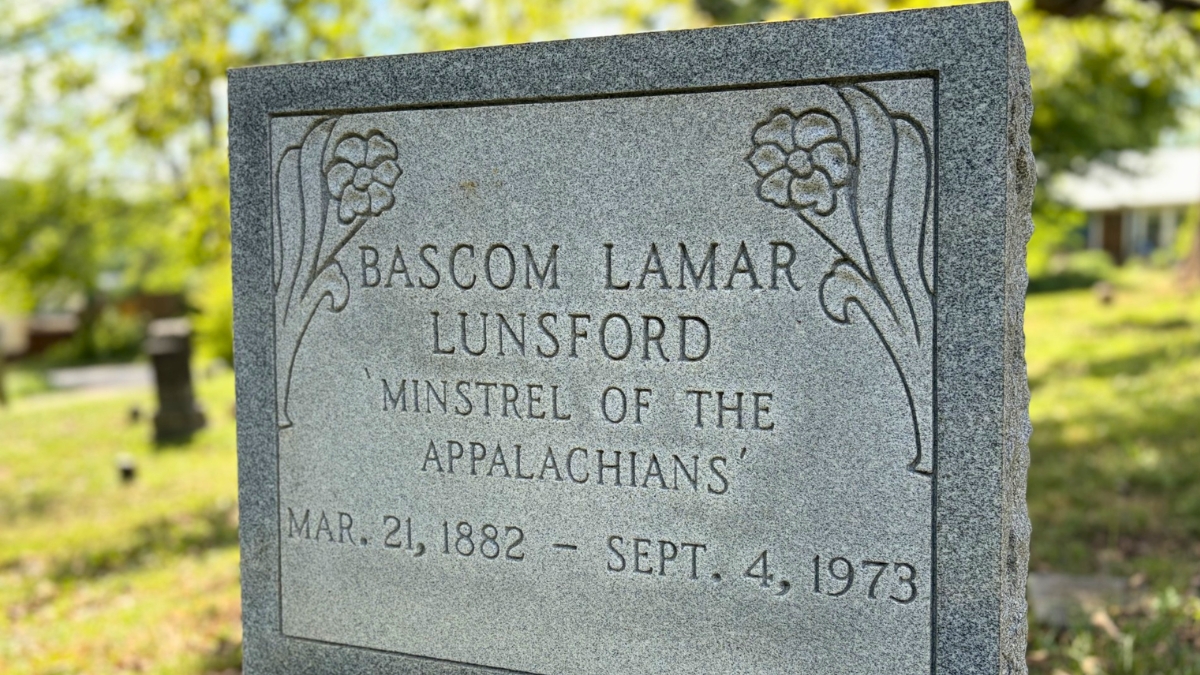
Tombstone Tales: Bascom Lamar Lunsford’s remarkable life

The Asheville lawyer, folklorist and festival organizer spent decades preserving Western North Carolina’s songs, dances and mountain traditions.
-
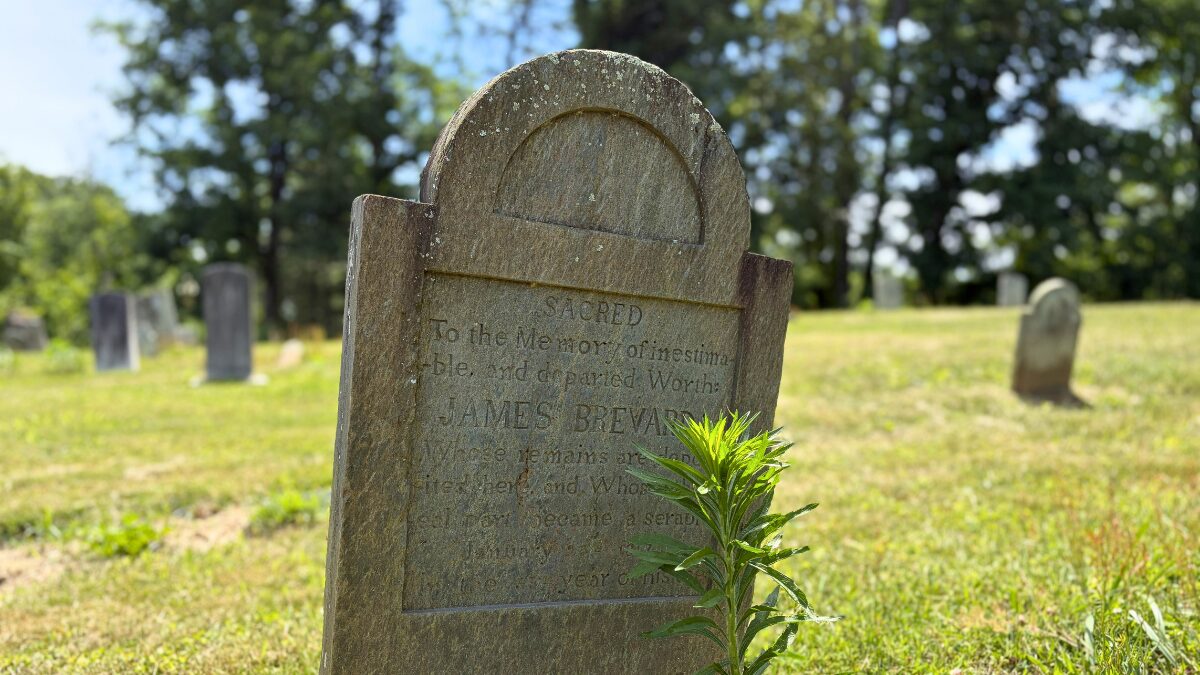
Tombstone Tales: A Fairview grave says James Brevard ‘became a seraph.’ Who was he?
Buried at Cane Creek Cemetery in 1847, the farmer, postmaster and state legislator left a public record that helps explain an extraordinary epitaph.
-
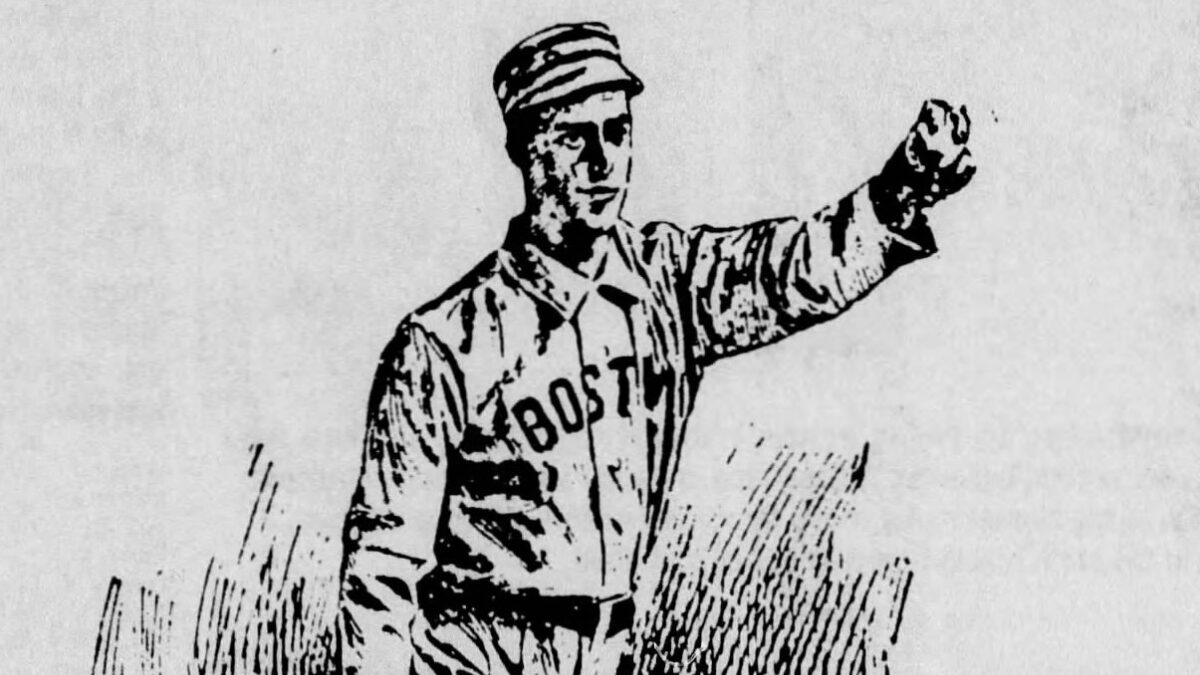
Tombstone Tales: The Reems Creek pitcher who played one game in the Major Leagues
Richard “Rome” Chambers became the first known Western North Carolina native to play Major League Baseball before returning home to Buncombe County, where he died just one day before his 27th birthday.
-
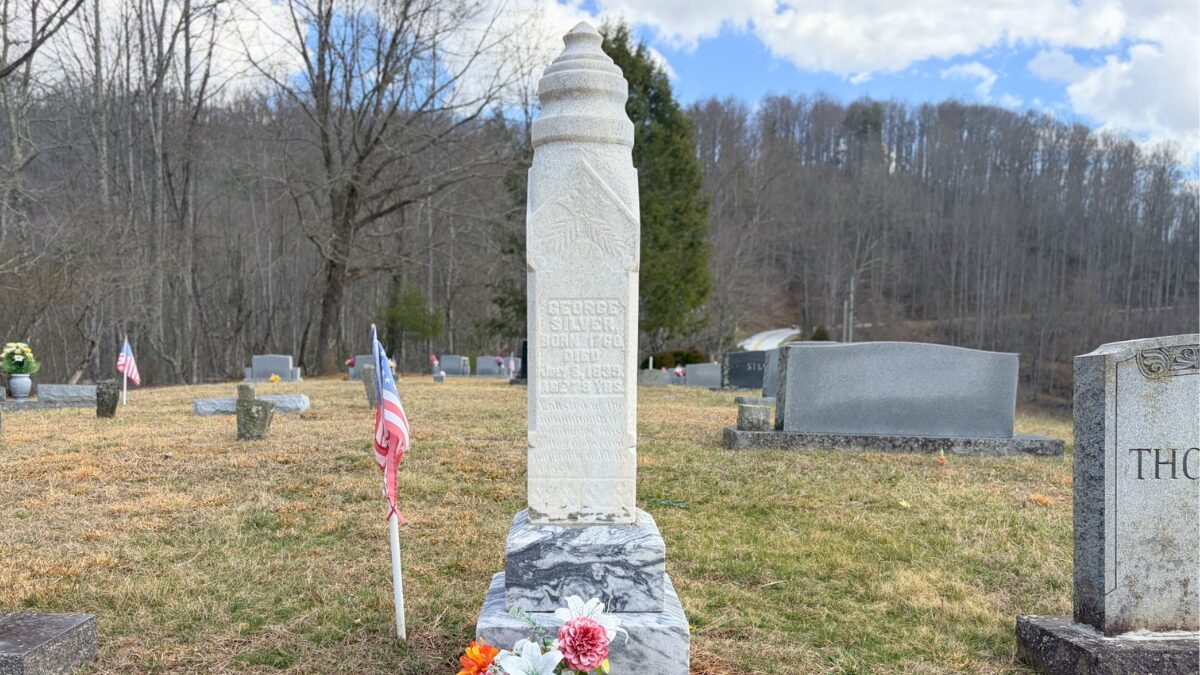
Tombstone Tales: A Revolutionary War veteran’s grave in Mitchell County tells a WNC story for July Fourth
At Kona Baptist Church Cemetery, a memorial to George Silver carries the story of American independence into the Toe River Valley and a family legacy deeply rooted in Western North Carolina.
-
Tombstone Tales: Flat Rock grave links to Declaration of Independence signer
As America marks its 250th anniversary, a grave at St. John in the Wilderness Cemetery connects Flat Rock to one of the signers of the Declaration of Independence and a young man remembered not for his famous name, but for his character.