


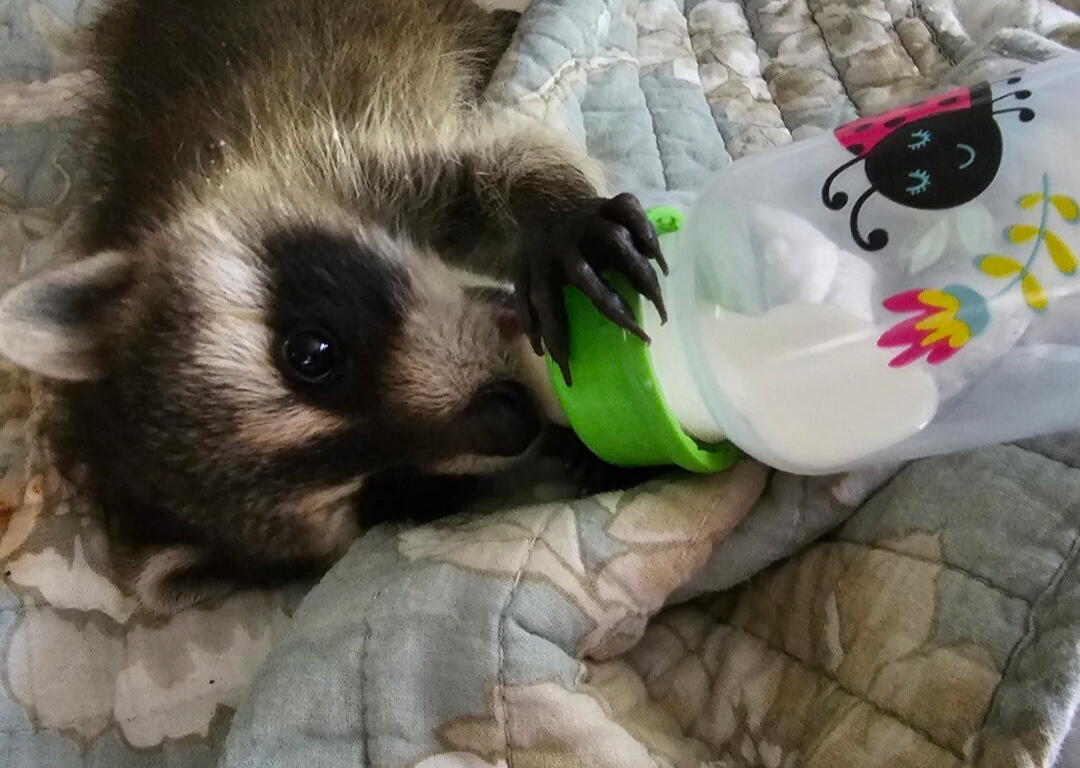

ASHEVILLE, N.C. (828newsNOW) — The Buncombe County Department of Health and Human Services advised visitors of Alleyoop Wildlife Rescue and Rehabilitation to seek a rabies risk evaluation after discovering several young raccoons at the practice. Their caretaker says the raccoons were no threat to anyone. What happened?
Meet Michelle Cole
Michelle Cole is an Asheville-based wildlife rehabilitator. Cole operates her practice, Alleyoop, out of her home in West Asheville, though animals are kept in a separate building. She maintains equipment like oxygen machines, medication, IVs and nebulizers, and mentors two apprentices working toward their North Carolina Wildlife Rehabilitation License.
Cole said has been licensed as a rehabilitator for three years. She has experience working with animals dating back to 1998, when she volunteered at the Western North Carolina Nature Center. Working as a rehabilitator, she said, is entirely voluntary.
“It’s completely voluntary. We do not get paid for it. We study for a year to do it and we have to have a vet that we’ll see that does wildlife. We get no help from the state at all. None,” Cole said. “We have to buy all their food. A can of formula for them might last four or five days, and it’s like 35 bucks.”
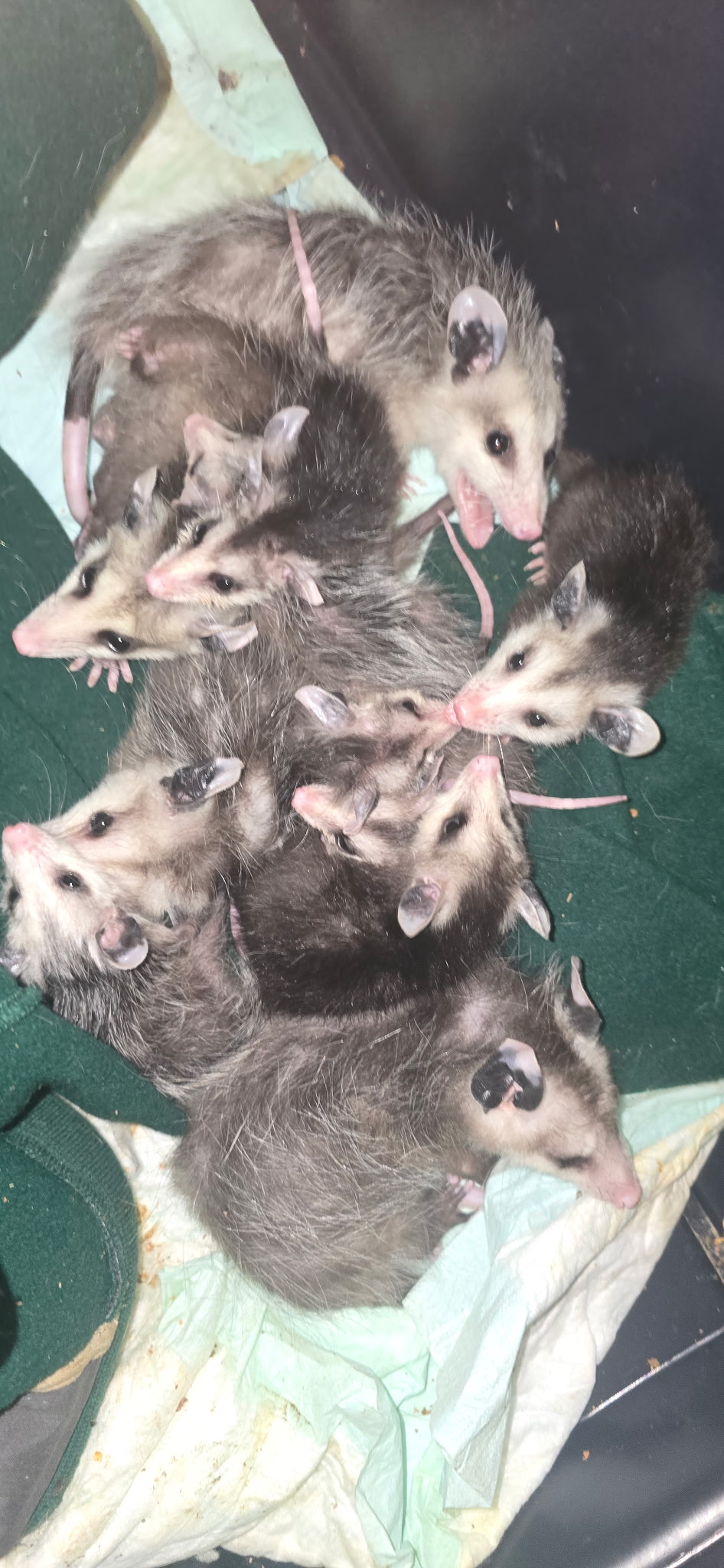
At Alleyoop, Cole works with opossums, squirrels and rabbits. North Carolina rehabilitators can also get specialized permits to care for animals like songbirds, bats and white-tailed deer. In the Asheville area, Cole said that there are around 15 active wildlife rehabilitators.
“There’s not very many of us, so we’re all overwhelmed. Like, I’ve had 48 possums this year released, because they get hit by cars, and then they have lots of babies,” Cole said. “There’s not enough of us to go around as it is, we’re all overwhelmed, and we’re all just trying to do our best and it’s very hard when the state is so combative.”
Rabies law
Cole explained that she and her fellow rehabilitators have been petitioning to change wildlife care laws in North Carolina. Currently, the North Carolina Wildlife Resources Commission prohibits interaction with rabies vector species, or animals that commonly contract rabies. Those species include bats, bobcats, foxes, skunks and raccoons.
“We are all trying to figure out how to approach Raleigh and change this law, ’cause for raccoons, foxes, skunks, coyotes, we’re supposed to kill them. We’re not supposed to help them,” Cole said. “I said, well, what if one’s injured or orphaned? ‘You just leave it there to die.’ That was their words to me. ’Leave it there to die.’ I just don’t see how anybody can do that.”
Earlier this week, Buncombe County health officials advised anyone who had visited Alleyoop or Cole inside the last six months to seek a rabies risk assessment.
“Buncombe County Department of Health and Human Services sent out this notification after learning about the potential for exposure to rabies vector species and rabies virus by members of the public who visited this facility. The North Carolina Wildlife Resources Commission was involved in evaluating the facility and its captive wildlife and has fully supported Buncombe County DHHS during their investigation,” the NCWRC said in a statement.
The organization told 828newsNOW that there was an active investigation into Cole, who was charged with possession of a rabies vector species without a permit on July 13, 2026.
“Michelle Cole was charged on 7-13-26 in connection with this investigation for possession of Rabies Vector Species (RVS), without being properly licensed. Ms. Cole did possess a valid rehabilitator license from the N.C. Wildlife Resources Commission (NCWRC) to rehabilitate small mammals,” NCWRC wrote in a statement on July 22. “She was not permitted to hold RVS based on rule 15A NCAC 10H .1402 CAPTIVITY LICENSE FOR REHABILITATION which states no rehabilitation or relocation of RVS in ORV zones (Oral Rabies Vaccination program).”
Raccoon violation
Cole explained that she was cited for rescuing several abandoned raccoons.
“I have raised these raccoons from four weeks old, bottle-fed them. They had their rabies shots, they had their distemper shots. I do have proof of that,” Cole said. “I told the game wardens that they were scheduled for release Sunday, because they’re old enough to be released, and I had a place, permission from a landowner that has 30 acres out in Marshall to release there. They refused to let me release them.”
Cole said that NCWRC officers took five raccoons, which she named Chelsea, Coconut, Maverick and D.D., short for Dumpster Diver, as well as the three-legged Izzy, who was missing an appendage after “somebody had chopped his arm off with a chainsaw.”


“They, in front of my 10-year-old, they grabbed them by their heads and slammed them in cages,” Cole said. “None of them were aggressive at all. They have never bitten anyone. They’ve never scratched anyone. They’ve never been exposed to anyone. I kept them separate from the other animals, separate from my family, separate from… You know, nobody came and played with them.”
NCWRC confirmed on July 22 that five raccoons were found in Cole’s possession.
“The raccoons were captured, secured, and placed into carriers by agency staff with Ms. Cole’s cooperation and assistance. The animals were euthanized following RVS/ORV rabies prevention program guidance,” NCWRC said. “The consequences to wildlife are extremely difficult for everyone when laws are not followed. Law Enforcement leadership reviewed body cam footage of enforcement actions taken by officer during this seizure and have confirmed that protocol was properly followed and utilized.”
Cole said that the officials were nothing but respectful to her during the process.
“I didn’t fight them. They thanked me for not causing any problems with them, because, I mean, they have to do what they’re supposed to do, and I’m not gonna try to fight the law,” Cole said. “They seemed to care, but their hands are tied too, I guess.”
According to the rehabilitator, the NCWRC said that caring for rabies vector species is especially prohibited because it might interrupt with the United States Department of Agriculture Oral Rabies Vaccine Program.
The NCWRC explained that the “Oral Rabies Vaccine Program is aimed at preventing the spread of the raccoon variant of the rabies virus west across the Appalachian mountains and into the western US. North Carolina is one of many states in the eastern US in which this program runs. The program accomplishes this by dispersing rabies vaccine packets by foot, airplane and helicopter during specific times of the year so that rabies vector species such as raccoons, skunks and foxes will find and consume the bait and become vaccinated against rabies. This program has been very successful at preventing the spread of this strain of rabies and reducing total rabies cases in the participating states.”
While Cole said she understood the effectiveness of the program, she did not understand why giving the animals rabies vaccines directly was not sufficient.
“They say it’s because of the bait drop program, ’cause they want them out there getting the bait, the rabies bait,” Cole said. “But if they’ve already been given their rabies vaccines, I don’t understand how that justifies killing them. We’re allowed to rehab bats, which are the number one rabies carriers, so that doesn’t make sense why.”
As she considers the charges against her, Cole was staunch in her defense of the five raccoons.
“The thing is, is that they kill these animals just for being what they are,” she said.
For more about North Carolina rabies law, read our previous story at www.828newsnow.com/news/228822-asheville-health-officials-advise-candler-animal-rescue-visitors-to-seek-rabies-evaluation.
This story was updated from a previous version on Wednesday, July 22.