ASHEVILLE, N.C. (828newsNOW) — “André Is an Idiot” is a unique testimony to the necessity of getting a colonoscopy.
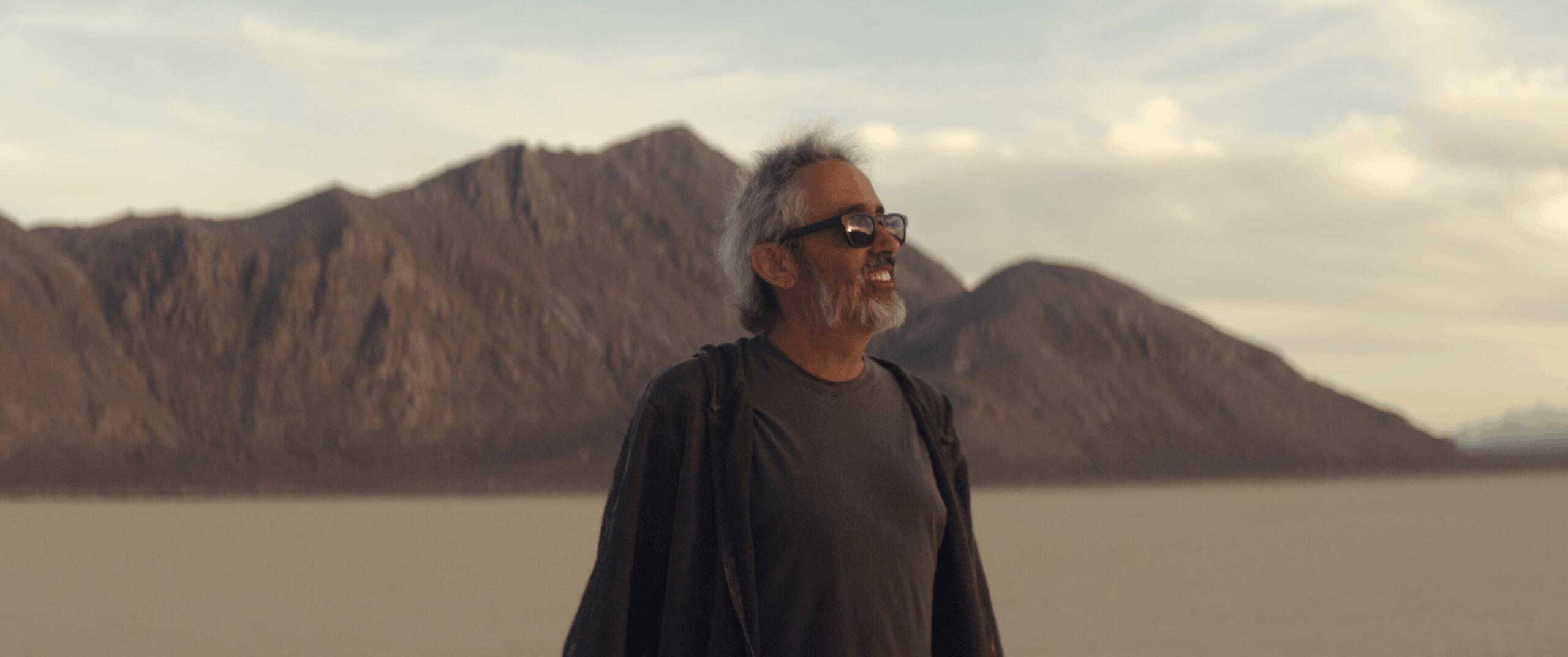
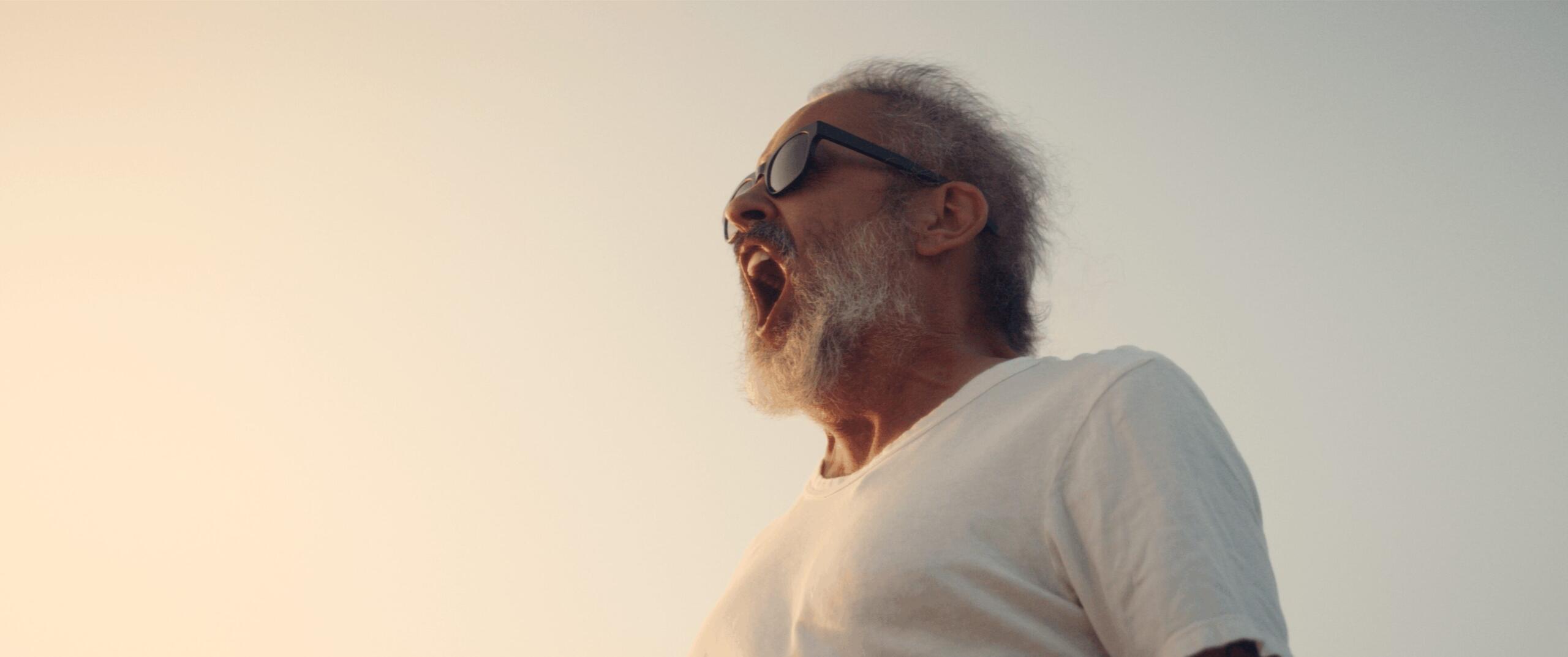
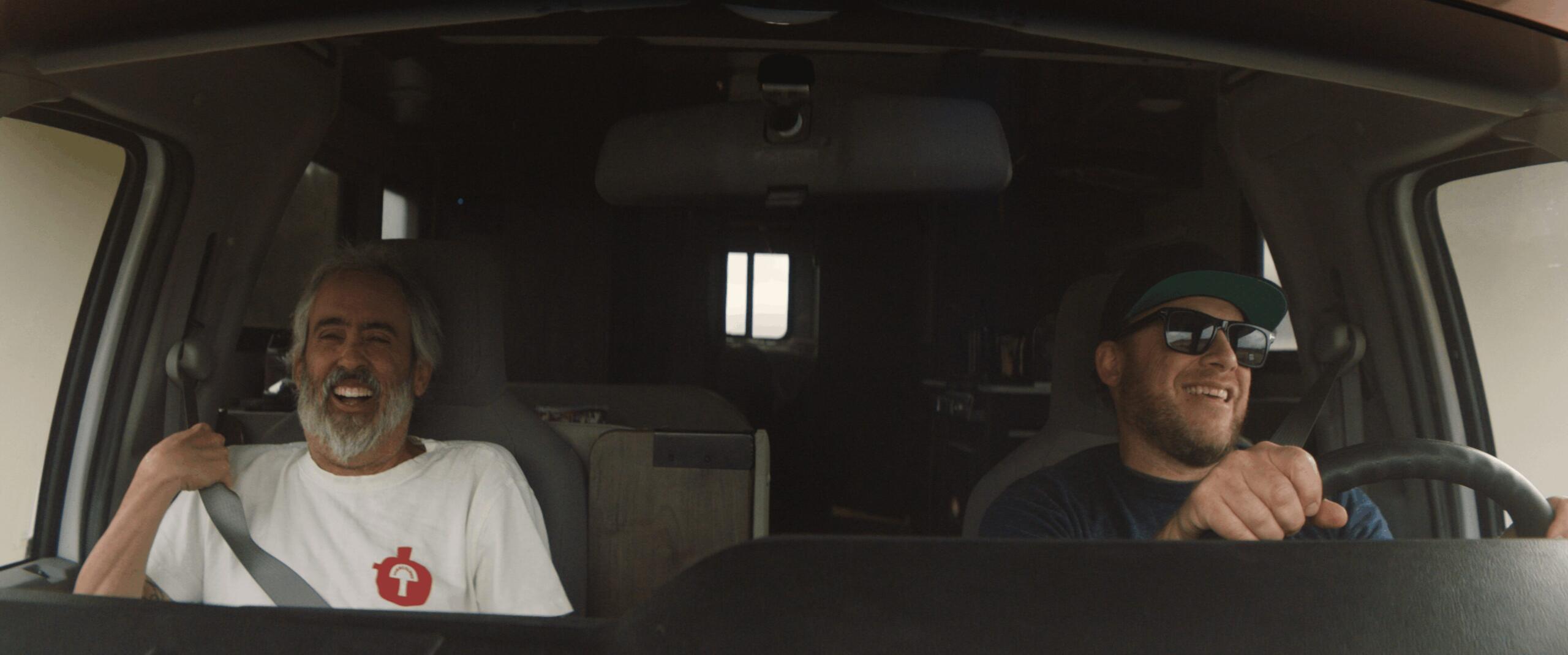
In the documentary, the one-of-a-kind André Ricciardi walks the audience through his experiences after receiving a terminal cancer diagnosis, exploring how to die happy and live fully in his singular exuberant way.
The film is constructed with a multimedia approach, combining traditional interviews with stop motion animation, scripted vignettes, archival footage and a punk rock spirit, a simultaneous portrait of André and unique health care PSA.
Watch the trailer for “André Is an Idiot”:
Interview with Tony Benna and Lee Einhorn
I sat down with filmmaker Tony Benna and Lee Einhorn, executive producer and co-subject of the film, for an interview about knowing and loving André, the multimedia approach to their filmmaking and the influences the documentary draws upon. This interview has been lightly edited and condensed for clarity.
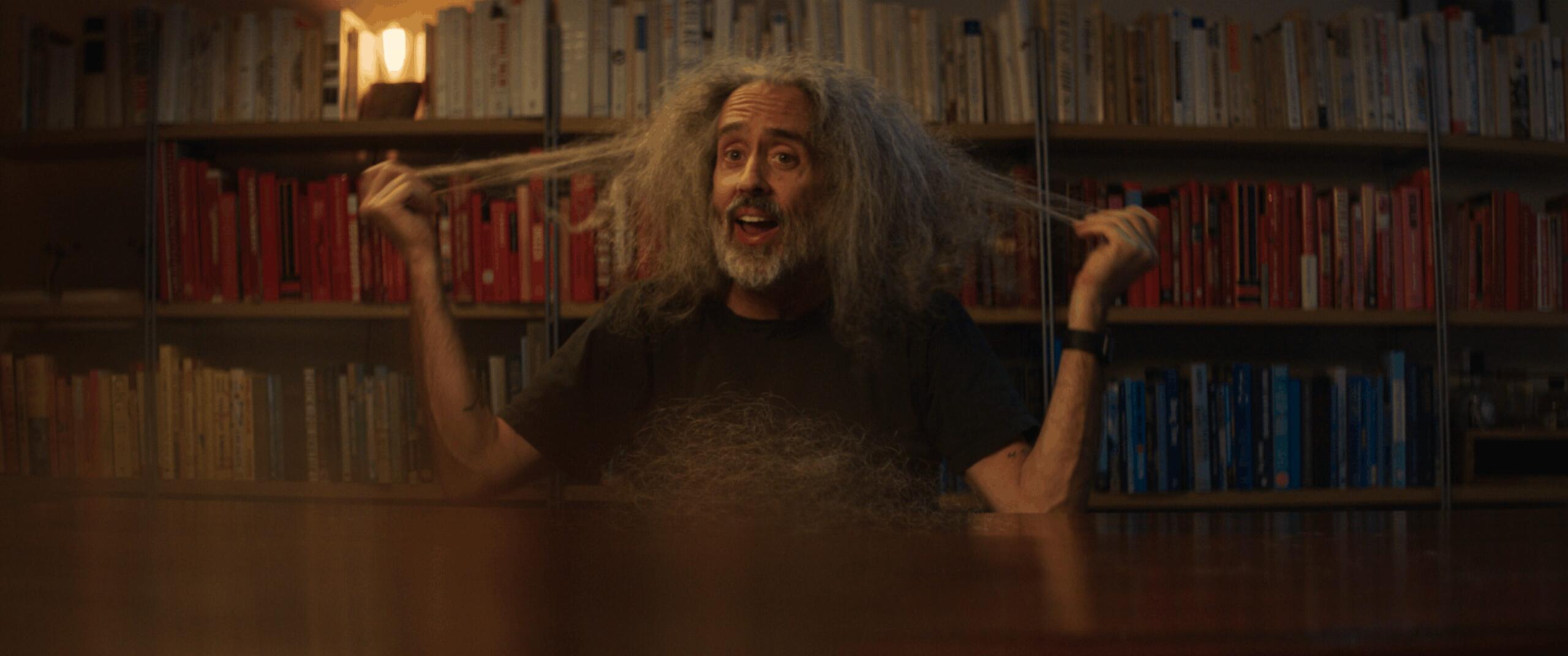
Q: I’m curious, when you have animation, and talking head interviews and what seem to be like scripted shots of a toilet, how did you go about combining all of that stuff into one film?
Lee Einhorn: You want to talk about the animation first?
Tony Benna: Yeah, sure.
Einhorn: That’s probably better for Tony, just because he did all the animation.
Benna: So, the question was, how did I go about combining all the stop motion? Yeah. You know, the idea for the stop motion really came from the fact that André’s ideas and everything that he spoke about was a little too crazy to show with a real human being. So, if you’re joking about 10 ways to dispose of your body, a puppet just made that much more digestible and added humor to some of his darker jokes, I suppose.
There was also a way for us to to showcase André’s crazier ideas and what he was thinking about just through through animation, and stop motion just seemed like the right medium, because it’s a little rough around the edges, just like André. And so, that was the thinking behind it.
Einhorn: I think there was also a want from us, in making the film, to have a layer that just felt different than your typical documentary, too, right? We both come from the world of animation, advertising, commercial film, where often there’s more of a mixed media vibe that can happen with it that can be used to kind of make a point with things. I think we were bringing some of that aesthetic from that part of our lives into it, and André’s as well.
Benna: And lastly, I’ll say that obviously in a cancer film, you’d think you’re going to do animations that are going to be all medical and all that, but we wanted to avoid the hell out of that, because it just didn’t represent André, didn’t represent our film. So, the puppet made the most sense.
Einhorn: Yes, those colonoscopies the puppets were giving were not medically certified, just so you know, Pruett.
Q: [Laughs] Yeah, thank you.
Benna: And, if you look closely, Lee is giving André a colonoscopy, and André’s giving Lee a colonoscopy.
Einhorn: Yeah, we were able to double use the puppets there.
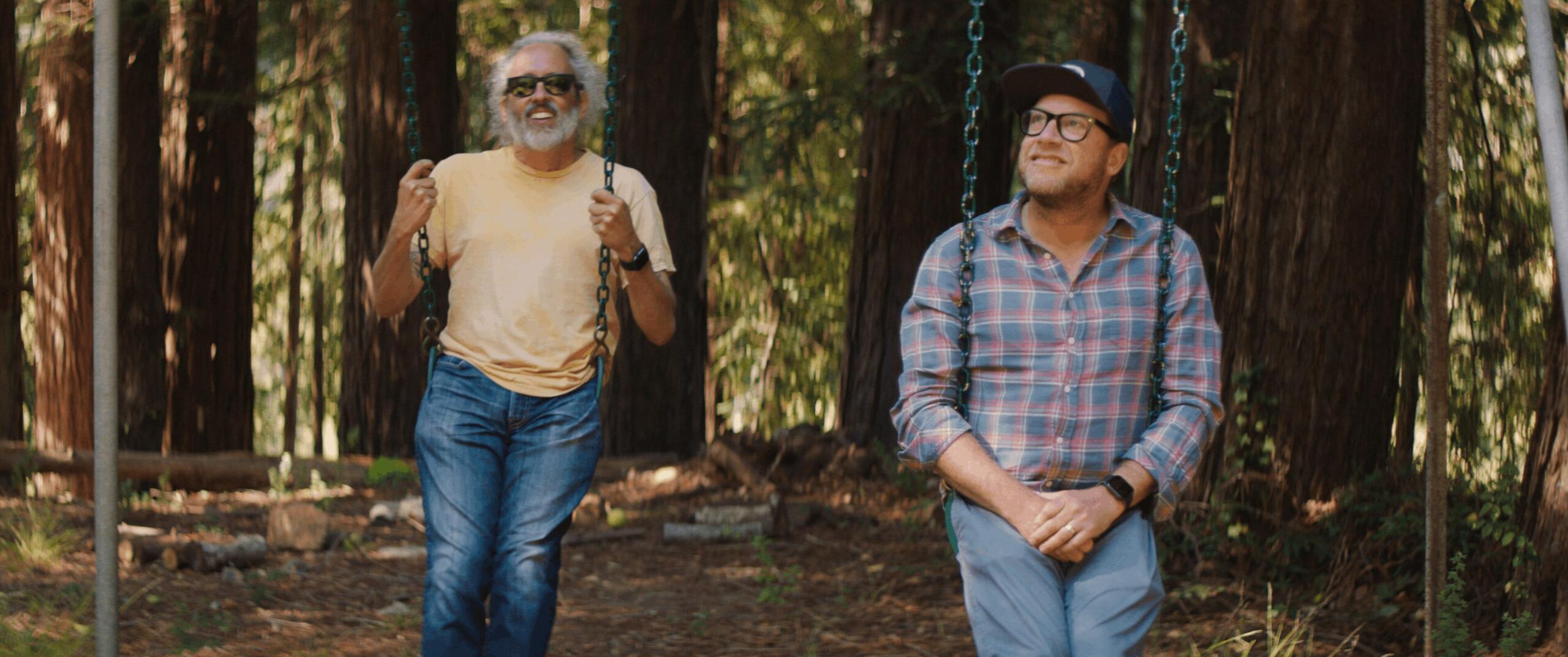
Q: Yeah, I thought that was beautiful. Lee, being as close as you were to André, I’m curious about your involvement with this process. Did it ever feel like it was hard, almost, to think clinically about what needed to be portrayed, knowing and loving someone so deeply? I feel like delineating what can be a smaller detail and what’s a big idea that has to come across could be difficult.
Einhorn: Yeah. I would say, overall, the process was hard. It was hard for both of us, as filmmakers and as friends. I’ve known his family since before his kids were born, basically. Maybe his older daughter was just born. So, I think there was always that sort of friendship level. There was the filmmaker level that we both had and friendship level that we both had.
I think thanks to André, honestly, we were able to separate as much as possible. He was so hell-bent on us making this, taking his vision and making this movie, like, not to be this sad, sorry thing, but to bring the humor level and to bring true André, the André spirit, into this.
I think he allowed us to kind of keep pushing through all the time. And, you know, that’s not to say there wasn’t some really hard days of him getting sick while filming, him not being able to film for a week or more or whatever. I think it definitely drained us. But because of his enthusiasm and because of the commitment that we had made to push forward, we were able to do that. But it was never easy, I’ll say that, for sure.
Benna: Yeah, I think it was ups and downs. You know, we had a lot of fun, of course, and hanging out with André for those three and a half years was a true honor and a gift, and we had some crazy times, a lot of laughs. And just like the film, the edit really kind of mimics the emotional roller coaster that we went on. So, there was a lot of high highs, but also some low lows.
Einhorn: Yeah, I think one thing to add, Pruett, to your question too, is there was a point where we were interviewing towards the end, André, and I think Tony said, “Describe the last three years in a sentence,” and he’s like, “Best years of my life,” and I think, I think I felt that too. It’s the most important project that we’ve ever worked on, and I think, as crazy as it sounds, a lot of joy came from it, as well.
Q: I know that André is kind of a singularly unique person, and I think the film goes to great lengths to demonstrate that. It doesn’t have to try very hard. He’s a pretty singular eccentric. But I was curious, as filmmakers, if you took inspiration and influence from other documentaries.
The one that I thought of most while I was watching it was “Roadrunner,” the movie about Anthony Bourdain that came out a couple years ago, and I was wondering if there were any touchstones that y’all were drawing from, besides your work in advertising previously.
Benna: Yeah, I would say that the two most influential documentaries for me in this process were “American Movie,” and then probably “Roadrunner.” “Roadrunner,” really, for the setup. I loved how they set up Bordain as a raucous, rebellious character in the first few minutes, and so I really wanted to mimic that, because I just wanted everyone to feel who this character is right out the gate. You don’t have a lot of time to set up who these characters are, especially when you have to set up the family as well, so I wanted everyone to feel André’s irreverence, his humor, immediately. So that definitely was a note I borrowed from “Roadrunner.”
But then also, “American Movie,” where there’s moments where you’re not sure if this is a mockumentary or a documentary, and you’re like, is this guy real? Is this s– really happening? That was another big influence for sure. And, I would say that “American Movie” was one of the first documentaries I had seen that made me realize documentaries could be comedies.
Einhorn: I just want to second the “American Movie” thing, as well. André kept a signed copy by, not the main guy, but like…
Benna: Mike Schank.
Einhorn: Mike Schank. He had a signed copy from Mike Schank on VHS that he kept in his in his living room, or probably his closet. But he, just to what Tony said, is this real? Is this not? We’ve had so many people come up to us and be like, “So, did you guys script a lot of this or was it,” and it’s just André. It’s like, with André and myself, it’s so easy. We had such an easy way of talking to each other, and laughing and joking, that I think it comes off as scripted sometimes, and I think that as a goal was kind of one of our goals.
Benna: I want to add one last thing. When Mike Schank passed away – Mike Schank passed away during the filming, the making of our film – and André texted us all and said, “See you soon, Mike! Rest in peace.” [Laughs] Yeah, that was his humor.
Einhorn: [Laughs] I forgot about that.
Q: Something I love about the idea of blurring the line between what’s real and what’s scripted I feel like is captured very well by an ad that André created. The “Planet of the Apes” thing, which has been a huge property for me for years. Like, I love that ad, I first encountered it on YouTube thinking it was a real video, and when I got really into the “Apes” franchise down the line, I was like, this is so weird and funny, and I didn’t know where it came from.
Q: So, when I saw that onscreen, I was blown away, realizing that André was kind of like this micro-celebrity in my life. Were there moments like that for people, as you’ve shown this movie? Have you had people respond to things that were maybe smaller or unexpected to you that had a major personal impact on them?
Benna: You mean, as far as his advertising or just as far as everything that’s conveyed in the film?
Q: Just the film in general, what’s captured there. Small moments that might’ve had a larger resonance with people than you imagined.
Einhorn: Oh, I see.
Benna: Yeah, I mean, I’d say because we know a lot of people in advertising, and I think when André, in the beginning of the film, when he says, “You got to be very careful of what you spend your life, what you get good at, and I got good at advertising.”
I’ve had a lot of advertising friends reach out and say, “Man, that was so inspiring, I really want to make a piece like you guys did that gives back,” and I think that for André, this film was that redemption piece. He was really down about how he’d spent his years, but then I think this gave him that piece of mind that I’m doing something that’s going to give back. So, that’s one small thing.
Einhorn: I mean, I think that’s probably the biggest thing.
Benna: Then I’d say the other thing is, just how you noticed, you said that André feels like this celebrity to you, I’ve had a lot of people say that in the Q&As. They say, “I feel like I should’ve known this guy,” or, “I feel like I did know this guy, like, he’s a celebrity, right?”
I said, well, in the ad world, he sort of was, because he was getting companies sued and his ideas were always insane. But he worked with a lot of celebrities. Ozzy Osbourne, Eminem, Danny Trejo. He always had ideas that were off the beaten path. Instead of going to film the Rolling Stones, he’s like, “We’re going to do a docu-piece about the guitar technician that’s been with the Rolling Stones forever,” and he thought that would be more interesting than just interviewing with the Rolling Stones. He just had really creative angles and I think in the ad world, he was semi-famous, you know?
Einhorn: I think as an overall too, and this doesn’t maybe completely answer it, but we got this a lot the last few days, is people like, “I just wish I could have known him. I wish I could have hung out with him.” I think that was the goal of the movie. We say that a lot at the intros and the Q&As that we do. We’re just happy that you get to come meet and hang out with our friend André.
Benna: Yeah, we feel like it’s a really authentic portrait of him, and I think people feel that.
Einhorn: Elon Musk posted that “Planet of the Apes” thing the other day again. It was crazy.
Benna: Did he really?
Einhorn: Yeah!
Q: [Laughs] That’s wild.
Q: Was there an idea that André brought to y’all that you couldn’t bring to the movie because it was too outlandish and couldn’t be captured, even in stop motion colonoscopy?
Einhorn: I mean, he definitely wanted to go meet with a guy that was going to talk to us about transplanting his head onto a child’s body. And the guy was willing to meet with us. It was in Turin, Italy?
Benna: Turin, Italy.
Einhorn: He sort of got too sick for this Italy trip that we were going to do towards the end. But, I mean, that was an idea, that was one that he truly, I don’t know if he really would have ever done that, but it was worth pursuing, to him.
Benna: That was the thing with working with André, is you never knew if he was joking or not, and so, sometimes, his ideas were scary to me as the director. I’m like, we’re all gonna get sued. If you go get your head transplanted for real, and it doesn’t work and we’re, like, sitting there holding cameras…
But he had a lot of ideas that aren’t in the film that we went and shot. He wanted to go to a radon mine in Montana and breathe radioactive air 80 feet below the ground. Where you could literally shine a black light and see all the radon in the mine.
Einhorn: He probably gave us cancer.
Benna: Yeah, if there’s a sequel, it’d be Tony and Lee have cancer from going to a radon mine.
Einhorn: “Tony and Lee Were Idiots for Following André.”
Benna: He wanted to do a crystal healing session, which we did. He wanted to do nine grams of mushrooms, which he did. We just said, whatever you want to do, we’ll film it. We’ll follow you.
Einhorn: Yeah, we’ve met with death doulas, we’ve met with anyone around that world. The cryogenics. At one point, we were going to go there.
Benna: The cryogenics people got nervous about us. But he also wanted, there was some people in Southern California that would let the sun hit their anus, I guess, and expose their anus to the sun. He was really interested in trying that. So, yeah. [Laughs] There was a lot of crazy André ideas that we were willing to film, but giving him that freedom was exhilarating, but also scary at times, you know?
Einhorn: There was a point where our cinematographer, Ethan, like, a couple weeks in, turned to us, and he was like, “André’s not joking with us, right? He really does have cancer?” Because, like, that’s the kind of thing he would have done. He had a very Andy Kaufman-esque vibe to him.
Q: Well, guys, I think it’s an amazing kaleidoscope.I really loved it. I hope more people get the chance to check it out, and thanks for taking the time to talk with me. I really appreciate it.
“ANDRÉ IS AN IDIOT” (2025, 87 min., directed by Tony Benna)
“André Is an Idiot” will have a limited run in New York beginning March 6 and will be released in North Carolina theaters on March 27, 2026.
-
Korean zombies, endless roads and Anthony Bourdain: New movies to see in September 2026

“Spider-Man: Brand New Day” and “The Odyssey” might have defined the summer box office, but there are plenty of hidden movie gems to discover as we head into the fall. Check out our reviews of “Tony,” “Colony,” “Buddy” and “It Ends.”
-
5 best films at the 2026 Asheville Film Festival

The 2nd annual Asheville Film Festival ran from Aug. 21-23, 2026, at the Masonic Temple in downtown Asheville. Read a review of our favorite festival films below.
-
‘Spider-Man,’ samurai and ‘I Want Your Sex’: New movies to see in August 2026
Want to know if “Spider-Man: Brand New Day” is worth your time? Looking for a cool indie to watch? Read on for our reviews of new movies to see this August.
-
‘The Odyssey’ review: Christopher Nolan’s epic is mythic, massive moviemaking

“The Odyssey” has arrived. “Oppenheimer” director Christopher Nolan delivers an unbelievably immersive and impressive interpretation of the epic story. Read our review for more.
-
Best movies of 2026 so far: Our top 10 and honorable mentions

The year is already halfway over, which means there has never been a better time to check out the 2026 movies you may have missed. Read our list of the 10 best flicks of 2026… so far.
-
‘Disclosure Day’ is Steven Spielberg doing what he does best
That is, sentimental sci-fi spectacle. The director’s latest movie is a fantastic, heartfelt alien adventure. Read our review for more.
-
‘Backrooms,’ He-Man and ‘Scary Movie’: New movies to see or skip in June 2026
Looking for a new movie to see as summer vacation starts? Check out our reviews of three major releases: the indie horror phenomenon “Backrooms,” the silly 80s throwback “Masters of the Universe” and the sixth installment of the long-running parody series “Scary Movie.”
-
‘The Mandalorian and Grogu’ is cute, copy-and-paste ‘Star Wars’

The first new “Star Wars” movie in seven years is here! While far, far away from the galaxy’s best “Star Wars” flick, “The Mandalorian and Grogu” offers up cuteness in overdrive.
-
From ‘Michael’ to ‘Mother Mary’: New movies to see or skip in May 2026
A Michael Jackson biopic, two Anne Hathaway vehicles and an Australian serial killer thriller are our movies to see, stream or skip this May. Find out which is which in our reviews.
-
New movies to see, stream or skip in April 2026

Looking for a movie to see in Asheville this April? Learn what to see, stream or skip with our reviews of a cult horror reboot, a fresh spin on “Hamlet,” a documentary of epic length and a niche new vampire flick.