


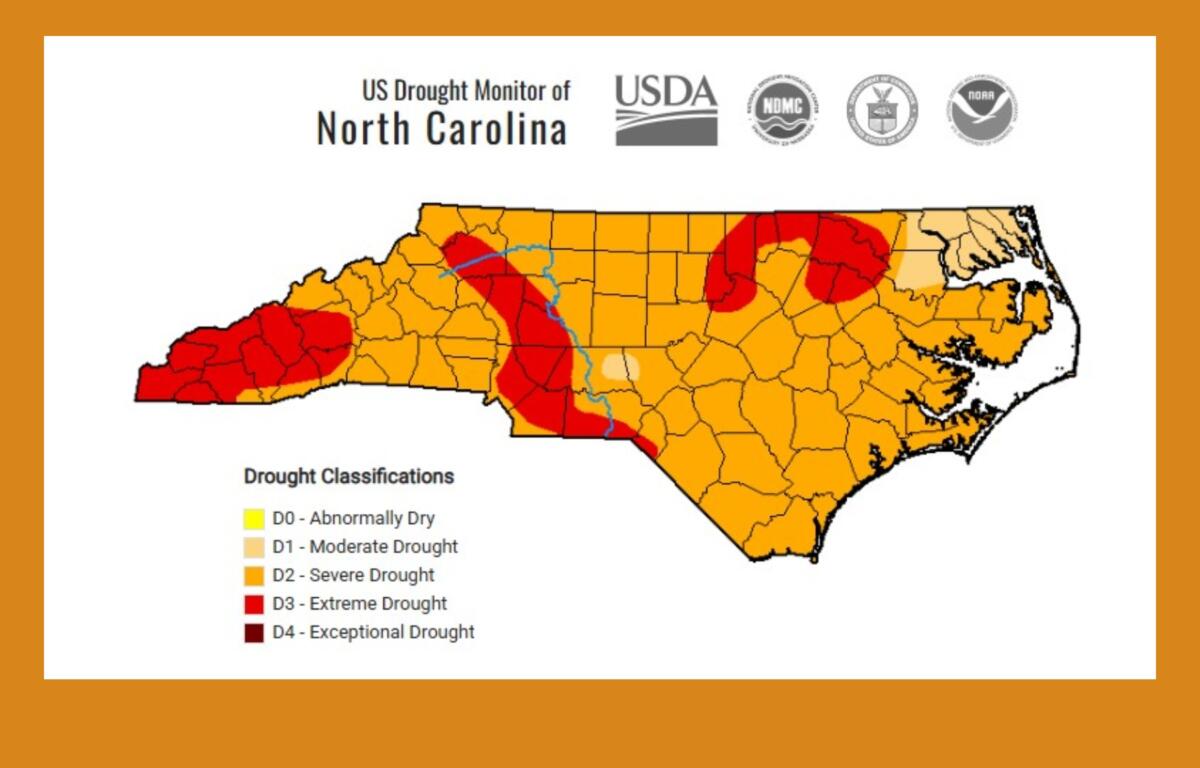

ASHEVILLE, N.C. (828newsNOW) — Drought conditions are intensifying across North Carolina, with little relief in sight as forecasters predict a dry week ahead for the Asheville area.
Nearly 9.5 million residents are now living in areas affected by drought, according to the U.S. Drought Monitor. March ranked as the fifth driest on record in the state, with just 1.85 inches of precipitation — 2.44 inches below normal. The first three months of the year have been even more severe, marking the third driest January-to-March period since records began in 1895, with a rainfall deficit of more than 5 inches.
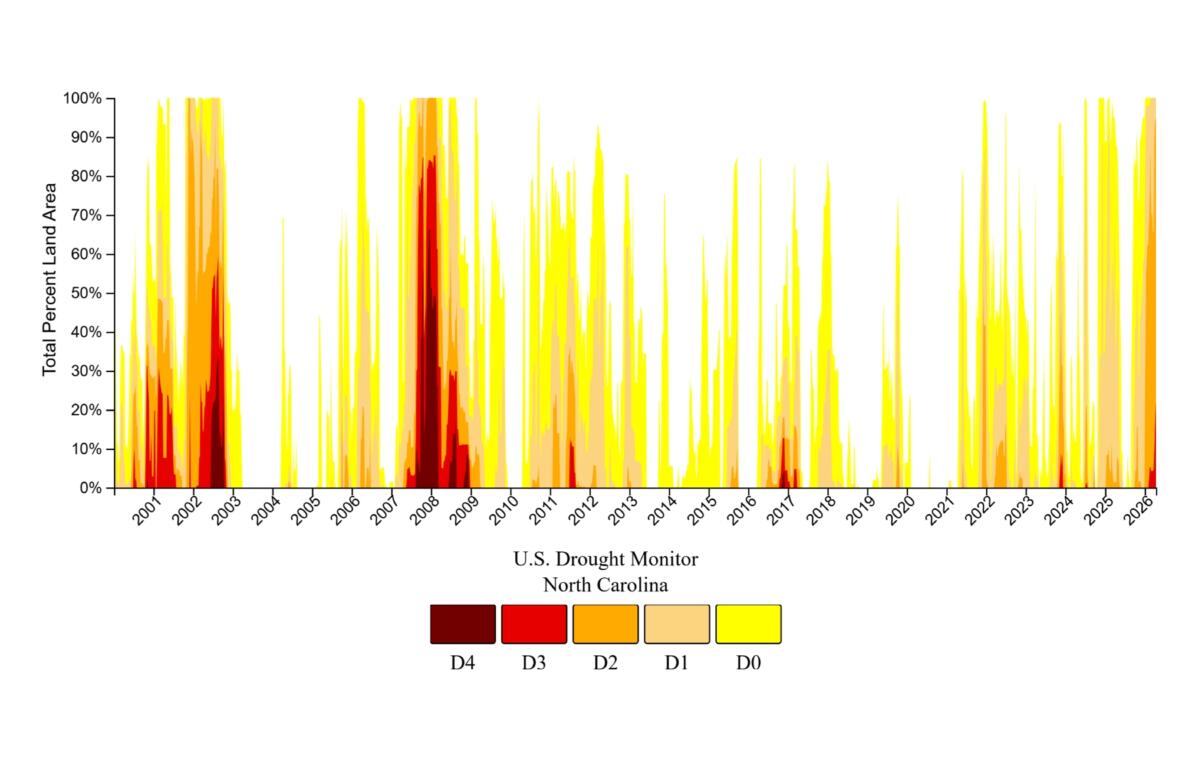
According to the U.S. National Weather Service in Greenville-Spartanburg, Asheville has had 1 7.82 inches of precipitation since Jan.1, which is 6.14 inches below normal.
State officials say conditions are worsening. The North Carolina Drought Management Advisory Council reports 30 counties are now in extreme drought, with most of the remaining counties classified under severe or moderate drought.
“Near record heat, negligible rain and increased water demand is going to accelerate the decline in river and lake levels over the next few weeks,” Klaus Albertin, chair of the council, said in a news release. “Reservoir systems are starting to see the impact of increased demand and low inflows.”
Click here to learn about USDA disaster assistance programs
Communities in the most severe category — known as D3, or extreme drought — are being urged to follow local water shortage response plans and implement conservation measures. Officials say residents should check with their local water systems for any restrictions.
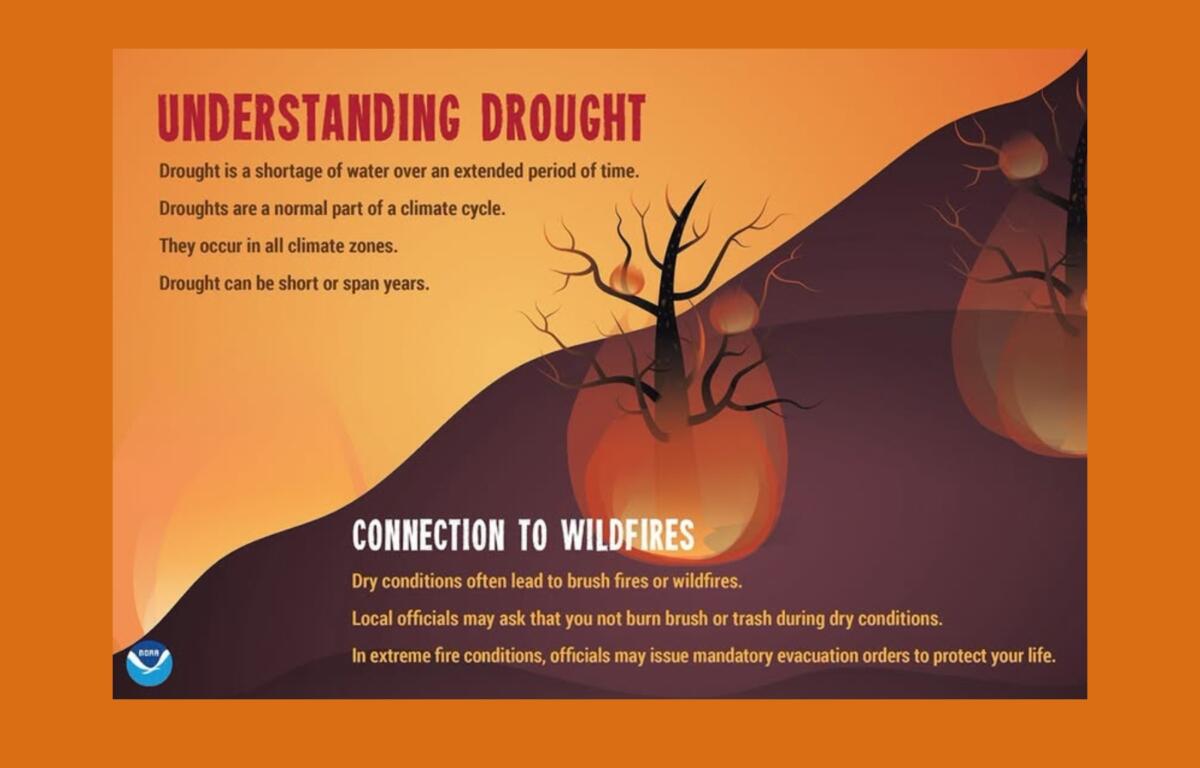
The dry conditions have also heightened fire risk. A statewide ban on all open burning remains in effect, and officials warn that continued lack of rainfall could worsen wildfire concerns.
The drought is also taking a toll on agriculture. The U.S. Department of Agriculture has designated 82 North Carolina counties as natural disaster areas because of drought. Forty of those counties are considered primary disaster areas, meaning farmers may qualify for emergency loans and other relief programs. An additional 42 counties are eligible because of their proximity.
Primary counties
- Alamance
- Alexander
- Bertie
- Cabarrus
- Cherokee
- Clay
- Cleveland
- Cumberland
- Davie
- Duplin
- Edgecombe
- Franklin
- Gaston
- Guilford
- Halifax
- Harnett
- Haywood
- Iredell
- Johnston
- Lee
- Lincoln
- Macon
- Madison
- Martin
- Mecklenburg
- Nash
- Northhampton
- Orange
- Person
- Randolph
- Richmond
- Rowan
- Sampson
- Stanly
- Swain
- Union
- Warren
- Wilkes
- Wilson
- Yadkin
Contiguous counties
- Alleghany
- Anson
- Ashe
- Beaufort
- Bladen
- Buncombe
- Burke
- Caldwell
- Caswell
- Catawba
- Chatham
- Chowan
- Davidson
- Durham
- Forsyth
- Graham
- Granville
- Greene
- Henderson
- Hertford
- Hoke
- Jackson
- Jones
- Lenoir
- Montgomery
- Moore
- Onslow
- Pender
- Pitt
- Robeson
- Rockingham
- Rutherford
- Scotland
- Stokes
- Surry
- Transylvania
- Vance
- Wake
- Washington
- Watauga
- Wayne
- Yancey
Agriculture Commissioner Steve Troxler said farmers are increasingly concerned as planting season begins.
“This is the time of year when many crops are being planted and when plants need moisture to get off to a good start,” Troxler said in a statement. “Farmers are worried and praying rain comes soon because it is a critical time for production.”
Learn about USDA Disaster Assistance Discovery Tool
Despite the growing concerns, the short-term forecast offers little hope.
The National Weather Service predicts a stretch of sunny, dry weather through the week in the Asheville area, with highs climbing from the mid-60s early in the week into the low 80s by Friday. No significant rainfall is expected.
Weather officials say drought is a normal part of climate cycles but emphasize the importance of conserving water and preventing fires during prolonged dry periods.
Without sustained, soaking rainfall, experts warn the drought could continue to deepen in the weeks ahead.