
ASHEVILLE, N.C. (828newsNOW) — “The Odyssey” has arrived. “Oppenheimer” and “The Dark Knight” director Christopher Nolan delivers an unbelievably immersive and impressive interpretation of the epic story. Read our review below.
Legendary storytelling with a modern twist
“The Odyssey” is a colossal achievement on every single level. Its scope is huge. Its performances are staggering. Its score is all-encompassing, its cinematography is sweeping and its storytelling is layered, detailed and rich. Even its villains are gigantic: Polyphemus the Cyclops, for example, or the armored Laestrygonians. The sheer scale of the production hearkens back to 20th-century epics like “Lawrence of Arabia,” yet “The Odyssey” has all the cinematic tricks of the 21st-century to work with, too. The combination of classical adventure storytelling with Nolan’s modern instincts and camera innovation makes a strong argument for “The Odyssey” as the defining blockbuster achievement of this millennium.
To use an anachronistic metaphor: Just three years after running the bases with “Oppenheimer,” which grossed nearly a billion dollars and won almost every Oscar it was nominated for, Nolan has again knocked the ball way out of the park. “The Odyssey” would be a jaw-dropping accomplishment from any filmmaker, but it is made doubly so in the context of Nolan’s career.
Granted, the film has only been out for a weekend and change, so it is probably too soon to proclaim such mighty cinematic stature. Perhaps the reason it gives off the aura of promised longevity – I think we will be talking about this movie for years to come – comes from the source material it adapts: Homer’s “The Odyssey,” a nearly-3,000-year-old epic poem that forged the foundation of Western storytelling. The story follows Odysseus, a veteran general of the Trojan War, who faces many great obstacles and challenges on his oceanic voyage home to Ithaca, where his wife, son and kingdom wait for him. Out of every feat Nolan and company accomplished with this film, the mightiest is the adaptation.

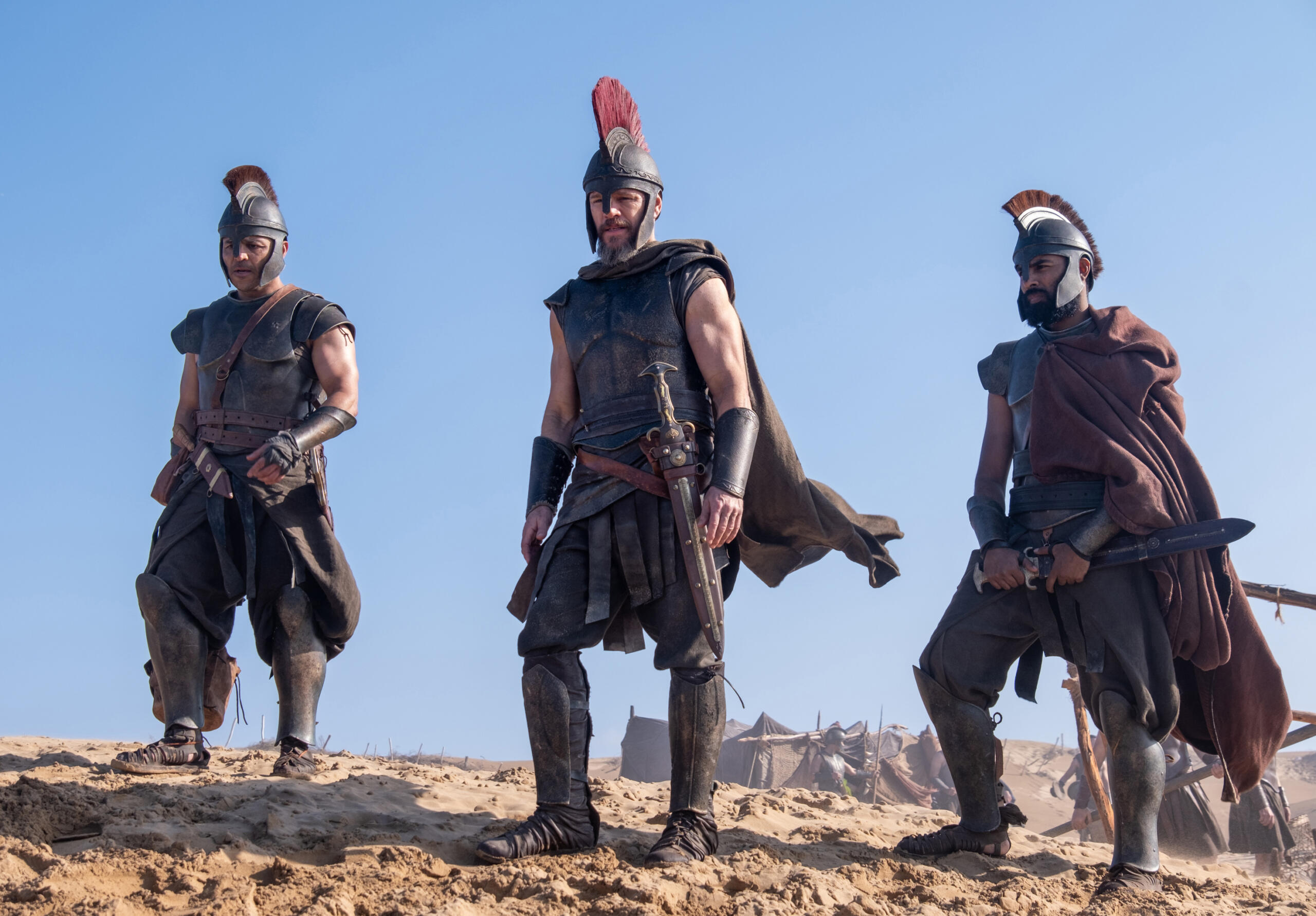
Matt Damon excels as Odysseus
Even though “The Odyssey” has clung to the craw of culture for centuries, the text has not necessarily adapted with the times. The original story is immensely masculine, positing military brawn and fraternal bond as thematic paramount. However, beneath the surface of its stubbled über-story, modern analysis and reinterpretation of the epic have revealed a treasure trove of less “manly” material to mine. One of the more popular versions of “The Odyssey” in recent years is Madeline Miller’s novel “Circe,” a feminist retelling of Greek myth from the perspective of the Homeric witch. Nolan, similarly, finds the feminine ferocity in “The Odyssey” in her and several other characters – more on that momentarily. At the same time, his Odysseus is less of an unflappable, inscrutable war chief than a conflicted, confused and recognizable human being. Matt Damon’s terrific performance is a big reason for that.
While the Homeric Odysseus is a wily trickster, habitual philanderer and confident commander, Damon cuts those traits with a dilution of humanity. His Odysseus is a leader that makes tough decisions, a dedicated husband in a bad situation and a shaken soldier living in the aftermath of bloody victory. Damon, 55, got positively shredded for the part and looks incredibly handsome, but instead of relying on those superficially heroic traits, we watch him toil to transmute physical power into emotional vulnerability. His character is easy to root for because of his relatable fallibility, a necessity in the most popular 21st-century adventure stories. Today’s modern epics demand deeper, more complex heroes. Damon’s Odysseus has more in common with Jon Snow of “Game of Thrones,” Robert Downey Jr.’s Iron Man or Katniss Everdeen in “The Hunger Games” than the stoic, rigid man of Homer. He makes mistakes, but has his heart in the right place. He stumbles, but ultimately triumphs. He is good, but he is complicated. This Odysseus is not the Ur-hero of ancient myth, but the best representation of what a great hero can be today.
It does not hurt that Damon has never been better. Give him the Oscar today.
The strong women of “The Odyssey”
Returning to the women of the piece, this version of “The Odyssey” is filled to the brim with strong female characters. Anne Hathaway is the female lead, Penelope, wife of Odysseus and mother of Telemachus, played by Tom Holland. In the poem, Penelope is an object to be won and a symbol to return to. She lives at Ithaca, seat of Odysseus, embodying the promise of power that awaits him upon his return. In his absence, she is squabbled over by a horde of suitors, who eventually engage in a literal contest to keep her as a prize. In the film, meanwhile, Penelope is like the lead of a political thriller.
Here, Penelope is presented as a savvy strategist, delaying the advances of suitors like Antinous – a deliciously detestable Robert Pattinson – as she strives to keep her kingdom afloat. Hathaway, who has been remarkable in three distinctive films this year, may be doing her best work in this one. She is icy on the outside, anxious on the inside. She is longingly loyal to Odysseus and fiercely protective of Telemachus. In one stand-out scene, she snaps at Holland with a frustration so red-hot you could feel it on your cheeks from the audience. Hathaway’s performance, through Nolan’s interpretation, is a welcome expansion of Penelope’s character. All of the core Homeric story is there – vying suitors, waiting for Odysseus, weaving and unraveling a tapestry – but deepened by looking through Penelope’s eyes.

The aforementioned Circe is another example. Samantha Morton plays the witch with rage and relish, and Nolan meets her energy, depicting the capture of several of Odysseus’ men in a terrifying sequence of transmogrifying witchcraft. The scene in the film is the perfect evocation of an iconic part of the poem. Homer followed it up, however, with a conversation between Odysseus and Circe where she begs the hero for her life and propositions a sexual tryst in exchange for the soldiers’ freedom. It’s an icky dynamic that feels about 3,000 years outdated. Nolan made the wise decision to change it.
In the film, Odysseus is deferential to Circe. Damon plays his scenes with Morton with quiet respect, and Morton, in turn, maintains a dangerous, distrustful energy. In Nolan’s telling, Odysseus is the one pleading for life, respecting the agency and power of Circe, no sex or violence involved. Circe is depicted as a force of nature, not the “wailing” and “fair-tressed goddess” of the poem, and the film is all the better for it.
While these changes to the source material benefit the movie, a strong adaptation is not just its alterations. It must also succeed at conveying the core of what it adapts. This is another way “The Odyssey” shines. Nearly every escapade in the Homer poem is thrilling depicted onscreen. From the pulse-pounding Polyphemus escape to the story of the Trojan Horse to the lure of the Sirens to the wastes of Hades, Greek mythology has never felt more real.
Should you see “The Odyssey” in IMAX?
To return to the colossal bonafides of “The Odyssey,” I want to encourage anyone interested in seeing it to seek out the largest format possible. I saw it in IMAX and it was borderline overwhelming. I have never had a cinematic experience like it. This is the first film shot entirely with IMAX cameras, and it comes through best on those gigantic screens, complete with their thundering sound. There is a shipwreck scene late in the film that made me feel like I was drowning in my seat, and every battle felt like you were in the middle of the action. Even the more intimate moments felt grander by the scale of the screen.

Near Asheville, there are two IMAX theaters: Regal Simpsonville at 780 South St., Simpsonville, South Carolina, and Epic Theatres of Hendersonville, 200 Thompson St., Hendersonville, N.C.
Another nearby premium format includes RPX screenings at Regal Biltmore Grande, 292 Thetford St., Asheville, N.C.
Happy voyaging.
Rating: 5/5
-
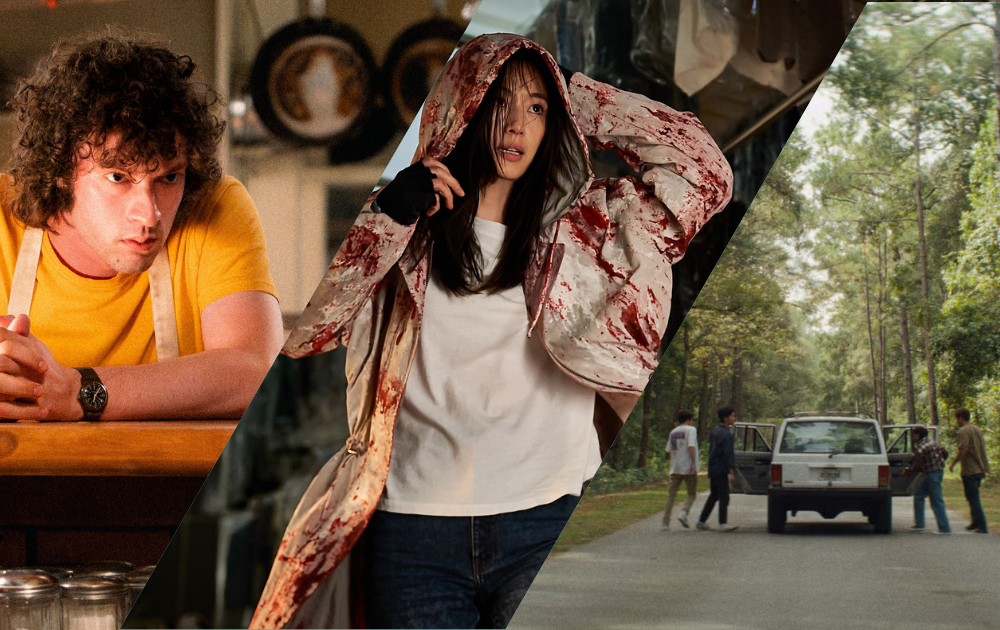
Korean zombies, endless roads and Anthony Bourdain: New movies to see in September 2026

“Spider-Man: Brand New Day” and “The Odyssey” might have defined the summer box office, but there are plenty of hidden movie gems to discover as we head into the fall. Check out our reviews of “Tony,” “Colony,” “Buddy” and “It Ends.”
-
5 best films at the 2026 Asheville Film Festival

The 2nd annual Asheville Film Festival ran from Aug. 21-23, 2026, at the Masonic Temple in downtown Asheville. Read a review of our favorite festival films below.
-
‘Spider-Man,’ samurai and ‘I Want Your Sex’: New movies to see in August 2026
Want to know if “Spider-Man: Brand New Day” is worth your time? Looking for a cool indie to watch? Read on for our reviews of new movies to see this August.
-
‘The Odyssey’ review: Christopher Nolan’s epic is mythic, massive moviemaking

“The Odyssey” has arrived. “Oppenheimer” director Christopher Nolan delivers an unbelievably immersive and impressive interpretation of the epic story. Read our review for more.
-
Best movies of 2026 so far: Our top 10 and honorable mentions

The year is already halfway over, which means there has never been a better time to check out the 2026 movies you may have missed. Read our list of the 10 best flicks of 2026… so far.
-
‘Disclosure Day’ is Steven Spielberg doing what he does best
That is, sentimental sci-fi spectacle. The director’s latest movie is a fantastic, heartfelt alien adventure. Read our review for more.
-
‘Backrooms,’ He-Man and ‘Scary Movie’: New movies to see or skip in June 2026
Looking for a new movie to see as summer vacation starts? Check out our reviews of three major releases: the indie horror phenomenon “Backrooms,” the silly 80s throwback “Masters of the Universe” and the sixth installment of the long-running parody series “Scary Movie.”
-
‘The Mandalorian and Grogu’ is cute, copy-and-paste ‘Star Wars’

The first new “Star Wars” movie in seven years is here! While far, far away from the galaxy’s best “Star Wars” flick, “The Mandalorian and Grogu” offers up cuteness in overdrive.
-
From ‘Michael’ to ‘Mother Mary’: New movies to see or skip in May 2026
A Michael Jackson biopic, two Anne Hathaway vehicles and an Australian serial killer thriller are our movies to see, stream or skip this May. Find out which is which in our reviews.
-
New movies to see, stream or skip in April 2026

Looking for a movie to see in Asheville this April? Learn what to see, stream or skip with our reviews of a cult horror reboot, a fresh spin on “Hamlet,” a documentary of epic length and a niche new vampire flick.