


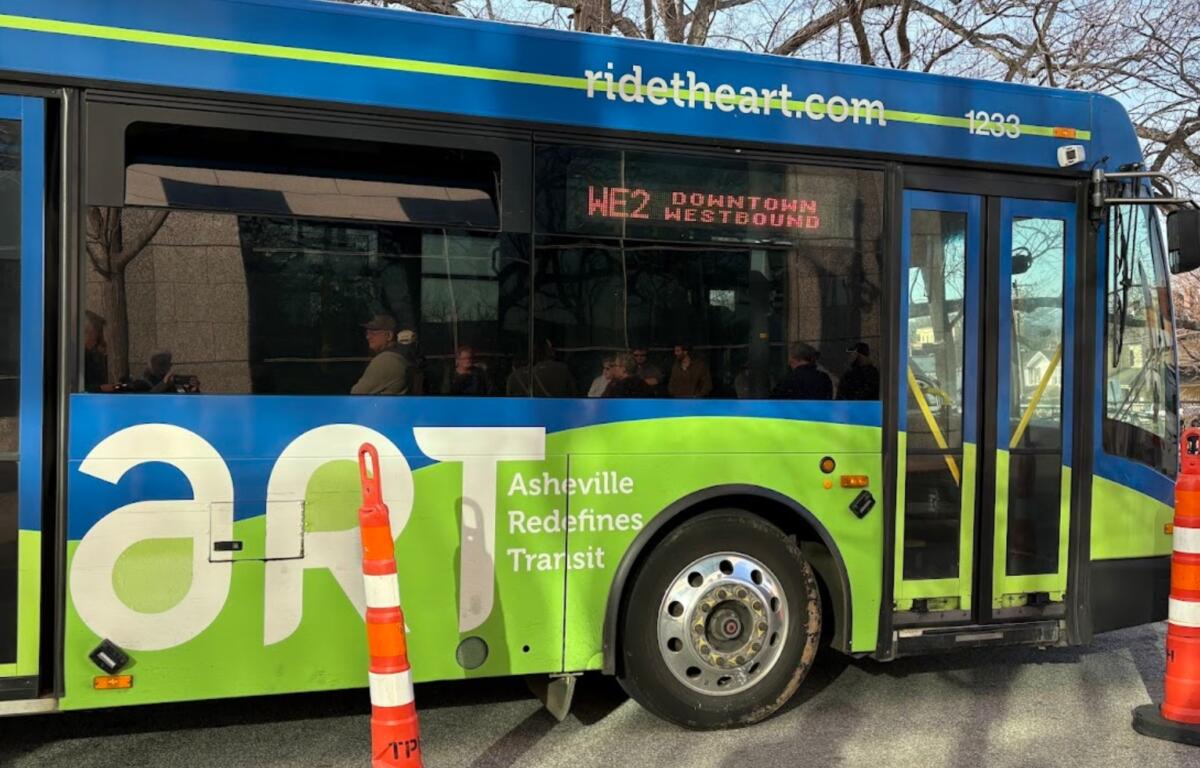

ASHEVILLE, N.C. (828newsNOW) — A proposed overhaul of Asheville’s bus system could mean shorter waits and more frequent service for many riders, but it also could leave some neighborhoods with fewer transit options.
Members of Asheville City Council’s Planning, Economic Development and Environment Committee got an update July 21 on the city’s ongoing Comprehensive Operational Analysis of Asheville Rides Transit, a study designed to reshape the bus network using the system’s existing resources.
The proposed changes would shift ART slightly away from a coverage-based model, where buses try to reach as many areas as possible, and toward a ridership-based model focused on putting more frequent service where the most people are likely to use it.
City staff said the goal is not to expand the system’s budget but to make the existing network work better.
“This was a cost-neutral study,” officials said. “We took the resources that we currently have and the direction was to reallocate those resources.”
The proposed network would move ART from its current balance of about half coverage and half ridership to a system that is roughly 60 percent focused on ridership and 40 percent on coverage.
The earliest any changes could take effect would be July 2027, as part of the city’s fiscal year 2027-28 budget.
More frequent service on key corridors
The draft network would add more frequent service along several major corridors, including:
- Hillcrest
- River Arts District
- Belmont Avenue toward Biltmore Village
- Patton Avenue
- Hendersonville Road
- Long Shoals Road
- Asheville Regional Airport and Biltmore Park
Some routes would move to 15-minute frequency, meaning buses would arrive about every 15 minutes instead of every 30 minutes or longer.
Staff said the changes are designed to make the system easier to use by improving reliability, reducing transfer times and making schedules line up better at the ART Station downtown.
The proposed network would increase the number of Asheville residents within a half-mile walk of either 15-minute or 30-minute transit service from about 28 percent today to 37 percent under the draft plan.
But the tradeoff is that the number of people not within a half-mile of any transit service would increase from about 39 percent to 42 percent, according to the presentation.
Proposed cuts draw concerns
To make the improvements possible without additional funding, some existing service would be reduced or eliminated.
The biggest concerns raised during public engagement involved:
- Outlet Mall/Brevard Road/Transformation Village
- Social Security offices
- West Haywood Road
- Other areas where current riders would lose direct service
Staff said those concerns were expected.
“We heard a lot of positive comments about increased frequency,” said Jessica Morris, assistant director for transportation. “But as you would expect, there was a lot of negative response to any of the proposed cuts.”
The city received 1,350 responses during its public engagement process. Staff cautioned the survey was not statistically significant because it represented only a small portion of Asheville’s population, but it did provide feedback from frequent ART riders and people who do not regularly use the bus.
Frequent riders were more likely to support the draft network, while non-riders were more divided, according to the survey results.
Council questions equity, housing and jobs impacts
Council members questioned whether the analysis fully captured development and populations that rely on transit, including people living at Transformation Village and development along Ferry Road.
Staff acknowledged some future projects may not be reflected in the census data used for the analysis.
Council members also asked about impacts on Asheville Housing Authority residents.
Staff said most housing authority communities would see the same level of service under the draft plan. However, three communities — Hillcrest, Maple Crest and Aspen Towers — would gain access to 15-minute service.
Council members raised concerns about areas where residents could lose direct routes, particularly people who depend on buses for work, medical appointments and daily needs.
Council calls for long-term transit funding strategy
While council members debated the proposed route changes, much of the discussion focused on a larger issue: Asheville needs more money to provide the transit system many residents want.
Council member Kim Roney said the study highlighted a long-standing challenge.
“We need long-term dedicated funding,” Roney said. “Period.”
Council members discussed creating a broader revenue and lobbying strategy to identify additional funding sources for transit rather than repeatedly trying to improve service without additional resources.
They pointed to other cities that have developed dedicated transit funding sources, including voter-approved sales taxes, as examples of what Asheville could explore.
Council members also noted the city had previously hoped to partner with Buncombe County on the study and broader transit planning, but that partnership did not move forward.
Ultimately, the committee voted to recommend moving the COA forward to the full council while also asking staff to pursue a long-term transit funding strategy.
What happens next
Staff plans to bring an updated version of the draft network to City Council on July 28 for additional feedback.
A final network plan is expected to return to council in August.
If approved, the changes would not take effect immediately. Implementation would begin no earlier than July 2027.