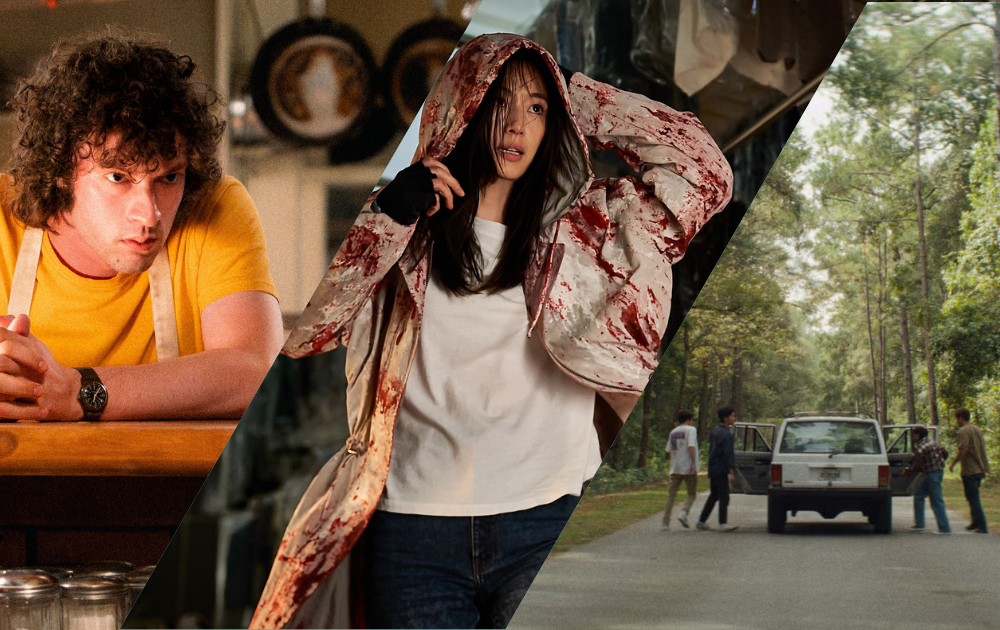

ASHEVILLE, N.C. (828newsNOW) — Want to know if “Spider-Man: Brand New Day” is worth your time? Looking for a cool indie to watch? Read on for our reviews of new movies to see this August.
“Spider-Man: Brand New Day”
No matter how you feel about his performance in the “The Odyssey” or his career outside of the Marvel Cinematic Universe, it is hard to argue that Tom Holland is anything but the perfect Spider-Man. In “Spider-Man: Brand New Day,” his fourth solo outing as the character, Holland has never been better. From its exceptional web-slinging action to the soap operatic personal life of Peter Parker, “Brand New Day” is the best live-action version of Spidey we’ve seen yet.
Destin Daniel Cretton, probably best known to Marvel fans as the filmmaker behind “Shang-Chi and the Legend of the Ten Rings, takes charge of the franchise here, picking up where Jon Watts’ “Home” trilogy left off. At the conclusion of “Spider-Man: No Way Home,” Peter Parker was forced to make a sacrifice: he saves the world, but everyone in his life, including his girlfriend, best friend and all of the Avengers, will forget that he is Spider-Man, their memories of Peter Parker wiped forever. Consequently, the Peter of “Brand New Day,” set four years after the events of the previous movie, feels like a very different Spider-Man than we’ve seen before.
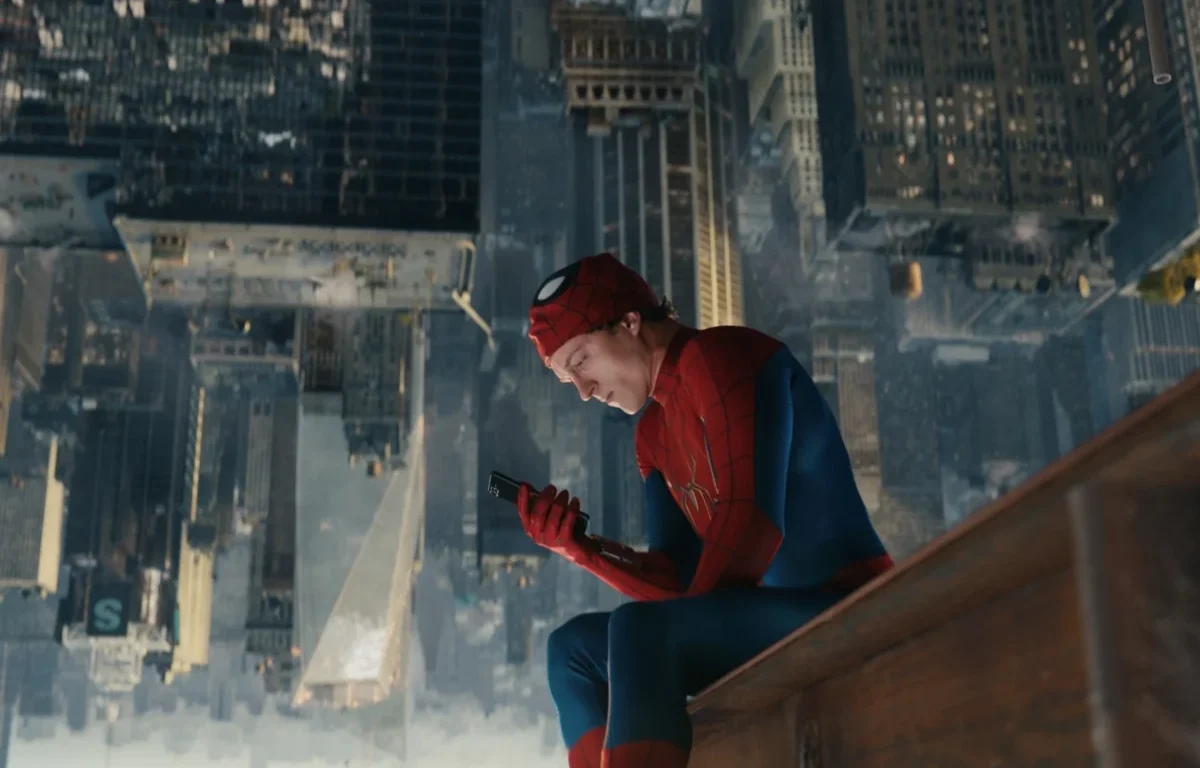
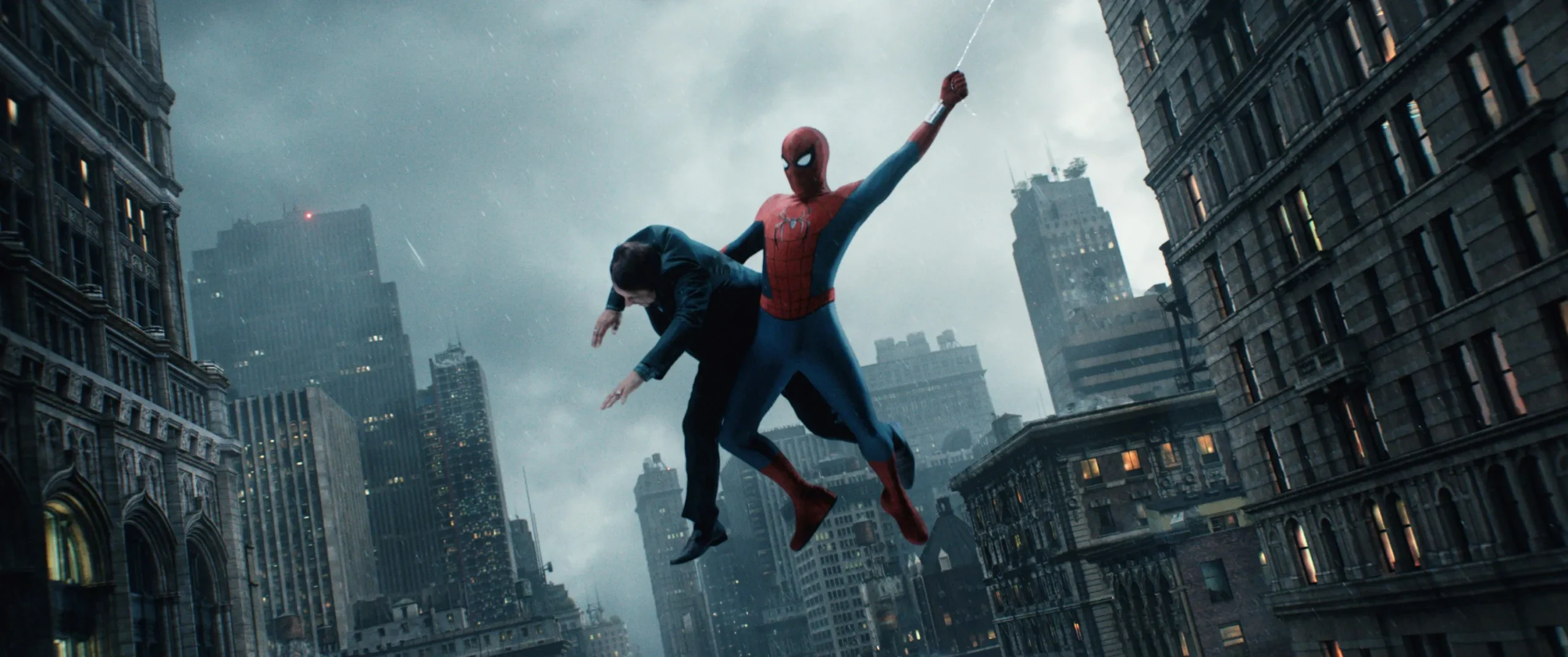
This Spider-Man is a brooding, depressed loner in his 20s, a far cry from the bubbly kid of the “Avengers” films. Everything about him feels more mature: he is confident in his crime-fighting abilities. He makes his own suits and tech. He lives in his own terrible apartment in New York City. Cretton’s direction mirrors the growth of the character. While Watts excelled at delightful teen comedy, with his installment, Cretton has brought an evolution in craft, style and visual acuity to the Spider-Man franchise. Watching this Spidey swing around NYC is exhilarating, the camera thwip-ing and bobbing along with its hero. Every shot is more interesting and tactile than any Spider-Man has been in about 20 years.
The feelings of the movie are richer than previous installments, too. If the “Home” trilogy was about the challenge of balancing high school with superheroics, “Brand New Day” is a graduation to the young adulthood of heroism. It is fascinating to watch this Peter Parker deal with an anxiety disorder, hormone spikes and lost love. We see sadness that comes after quippy fights and loneliness that exists outside of bright tights. This version of the character is flawed and raw in a way he has never been before.
All of that stuff is wonderful. I think that if this were this merely a Spider-Man movie, or even a Spider-Man movie featuring a few other heroes – the Hulk, the Punisher and Black Widow all appear in various measures – it would have rivaled Sam Raimi’s “Spider-Man 2” for the franchise crown. Unfortunately, Marvel had to meddle. By the end of “Brand New Day,” the needs of the parent cinematic universe superseded Spider-Man.
Spoilers ahead.
The secret’s out: “Brand New Day” is the back-door pilot for the brand new “X-Men.” The back half of the movie is devoted to introducing Sadie Sink as Jean Grey, the telepathic teen at the center of the superhero team. Spider-Man and Jean Grey have never been closely associated in the comics, which made her debut in “Brand New Day” a big surprise.
To some extent, Jean is an apt match for this material. She can read minds. Peter’s friends have lost their memories. She is a mutant. Peter’s spider DNA is mutating. There is lot to like about Sink, too. This version of the mutant is young, wounded and angry, which is all way inside the actor’s wheelhouse. Plus, her powers look very cool. When Jean “jumps” into a new person’s mind, we are treated to some freaky physical choreography by Nathan Kim. It’s another instance of Cretton bringing some practical filmmaking fun to the superhero game.
The problem is that the movie buckles under the weightiness of Jean’s introduction. Even outside of the cynical franchise-building of her inclusion, the character takes over the third act of this Spider-Man movie. For a solid chunk of the finale, the movie is told from Jean’s point-of-view, a confounding move for a movie intended to be freshly focused on its title character. She felt shoehorned in for the next new thing, which is not a satisfying arc for an antagonist of this story.
Like the emergence of a new mutatation, “Spider-Man: Brand New Day” is a breath of fresh air for the character. I just wish that’s all it was.
Rating: 3.5/5
“Spider-Man: Brand New Day” is now playing in theaters nationwide.
“I Want Your Sex”
Gregg Araki hasn’t directed a feature film in over 12 years, but the forever-stylish filmmaker hasn’t lost a step. Who else would start their movie with a hot pink title card, a cussing, lingerie-wearing Cooper Hoffman and a naked Olivia Wilde, floating face down in a swimming pool?
Araki made his name as an icon of the New Queer Cinema movement in the 1990s, directing cult classics like “The Doom Generation,” “Totally F***ed Up” and “Nowhere” with violent, oddball flair for the disillusioned Gen X cool. Remarkably, with “I Want Your Sex,” Araki proves himself just as equipped to tackle Gen Z anxiety.

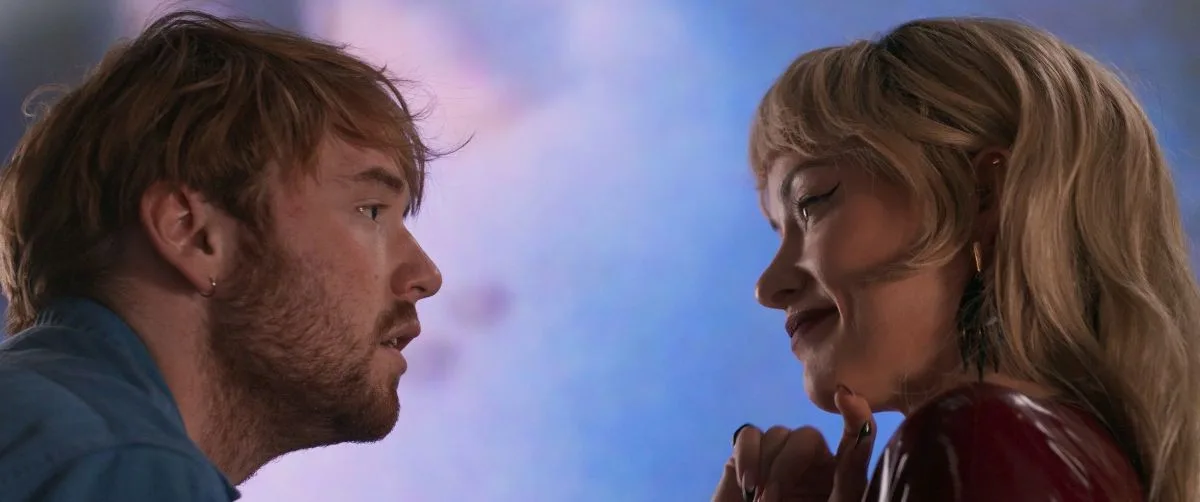
Hoffman is a hysterical avatar for a satirization of Gen Z. The actor plays Elliot, a scruffy, unfashionable young man paralyzed with sexual angst, as unapologetically lame, wearing ugly button-downs and going on sweaty jogs. His girlfriend, played by Charli XCX in a terrible but funny performance, hates him. When he lands a job as an assistant at a trendy art gallery, his hip, queer, metropolitan coworkers look on in disdain.
Nonetheless, something about his energy attracts the attention of his boss, Erika Tracy. Tracy is a domineering, decidedly un-P.C. artist, played by Wilde with sexy aplomb and apathetic cruelty. When the two begin a toxic workplace affair, Elliott finds that sexual domination is exactly what he needed to eke some personality out of his repressed shell. Then, in spectacular Araki fashion, things go very awry.
The film is unapologetically weird. Similarly to Boots Riley’s “I Love Boosters,” a favorite from earlier this year, “I Want Your Sex” is filled with colorful strokes of multimedia. One moment is presented in fast-forward, while another features an overlay of fireworks. Occasionally, the screen sports hallucinogenic animation, like a demented “Who Framed Roger Rabbit?” The comedy is sometimes broad and slapstick, and other times hilariously hyper-specific; “I’m gonna have a Spindrift. Do you want one?” is a killer line. The movie is good old-fashioned fun, all the way through.
Yet, at the same time, it feels indelibly of the now. Araki has a keen sense for connotative detail. Recent data sets have revealed that young people are having sex far less than previous generations. In a literalization of that perceived sexual indecisiveness, Araki stamps Elliott, his Gen Z avatar with tattoos reading “NO?” and “YES?” on either hand.
Pivotally, Wilde’s character is a boundary-pushing artist. “I Want Your Sex” is a tight 90 minutes of transgressive politics, explicit nudity and searing cultural critique, the exact sort of movie common to the 90s but rare in 2026. 30 years ago, Araki was one of the artists putting sexual taboo onscreen. Today, Erika Tracy is putting it on the walls of her gallery.
The characters represent a very Araki view of their respective age groups.
However, lest we think the director is preaching at us, “I Want Your Sex” is careful to present the problematic half of the Tracy character, too. Araki is not saying what Erika does is right. Likewise, while Elliott is often the butt of the joke, he is also the moral center of the story. Araki is not saying that pure transgression is the way to go. Instead, “I Want Your Sex” wants Erika and Elliott to learn from each other, and Gen X and Gen Z along with them. It’s a nice lesson wrapped up in neon pink bubble wrap.
It’s great to have Araki back. More of these, please.
Rating: 4/5
“I Want Your Sex” is now playing in select theaters nationwide.
“The Samurai and the Prisoner”

I think of Kiyoshi Kurosawa as an utterly modern director. The filmmaker is known for gritty, grimy thrillers like “Cure,” and has recently focused on stark, tech-focused pieces, like last year’s “Cloud,” and the short film “Chime,” which was released as an NFT. In contrast, his latest is about as classical as it gets.
“The Samurai and the Prisoner” is a historical chamber drama about real-life Japanese feudal lord Araki Murashige, set during the siege of Arioka Castle in 1579. The movie is garbed in superb period dress and artful set design. I cannot extol the virtues of their color enough: the costumes are all variations of green, but never once are they uniform. Each has its own detail, design and delightful forest-y flair. Yasuyuki Sasaki’s stellar cinematography makes them even more beautiful to behold. Kurosawa’s new movie is a breathtaking view of five centuries ago.
Even if “The Prisoner and the Samurai” is not outside of modernity, it would not be a Kurosawa movie without a terrific mystery. The movie is a whodunnit in quadruplicate, depicting four different murders in four distinct chapters.
Masahiro Motoki stars, in a stately, sincere performance, as Murashige, a samurai lord who refuses to kill without cause. Unfortunately for Murashige, death has been happening around him all the same. An encroaching enemy army picks off allies all over the region, and inside his castle gates, people are being killed in unusual ways. Desperate for a solution to the confounding carnage, Murashige enlists the help of his brilliant prisoner, Kuroda Kanbei. Kanbei, a military strategist, serves as a Hannibal Lecter-style confidant to Murashige from the confines of the Arioka dungeon.
Masaki Suda is a ton of fun as Kanbei. Just like Lecter, the morality of his character is dubious, at best, but Suda is such a seductive, charismatic presence that Murashige’s trust in him is completely believable. In a sword battle for best performance of the film, Suda and Motoki go blow for blow.
Three weeks later, “The Odyssey” has still been leading moviegoers to war, but I would fight for audiences to seek “The Samurai and the Prisoner” as its B-side. The films share similar themes about leadership, duty and the cost of war, but in different registers – Kurosawa is refined intimacy to Nolan’s exuberant scope – and both are among the best flicks of the year.
Rating: 4.5/5
“The Samurai and the Prisoner” will open in Winston-Salem, N.C., on Aug. 14, and Charlotte, N.C., on Aug. 21.
-
Korean zombies, endless roads and Anthony Bourdain: New movies to see in September 2026

“Spider-Man: Brand New Day” and “The Odyssey” might have defined the summer box office, but there are plenty of hidden movie gems to discover as we head into the fall. Check out our reviews of “Tony,” “Colony,” “Buddy” and “It Ends.”
-
5 best films at the 2026 Asheville Film Festival

The 2nd annual Asheville Film Festival ran from Aug. 21-23, 2026, at the Masonic Temple in downtown Asheville. Read a review of our favorite festival films below.
-
‘Spider-Man,’ samurai and ‘I Want Your Sex’: New movies to see in August 2026
Want to know if “Spider-Man: Brand New Day” is worth your time? Looking for a cool indie to watch? Read on for our reviews of new movies to see this August.
-
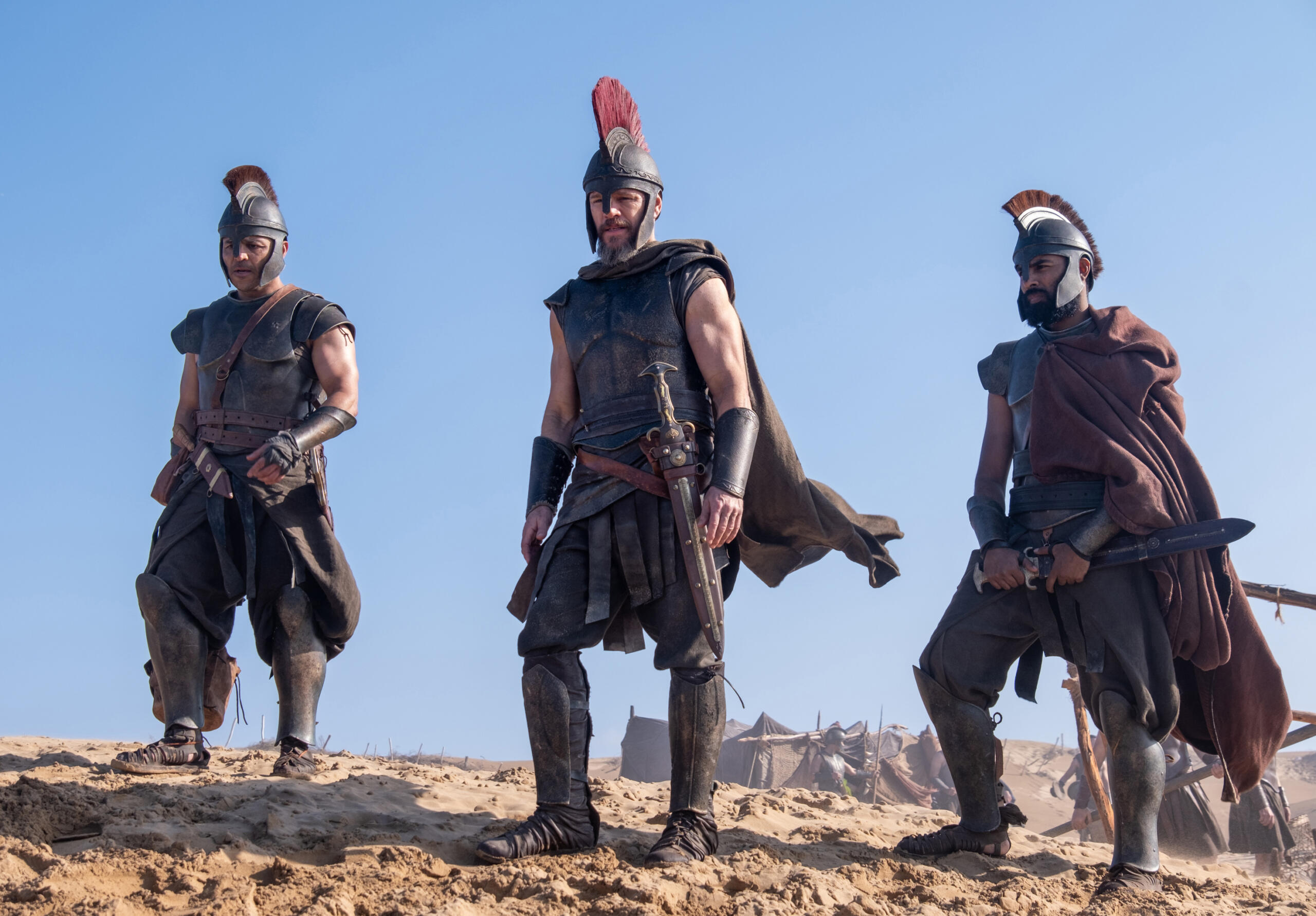
‘The Odyssey’ review: Christopher Nolan’s epic is mythic, massive moviemaking

“The Odyssey” has arrived. “Oppenheimer” director Christopher Nolan delivers an unbelievably immersive and impressive interpretation of the epic story. Read our review for more.
-
Best movies of 2026 so far: Our top 10 and honorable mentions

The year is already halfway over, which means there has never been a better time to check out the 2026 movies you may have missed. Read our list of the 10 best flicks of 2026… so far.
-
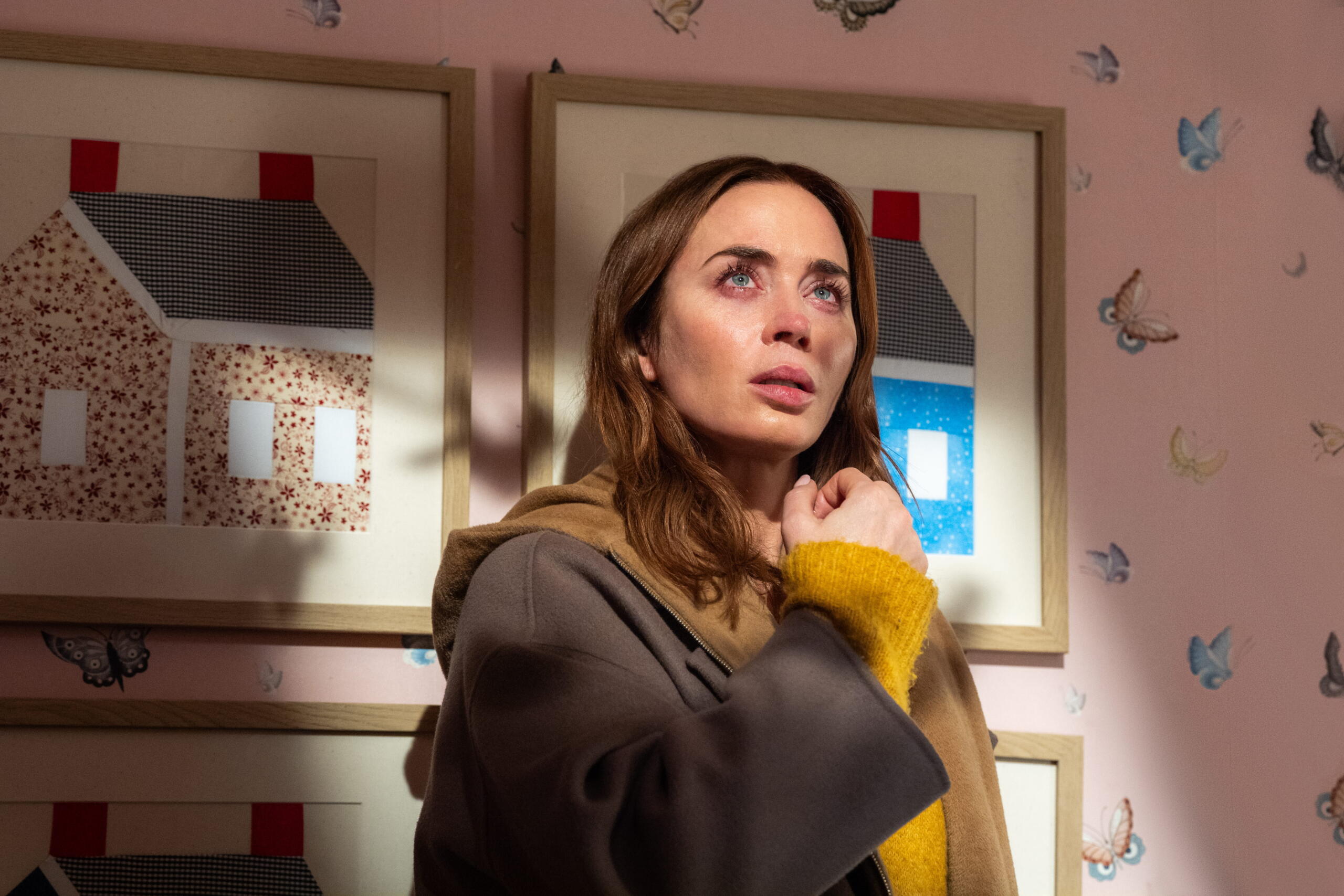
‘Disclosure Day’ is Steven Spielberg doing what he does best
That is, sentimental sci-fi spectacle. The director’s latest movie is a fantastic, heartfelt alien adventure. Read our review for more.
-
‘Backrooms,’ He-Man and ‘Scary Movie’: New movies to see or skip in June 2026
Looking for a new movie to see as summer vacation starts? Check out our reviews of three major releases: the indie horror phenomenon “Backrooms,” the silly 80s throwback “Masters of the Universe” and the sixth installment of the long-running parody series “Scary Movie.”
-
‘The Mandalorian and Grogu’ is cute, copy-and-paste ‘Star Wars’

The first new “Star Wars” movie in seven years is here! While far, far away from the galaxy’s best “Star Wars” flick, “The Mandalorian and Grogu” offers up cuteness in overdrive.
-
From ‘Michael’ to ‘Mother Mary’: New movies to see or skip in May 2026
A Michael Jackson biopic, two Anne Hathaway vehicles and an Australian serial killer thriller are our movies to see, stream or skip this May. Find out which is which in our reviews.
-
New movies to see, stream or skip in April 2026

Looking for a movie to see in Asheville this April? Learn what to see, stream or skip with our reviews of a cult horror reboot, a fresh spin on “Hamlet,” a documentary of epic length and a niche new vampire flick.