



ASHEVILLE, N.C. (828newsNOW) — Asheville City Council approved millions of dollars in additional Tropical Storm Helene recovery funding, launched a new home repair program for low-income homeowners and adopted a resolution aimed at reducing displacement as the city works through recovery and continued growth during its meeting Tuesday.
Council’s agenda included a mix of disaster recovery and routine city business, with actions ranging from rebuilding damaged parks along the French Broad River to accepting public safety grants and approving rezonings.
More Helene recovery funding approved
Council unanimously approved an amendment to the city’s Community Development Block Grant-Disaster Recovery agreement with the North Carolina Department of Commerce, increasing funding for the Renew NC Single-Family Housing Program to $22.2 million.
The additional federal disaster recovery funding will help more homeowners repair and rebuild homes damaged by Tropical Storm Helene.
“Last month, City Council approved additional funding to expand support for homeowners repairing and rebuilding homes damaged by Tropical Storm Helene,” Director of Recovery and Resilience Bridget Herring said. “This resolution formalizes the agreement with the state, allowing these federal disaster recovery dollars to move forward and help more Asheville residents recover and rebuild.”
Council also approved a contract to demolish storm-damaged facilities throughout the French Broad River parks system, clearing the way for long-term redevelopment of the riverfront.
Demolition work will begin after required permits are secured, a process city officials said could take several months.
“By authorizing the removal of these damaged amenities, we are clearing the path for the French Broad Riverfront Park unified concept plan and actively reclaiming these essential public spaces for our residents,” Capital and Asset Management Director Walter Ear said. “This contract allows us to transition from damage assessment to tangible site restoration, ensuring we can rebuild a safer, more accessible riverfront park for everyone.”
Affordable housing bond funds approved for home repairs
One of the meeting’s most significant non-recovery actions was council’s approval of a new Home Repair Policy and the allocation of 2024 Affordable Housing Bond funding to support repairs for low-income homeowners.
The program will provide funding to agencies that perform critical repairs, including roof replacements, HVAC systems and other major home improvements that allow residents to remain in their homes.
Housing and Economic Development Director Nikki Reid said the city expects the program to assist between 68 and 108 low-income families, with work expected to begin this fall.
“The adoption of the home repair policy and the funding to go with it means that staff can start the process for getting repair agencies under contract,” Reid said.
Council adopts anti-displacement resolution
Council also approved an amended resolution establishing a framework to reduce displacement caused by rising housing costs, redevelopment and gentrification.
The resolution directs the city to identify neighborhoods most vulnerable to displacement and incorporate strategies into future housing and development decisions aimed at helping longtime residents remain in their communities.
“This resolution represents a commitment to protecting existing neighborhoods from displacement and helping residents stay in the communities they’ve helped define,” Assistant City Manager Ben Woody said. “By integrating anti-displacement strategies into City policies, programs and tools, we are proactively balancing the need for additional housing with preserving the long-standing neighborhood identity of our communities most at-risk of displacement.”
Public safety grants accepted
Council approved several grants for the Asheville Police Department, including an $80,471.80 U.S. Department of Justice Bulletproof Vest Partnership grant to purchase protective equipment for officers.
“Ensuring our officers have essential protective equipment is fundamental to both officer safety and effective public safety,” Interim Police Chief Jackie Stepp said.
Council also voted 5-1 to accept a $160,904 High Intensity Drug Trafficking Areas grant, which supports regional investigations targeting drug trafficking organizations and related violent crime.
“Partnerships are one of our strongest tools in combating violent crime and drug trafficking,” Stepp said. “Drug trafficking and the violence that often accompanies it do not stop at jurisdictional boundaries.”
Historic City Hall chimes to be restored
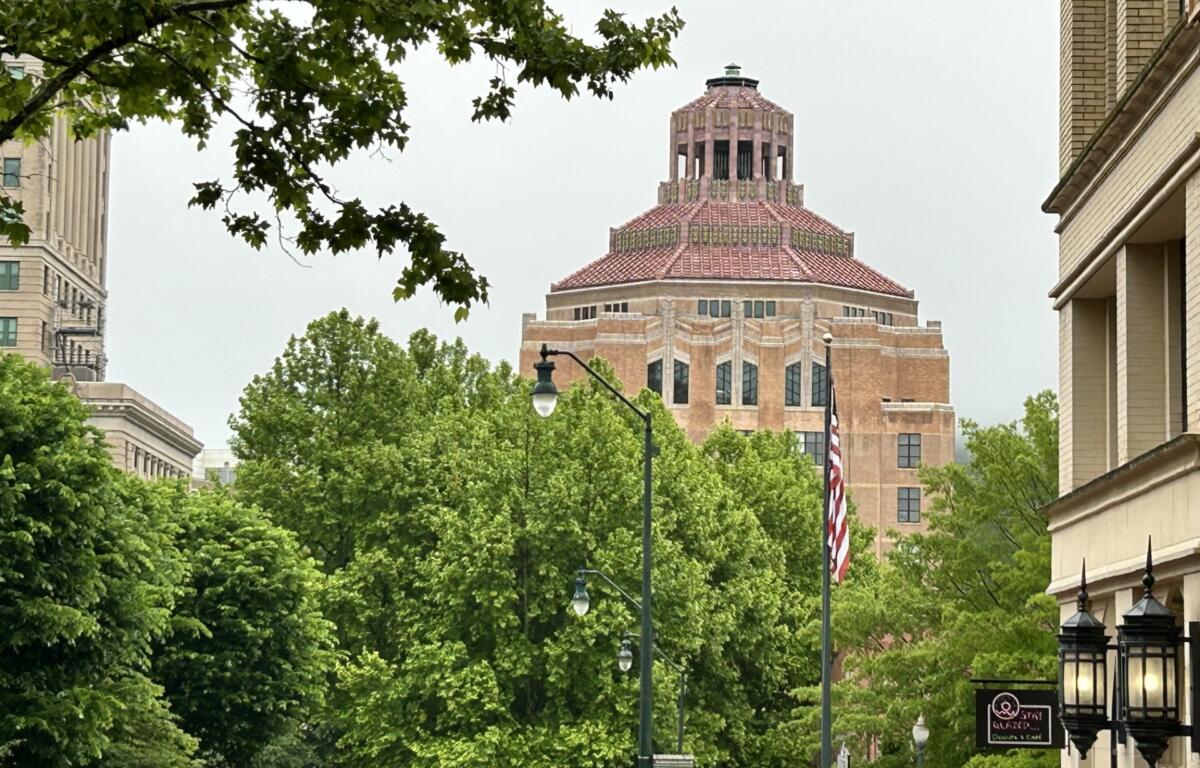
Council accepted a donation agreement from the Preservation Society of Asheville and Buncombe County to restore and modernize the historic City Hall Peace Chimes.
The project will convert the 1932 chime system into a fully automated, synchronized system.
“The City Hall Chimes are a rare musical treasure woven into the Asheville skyline and the fabric of our community,” Ear said.
Property approved for youth program
Council approved conveying a portion of city-owned property at 55 Hunt Hill Place to nonprofit KL Training Solutions for $1.
The organization plans to install a modular school building to expand its “My Daddy Taught Me That” youth development program, providing after-school programming, mentoring, career readiness and job training opportunities for low- and moderate-income youth. The property will remain permanently restricted for community development and youth-serving uses.
Rezoning requests approved
Council also approved two zoning requests after public hearings:
- A conditional rezoning at 3862 Sweeten Creek Road from Residential Multi-Family High Density to Residential Expansion-Conditional Zone.
- A 4-2 rezoning of 3 S. Tunnel Road from Urban Place to Regional Business.
Transit update presented
Council also received an update on Asheville Rides Transit’s Comprehensive Operations Analysis, which is evaluating future service improvements and route changes across the city’s transit system.