


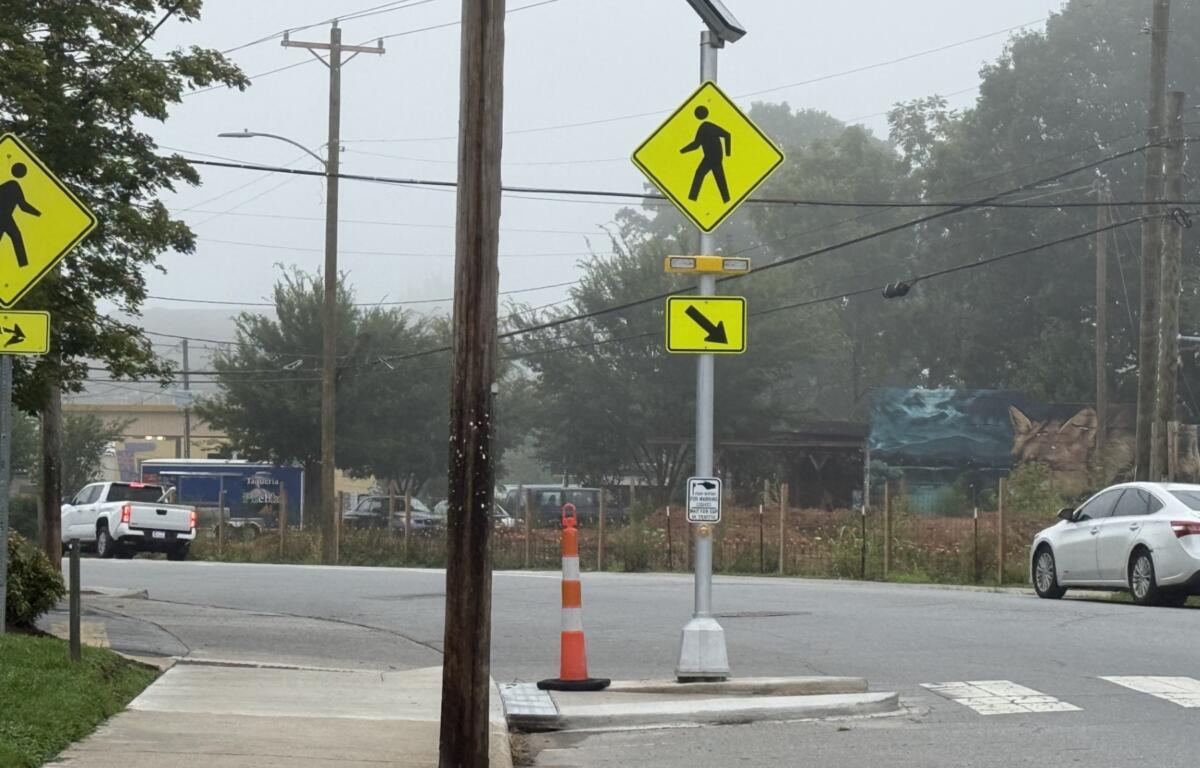

ASHEVILLE, N.C. (828newsNOW) — Speed humps, potholes and road diets — Asheville residents have plenty of opinions about what makes drivers slow down.
Now, the city wants to hear more of them.
The city of Asheville is asking residents to weigh in as it updates its Traffic Calming Policy, which guides how the city addresses speeding and traffic safety on residential streets.
Traffic calming includes roadway features designed to encourage drivers to slow down and make streets safer for drivers, pedestrians and cyclists.
The city recently launched an online survey asking residents what they think of the current policy and what they would like to see changed.
Take the city’s traffic-calming survey
The effort comes as the city works with consultant Kittelson & Associates to develop a new traffic-calming guide and updated policy.
The current policy was established in 2014 to improve neighborhood livability and traffic safety. City officials say the process has become increasingly resource-intensive, with projects sometimes taking a long time to move forward and community expectations going unmet.
The updated policy is expected to look at additional ways to slow traffic beyond the speed humps and speed cushions Asheville currently uses. It also will consider which streets should qualify for traffic-calming projects and how the city should prioritize them.
Residents have plenty to say
The city held a public meeting May 28 to gather feedback. Fifty-two people signed in, and residents submitted 36 comment cards.
One of the clearest themes was a desire for Asheville to take a more proactive role in identifying streets that need traffic calming rather than waiting for residents to request projects.
Some residents also questioned the city’s current requirement that neighborhoods gather support from 60 percent of residents before moving forward.
One comment suggested safety decisions should be based more on factors such as crash rates and safety ratings than a neighborhood vote.
Others said residents need a clearer way to understand how to request traffic calming and track projects once they are proposed.
An online tracking system was among the suggestions.
Residents also expressed strong support for so-called quick-build projects — relatively inexpensive measures that can be installed and evaluated before the city commits to more costly permanent construction.
Paint, bollards and other lower-cost options were among the ideas mentioned.
Another recurring theme was that the city should expand its toolbox.
Some residents said speed humps don’t work equally well on every street and called for more options that could be tailored to individual neighborhoods and road conditions.
And then there’s social media
The city’s Facebook post announcing the survey brought out plenty of opinions, too.
One resident said faded warning paint on speed humps makes them harder to see and suggested repainting them so drivers slow down sooner.
Others weren’t nearly as enthusiastic about the traffic-calming measures.
“Ban bumps! Stop punishing everyone and ticket the speeders,” one commenter wrote.
Another suggested the city spend money fixing potholes instead of adding more traffic-calming features.
Some commenters criticized previous road changes, including Asheville’s road diets.
Others raised concerns about how speed humps affect larger vehicles.
“It’s a ***** for motorcoach busses and service trucks,” one commenter wrote, noting that a motorcoach can be 45 feet long.
The comments underscore one of the challenges facing the city as it revises the policy: What makes a street safer for one person can be frustrating for another.
The city says the goal of the update is to create a process that is more efficient, transparent and responsive while finding ways to manage vehicle speeds and traffic volumes on residential streets.
Residents can submit feedback through the city’s online survey as the policy update moves forward.