


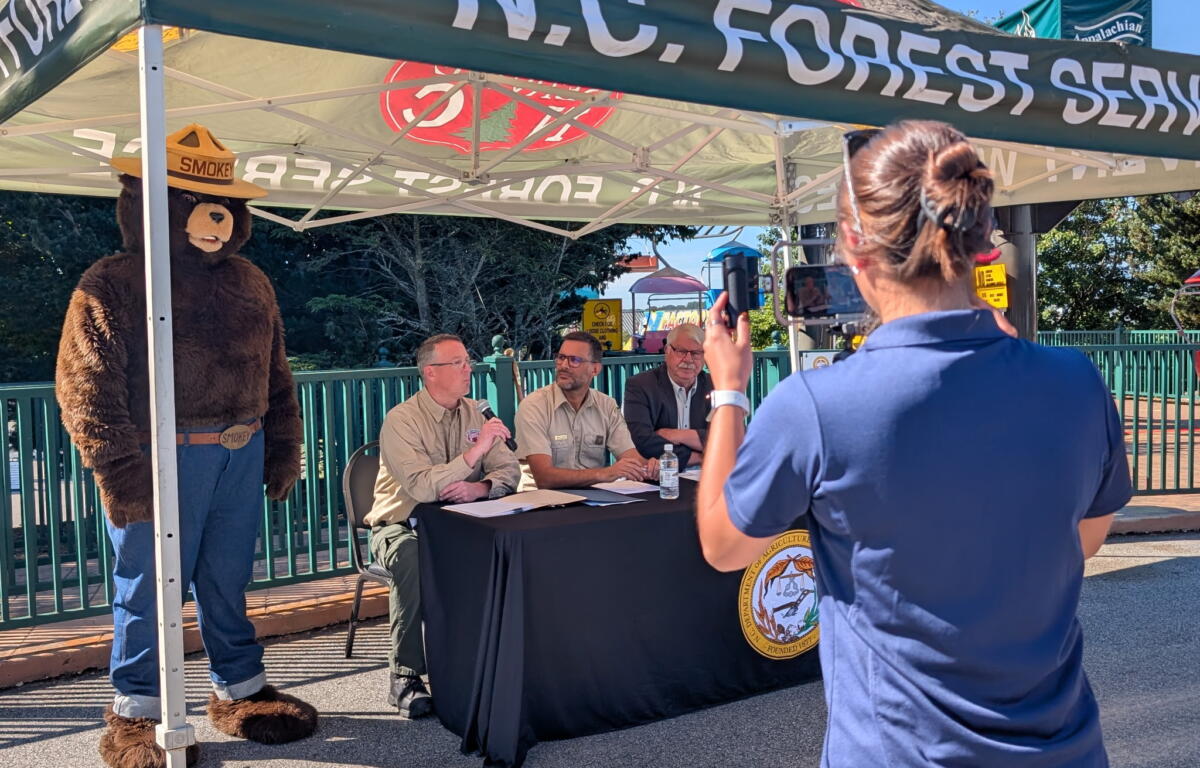

ASHEVILLE, N.C. (828newsNOW) — Earlier today, state and federal forest services signed a 10-year, nearly $65 million Good Neighbor Authority commitment to Tropical Storm Helene recovery efforts in Western North Carolina.
The GNA allows the USDA Forest Service to participate in cooperative forest conservation between the federal government and state agencies, county governments and federally-recognized tribes.
The North Carolina Forest Service GNA agreement will allow the organization to reduce hazardous fuel spread across the region, increase the pace of forest restoration through new job opportunities in the area and develop strategies to handle invasive and non-native species that may have thrived in the aftermath of Helene.
The storm devastated WNC in September 2024. The NCFS estimate that more than 800,000 acres of WNC forest, including vast swaths of Nantahala National Forest and Pisgah National Forest, were impacted by Helene, creating thousands of downed trees, a major source of forest fires. Fire mitigation is another potential benefit of the GNA funding.
“This is a significant investment in Western N.C. and in helping protect homes, property and timber resources in the region from the increased fire risk of downed trees and debris that remains on public and private lands following Hurricane Helene,” said Steve Troxler, North Carolina Commissioner of Agriculture. “The Good Neighbor agreement and funding will allow work to remove these potential fire fuels to also take place on private lands in disaster impacted counties that meet shared management goals, which I know will be especially beneficial.”
Fire has already proven to be an issue for the NCFS after Helene, officials said.
“In the two years since Helene, we’ve already experienced substantial wildfire activity in areas with some of the heaviest amounts of blowdowns, but thanks to the close cooperation between federal and state responders, these fires were quickly contained,” said N.C. National Forest Supervisor James Melonas.
“That’s what makes this Good Neighbor agreement so important. Despite the amount of work that has been completed to reduce hazardous fuels, an unacceptable level of risk remains for families living in vulnerable communities. This agreement is a major step forward toward mitigating those risks.”
For more information about the Good Neighbor Authority, visit www.fs.usda.gov/managing-land/farm-bill/gna.