


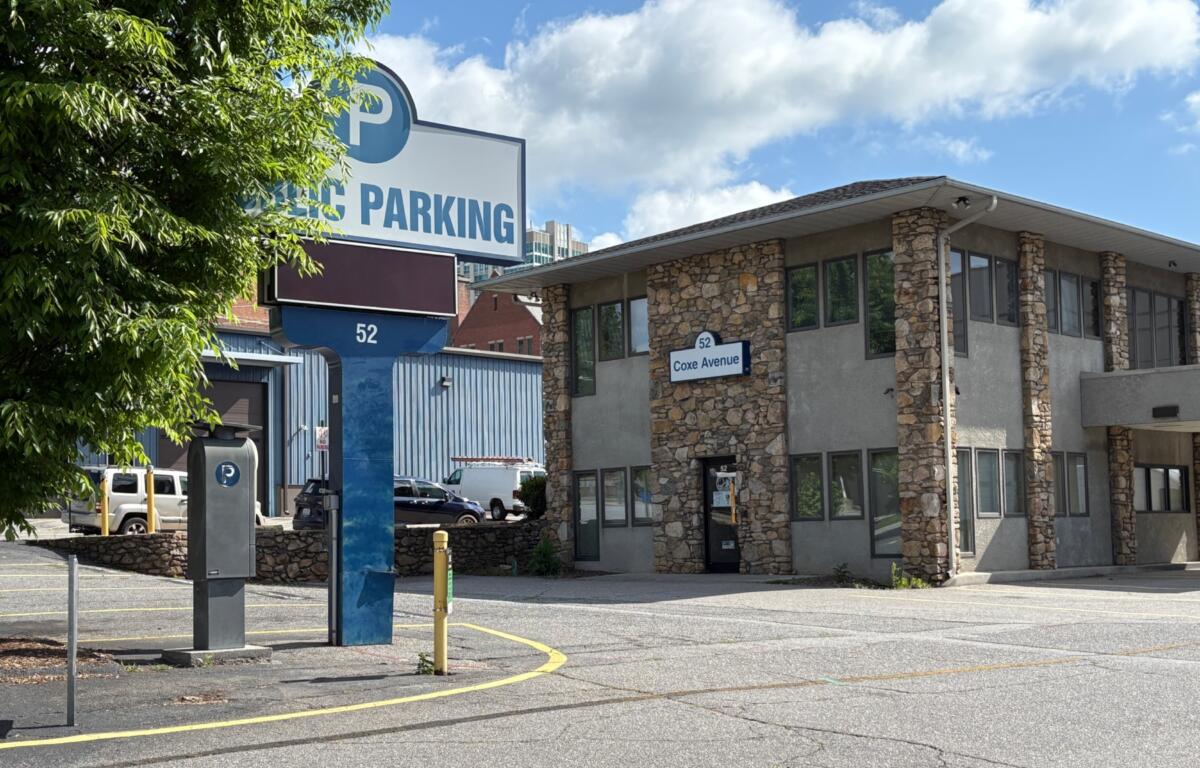

ASHEVILLE, N.C. (828newsNOW) — A planned 203-unit affordable housing development on Coxe Avenue is facing a $15 million funding gap after receiving neither state disaster-recovery funding nor Low-Income Housing Tax Credits, while other Western North Carolina counties received millions of dollars through the same housing funding process.
Buncombe County commissioners got a closer look Tuesday at how Community Development Block Grant-Disaster Recovery money was distributed for affordable housing following Tropical Storm Helene.
The numbers showed wide differences in the amount of CDBG-DR funding awarded to counties.
Buncombe received $1.7275 million for 60 affordable housing units, according to the county presentation. That was 2.5 percent of the $69.14 million in CDBG-DR funding awarded through the state’s Low-Income Housing Tax Credit process.
Haywood County, by comparison, received $10.5544 million for 60 units. Burke received $13.3475 million for 144 units, while Transylvania received $12.6719 million for 84 units.
The Buncombe project receiving the $1.7275 million award is Crescent Place in Arden.
The county presentation also showed that Buncombe had 285 housing units destroyed outside Asheville based on February 2026 FEMA data — 174 owner-occupied units and 111 rental units.
The 60 units supported through the state process represent about 21 percent of all housing units destroyed outside Asheville and about 54 percent of destroyed rental units, according to the county’s calculations.
Coxe Avenue project gets no award
The numbers brought renewed attention to Buncombe’s much larger Coxe Avenue project.
The county and Harmony Housing are planning 203 affordable apartments at 50-52 Coxe Ave. The proposed development would include 151 one-bedroom, 30 two-bedroom and 22 three-bedroom units.
The affordability mix would include 46 units for households earning no more than 30 percent of area median income, 114 units at 60 percent or below and 43 units at 80 percent or below.
But the project received neither Low-Income Housing Tax Credits nor CDBG-DR funding through the state or city, according to Tuesday’s presentation.
The county lists the resulting funding gap at $15 million.
The project has already cleared a major local hurdle. Asheville City Council approved conditional zoning for the 50-52 Coxe Ave. property in April, allowing plans for a seven-story multifamily and mixed-use development to move forward. (Buncombe County)
Buncombe County began pursuing development of the county-owned property several years ago and selected Harmony Housing as its development partner after reviewing proposals from nine developers. County records show the project evolved from an earlier proposal for about 200 units to the current 203-unit plan.
A different funding picture elsewhere
The county presentation showed that Buncombe’s $1.7275 million award was the smallest CDBG-DR award among the 10 counties receiving money through the state’s LIHTC process.
The awards included:
- Burke: $13.35 million for 144 units
- Transylvania: $12.67 million for 84 units
- Watauga: $11.41 million for 93 units
- Haywood: $10.55 million for 60 units
- Ashe: $8.48 million for 55 units
- Caldwell: $3 million for 60 units
- Cleveland: $3 million for 84 units
- Henderson: $2.9 million for 132 units
- Rutherford: $2.05 million for 56 units
- Buncombe: $1.73 million for 60 units
The amount of CDBG-DR funding per unit also varied considerably. Haywood’s award amounted to nearly $176,000 per unit, compared with about $28,800 per unit in Buncombe.
Those awards were announced Aug. 25. The corresponding LIHTC awards for the projects receiving CDBG-DR through the 4 percent process are expected to be announced by the North Carolina Housing Finance Agency in early 2027, according to the county presentation.
The county presentation also compared CDBG-DR-supported units with housing destroyed by Helene. Some counties received funding for substantially more units than the number of homes FEMA had identified as destroyed, while Buncombe’s supported units represented a smaller share of its documented losses.
What’s next for Coxe Avenue
The Coxe Avenue project is not being abandoned.
Buncombe County and Harmony Housing are working together to determine whether additional CDBG-DR opportunities become available through the North Carolina Department of Commerce, the state’s Division of Community Resources and the North Carolina Housing Finance Agency, or through the city of Asheville.
They are also looking at other sources of capital, possible reductions in project costs and alternatives that could reduce the $15 million gap.
Harmony Housing plans to submit applications for other funding sources and for the 4 percent Low-Income Housing Tax Credit program, including the October or January application windows, according to the county presentation.
The project is part of Buncombe’s broader effort to convert county-owned property into affordable housing. County officials have said the Coxe Avenue development is intended to maximize the number of affordable apartments while attracting private investment to help fill the project’s financing gap.
For commissioners, Tuesday’s presentation highlighted a continuing challenge in the county’s post-Helene housing recovery: finding enough public and private funding to build affordable units in a community where hundreds of homes were destroyed.
The county previously raised concerns about the state’s CDBG-DR plan and how disaster-recovery money would be used for affordable housing. Commissioners authorized comments on the state’s plan in March 2025 as the state was developing its recovery program.
| County | CDBG-DR | Units | CDBG-DR per unit |
|---|---|---|---|
| Burke | $13.35M | 144 | $92,691 |
| Transylvania | $12.67M | 84 | $150,856 |
| Watauga | $11.41M | 93 | $122,652 |
| Haywood | $10.55M | 60 | $175,907 |
| Ashe | $8.48M | 55 | $154,216 |
| Buncombe | $1.73M | 60 | $28,792 |