


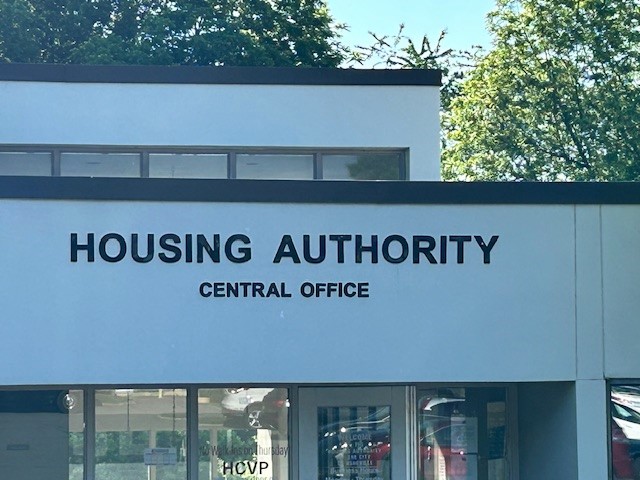

ASHEVILLE, N.C. (828newsNOW) — Some Asheville families receiving federal housing assistance will have to pay more toward their rent beginning Oct. 1 after the Housing Authority of the City of Asheville says it discovered it had been calculating subsidies using a payment standard HUD had not approved.
HACA began using a payment standard equal to 150% of Fair Market Rent in January 2025. Now, affected Housing Choice Voucher households are being moved to 120%.
For some families, that could mean finding hundreds of additional dollars in their monthly budgets.
Some tenants face hundreds more a month
Asheville-area landlord Reade Walker has five tenants affected by the change. He told 828newsNOW their assistance, including utility reimbursements, is being reduced by a combined $1,155 a month, or $13,860 a year.
Individual households face increases of about $174 to $284 a month, Walker said.
Several tenants have already contacted him worried about how they are going to manage the added expense.
HACA doesn’t dispute that some families will see significant increases.
In an example provided to 828newsNOW, the authority described a one-person household earning $18,000 a year and renting a one-bedroom apartment for $1,800 a month. Under the 150% payment standard, the tenant’s share would be $359. At 120%, it would climb to $536 — $177 more each month.
The actual impact will vary depending on a family’s income, rent, utility allowance and unit size.
How did HACA get here?
The possibility of increasing HACA’s payment standard to 150% was under consideration while former President and CEO Monique Pierre was still leading the agency.
An Oct. 23, 2024, HACA board resolution approved payment standards at 120% of Fair Market Rent and said the authority could go as high as 150% if HUD approved the higher standard.
HACA says Pierre and other members of the agency’s previous leadership told staff that HUD approval was being sought for the higher standard in response to Tropical Storm Helene.
“At the time, executive leadership, spearheaded by former CEO Monique Pierre, informed staff that HACA was requesting HUD approval for the higher standard in response to Hurricane Helene and directed staff to begin using it in subsidy calculations,” spokesperson Lauren Stepp said in a written response to 828newsNOW.
Pierre’s attorney, Corey B. Atkins, said the 150% standard was proposed because Helene had reduced housing opportunities and the higher amount was intended to give voucher holders more housing options.
He also pointed to the role of HACA’s board in approving agency proposals.
“Any resolutions and proposals have to be approved by the Board and all of that should be documented,” Atkins said in an email to 828newsNOW.
The agency’s records leave a gap in the timeline.
HACA’s board terminated Pierre on Nov. 7, 2024. HACA says it did not begin using the 150% standard until January 2025, nearly two months after Pierre’s departure.
That leaves unanswered when the higher standard moved from a proposal contingent on HUD approval to one actually being used to calculate subsidies.
Atkins said HUD’s denial of the higher standard came months after Pierre was terminated. He also said, based on information available to Pierre, HUD provided instructions to HACA staff at that time about how to obtain approval for the higher standard.
HACA describes what happened somewhat differently. The authority says the problem surfaced in late 2025 during a preliminary audit after its current Housing Choice Voucher Program director took over in October.
HACA then asked HUD whether the 150% standard had ever been approved. According to the authority, HUD confirmed in mid-2026 that it had not.
Current HACA leadership says it did not establish or authorize the 150% standard.
HUD did not order HACA to reduce the payment standard, according to HACA. The authority says it decided to return to 120% because continuing at 150% could cause a funding shortfall and affect its ability to serve other voucher recipients and applicants.
828newsNOW contacted HUD on Sept. 24 seeking clarification about whether the 150% standard was denied or simply never approved, when HUD communicated with HACA and what guidance it provided the authority. HUD had not responded as of publication.
Beginning Oct. 1, affected households will instead be subject to a payment standard of 120% of Fair Market Rent.
HACA’s published Moving to Work materials establish a range of 80% to 120% for its standard tenant-based Housing Choice Voucher program.
The authority also cleared up confusion over references some landlords and tenants had heard to an “approved 140%” standard. That figure applies to HACA’s homeownership voucher program, which operates under a separate waiver. It does not apply to the households affected by the Oct. 1 change.
How many families are affected?
HACA says every existing household whose assistance was calculated using the 150% standard will be affected.
How many families that means is still unknown.
The authority is reviewing its accounts and says it doesn’t yet have a final count or an estimate of how much assistance will be reduced overall.
Walker also questions what happens to families who have been relying on the higher subsidy.
He pointed to HACA’s published Moving to Work policies, which generally protect an established housing assistance payment when a payment standard is subsequently reduced.
HACA says that protection doesn’t apply here because the 150% standard was never approved by HUD. The authority says the policy is meant for situations in which an approved payment standard is later lowered.
HACA also contends that assistance paid above the authorized standard constitutes an overpayment under federal regulations. HUD has not responded to 828newsNOW’s request for clarification on that interpretation.
At the same time, HACA says it technically could continue using the 150% standard under its Moving to Work authority. The authority says it has chosen not to because doing so could put the voucher program at risk of a funding shortfall.
What happens to tenants now?
There is no hardship policy specifically for families affected by the correction, according to HACA. The authority does have a separate hardship policy for households that lose income.
Tenants are receiving at least 30 days’ notice before their assistance changes.
HACA says it will monitor families whose housing costs rise significantly. If a household’s total housing costs exceed 40% of its adjusted monthly income, the authority will notify the tenant about the rent burden and discuss possible options.
The authority also says it will ask landlords to consider lowering rents when that could help keep a family in its home. If a household can no longer afford to stay, HACA says it will help the family look at other options, including moving to a less expensive home.
For Walker, those options don’t erase the immediate problem facing his tenants.
They have been paying rent based on assistance amounts calculated by HACA. Beginning Oct. 1, some will have to find an additional $200 or more each month.
And with HACA’s review still underway, the authority doesn’t yet know how many other families are facing the same problem.