


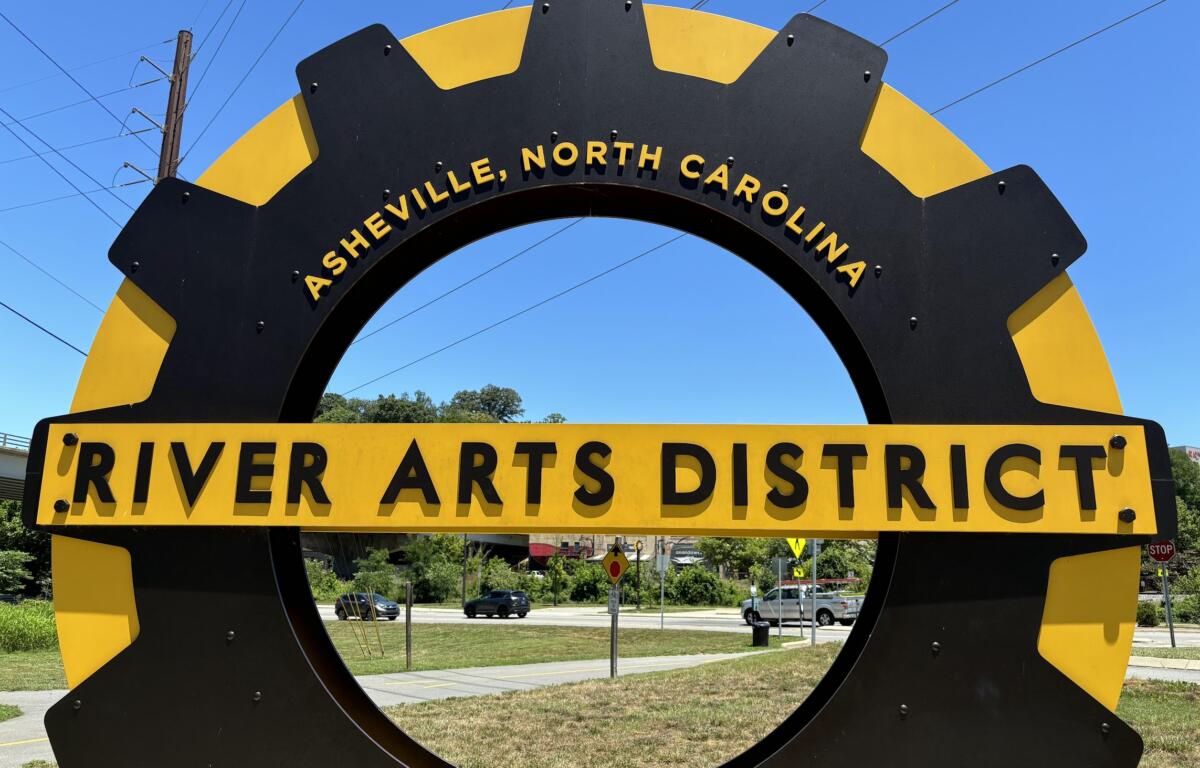

ASHEVILLE, N.C. (828newsNOW) — Two years after Tropical Storm Helene devastated Asheville’s River Arts District, city leaders are confronting a question that goes beyond replacing what the flood destroyed: What should rebuilding along the French Broad River look like?
The city has not decided to relocate the River Arts District, an idea that drew attention after a post-Helene planning group raised the possibility of moving some development away from flood-prone areas.
But recent City Council discussions show Asheville is considering how and where to reinvest in the district, how to reduce flood risk and how federal recovery money could help shape the riverfront for decades to come.
Those questions surfaced during a Sept. 24 City Council workshop on Asheville’s Revitalization of Flooded Commercial Districts program, which has $30 million in federal disaster recovery money available for areas including the River Arts District and Swannanoa River Road.
Rather than immediately moving ahead with a funding solicitation, council members asked city staff for more information about best practices, existing public investment and conditions in the two corridors.
They also wanted a broader strategy discussion before deciding how the money should be spent.
The conversation included ways to reactivate commercial areas and public spaces, improve transportation and pedestrian connections and protect businesses from displacement.
Mayor Esther Manheimer discussed leveraging the $30 million with other funding to help complete connections involving Thompson Street, Riverside Drive, Biltmore Village, Meadow Road, Amboy Road and Hillcrest.
Council members also emphasized keeping River Arts District businesses in the district. Among the ideas discussed was a commercial land trust that could help preserve commercial space as redevelopment occurs.
The discussion wasn’t about abandoning the RAD. Instead, it reflected a larger challenge Asheville faces as it directs substantial public investment back into an area that suffered catastrophic flooding during Helene.
Relocation idea drew concern
The question of whether Asheville might move the River Arts District surfaced publicly in 2025 after an Urban Land Institute advisory panel examined the city’s recovery and recommended rebuilding more resiliently.
One concept involved shifting some development away from areas most vulnerable to flooding.
The suggestion prompted enough concern that the city issued a public clarification in August 2025.
“To be clear, the City of Asheville has made no decision to relocate the River Arts District,” the city said.
Officials emphasized that the ULI recommendations were ideas for consideration, not adopted city policy.
The city also noted that much of the property in flood-damaged portions of the district is privately owned or controlled by the railroad or N.C. Department of Transportation, meaning Asheville does not control what happens on much of the land.
At the same time, city officials acknowledged that future planning would have to account for the risks posed by flooding.
Rethinking city-owned riverfront property
Some of that work is already underway on city-owned property.
At 8 River Arts Place, a city-owned building damaged during Helene, Asheville is moving forward with restoration. Design work includes looking for ways to reduce future flood hazards at the property.
The city is also developing a recovery plan for more than 200 acres of parks and recreation property along the French Broad River.
The French Broad Riverfront Parks Recovery project is examining the future of city-owned riverfront parks and other public spaces damaged by Helene.
Those projects are separate from the $30 million commercial corridor program, but together they put the city in a position to make significant decisions about how public property and public money are used along the river.
The River Arts District was already undergoing major changes before Helene.
Asheville’s River Arts District Transportation Improvement Project, or RADTIP, brought greenways, sidewalks, bike lanes, stormwater improvements, wetlands, parking and other infrastructure to the area.
Helene’s flooding damaged portions of that infrastructure along with businesses, studios, roads, parks and other property throughout the district.
Now, recovery planning is happening alongside decisions about future development and flood resilience.
$30 million decision still ahead
No city plan calls for relocating the River Arts District, and recent council discussions have included ways to help businesses remain there.
But city leaders have not yet decided how the $30 million set aside for flooded commercial corridors should be divided or what types of projects should receive priority.
Council members have asked staff to return with additional research, including information about previous public investment and strategies used elsewhere. They also want to see more of the public feedback already gathered rather than only broad themes drawn from it.
Another council strategy session is expected before the city moves into broader public outreach or begins seeking proposals for the money.
That means some of the biggest decisions about the River Arts District’s post-Helene recovery are still ahead, including how Asheville balances rebuilding a commercial and arts district along the French Broad with the continuing risk of another major flood.