


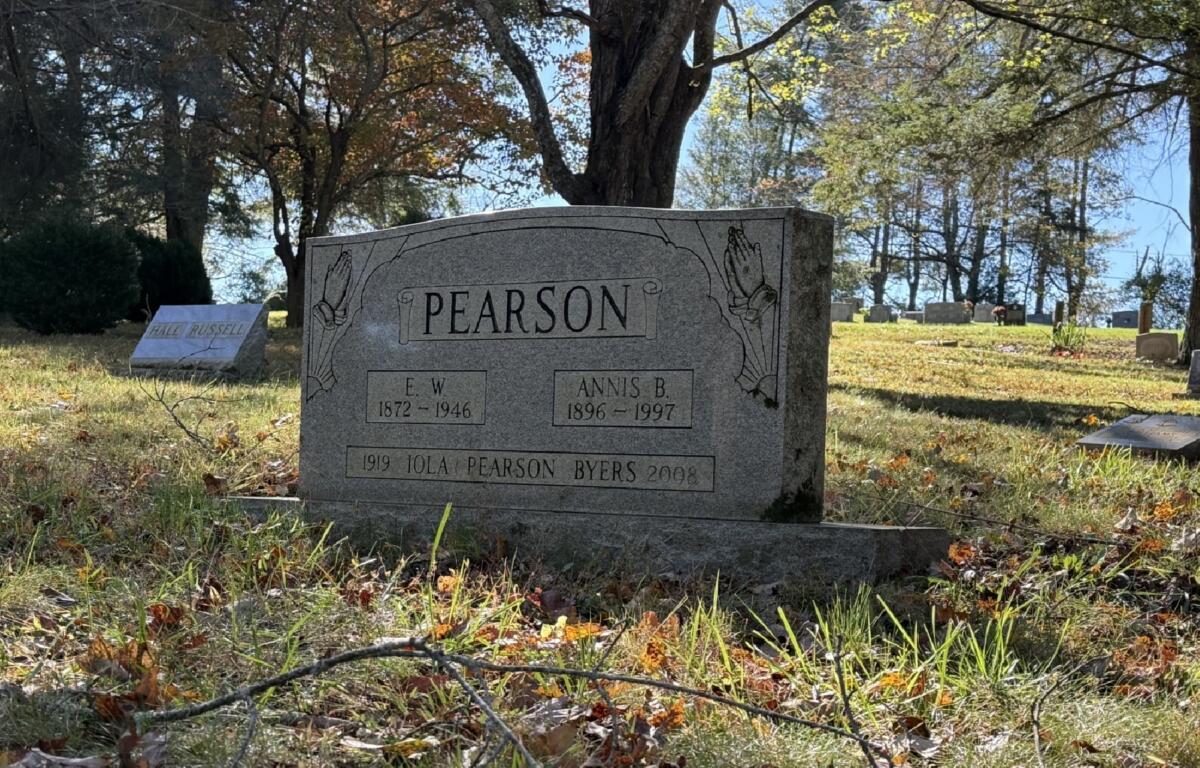

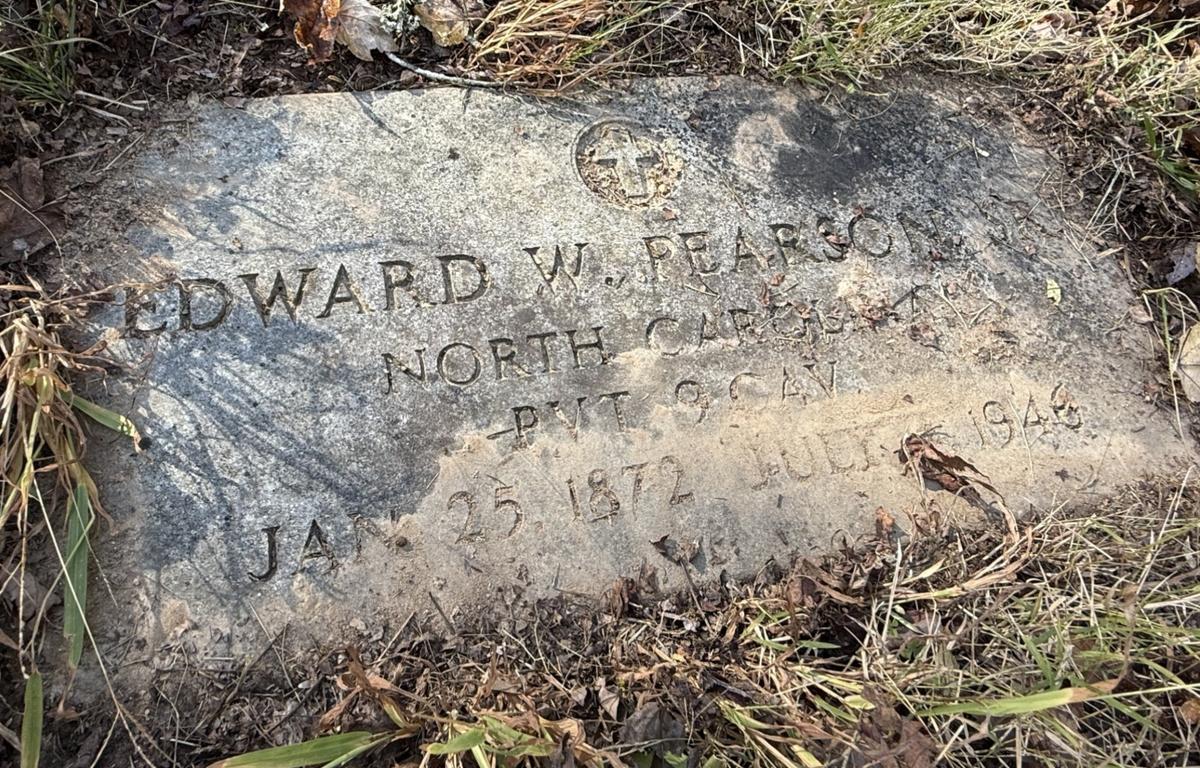
ASHEVILLE, N.C. (828newsNOW) — Two grave markers at Asheville’s Violet Hill Cemetery tell part of Edward Walton Pearson Sr.’s story.
One identifies him as a private in the 9th Cavalry, one of the U.S. Army’s historic Buffalo Soldier regiments. The other bears the names of his wife and daughter, members of a family whose influence on West Asheville lasted generations.
But neither tells the story of 50 acres of land and a father’s determination to keep his daughter in college.
In 1935, with the Great Depression making money scarce, Pearson faced a problem. His daughter Annette wanted to continue her college education, but he couldn’t afford the tuition.
So he offered the college something he did have: land.
The arrangement, preserved in letters discovered decades later, offers a glimpse of a man who spent much of his life creating opportunities for others.
A man who made his own opportunities
Pearson was born Jan. 25, 1872, in Glen Alpine, a small town in Burke County. His formal education ended after fourth grade, but that didn’t stop him from pursuing a remarkable range of interests.
He worked in Tennessee’s coal mines before joining the U.S. Army, serving with the 9th Cavalry, one of the segregated units whose Black soldiers became known as Buffalo Soldiers.
After leaving the military, he spent time in Chicago, where he continued his education through correspondence courses, studying subjects that included business, insurance and real estate.
By the time he arrived in Asheville in 1906, he had developed skills that would serve him well in a city where Black residents faced discrimination in housing, employment and business.
Pearson began buying and developing property in West Asheville. With his wife, Annis Bradshaw Pearson, he helped establish the Park View subdivision, which became part of today’s Burton Street neighborhood.
For Black families who faced restrictions on where they could live, the chance to own property meant more than having a place to call home. It offered stability, independence and something to pass along to their children.
Pearson also operated businesses, helped organize an agricultural fair for Black residents and formed the Asheville Royal Giants, a semiprofessional baseball team.
He became so closely associated with the neighborhood that he was known as the “Black Mayor of West Asheville.”
But for all his accomplishments, Pearson never forgot the importance of education.
A father’s determination
In 1935, Pearson’s daughter Annette was attending North Carolina College for Negroes, now North Carolina Central University in Durham.
She had completed her first year, but paying for another was proving difficult.
Pearson, who had built a career through determination and self-education, wanted his daughter to have the schooling he had never received.
He wrote to college President James E. Shepard and arranged to pledge 50 acres of land as security for the tuition he owed.
The correspondence became a small piece of family history, tucked away and largely forgotten.
Decades later, Pearson’s grandson, Clifford Cotton II, discovered four letters involving his grandfather and the college. Cotton shared them with Buncombe County Special Collections, which published an account of the discovery in 2014.
The letters tell a story that doesn’t appear on a monument or historical marker.
Pearson had spent years helping other families acquire property. Now he was willing to use some of his own land to help his daughter stay in school.
For a man whose formal education ended so early, the opportunity to give his child a college education clearly mattered.
A legacy beyond the grave
Pearson died July 4, 1946, at age 74.
The neighborhood he helped establish continued long after his death, although it faced its own challenges.
Road construction and urban renewal projects disrupted Burton Street in the decades that followed, displacing families and changing the community Pearson had helped build.
Still, the neighborhood endured.
Today, Pearson’s image appears on a mural at the Burton Street Community Center, and his contributions are recognized along Asheville’s Black Cultural Heritage Trail.
His family’s involvement in the community also continued. His daughter Iola Pearson Byers served for nearly three decades as director of the Burton Street Community Center.
At Violet Hill Cemetery, the Pearson family headstone bears the names of Edward, Annis and Iola. Nearby, his military marker records his service and the dates of his life: Jan. 25, 1872, to July 4, 1946.
The markers offer a glimpse of a soldier and a family whose influence reached well beyond their lifetimes.
But the letters about Annette’s tuition reveal something that a list of accomplishments cannot.
The man who helped other families put down roots in West Asheville was also a father determined to give his own daughter a better future.
And when money stood in the way, he was willing to put 50 acres of land behind that promise.