



BAT CAVE, N.C. (828newsNOW) — Somewhere in the mountains of Hickory Nut Gorge, a fortune in gold is supposedly waiting to be discovered.
Or so the legend goes.
The treasure is said to have been hidden more than two centuries ago by English prospectors fleeing an encounter with Cherokee people. Other stories link the area to the Underground Railroad and Confederate soldiers hiding weapons during the Civil War.
Whether any of those tales are true is another matter. But the cave at the center of many of them is real, and it’s remarkable enough without the legends.
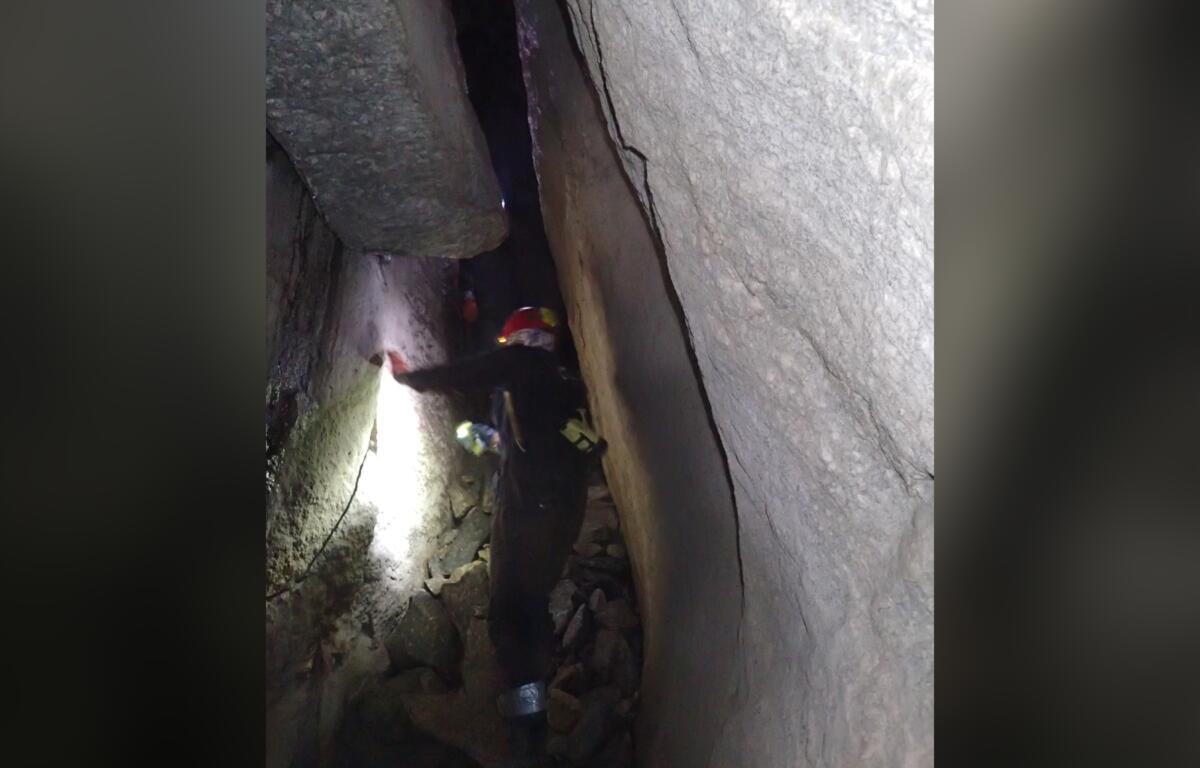
Bat Cave, tucked into the mountains of Henderson County, has nearly 1.4 miles of mapped passages. Its largest chamber measures about 330 feet long and 85 feet high.
It’s also the reason the small community along the Broad River is called Bat Cave.
The cave is protected by The Nature Conservancy and closed to the public, leaving most people to experience it through photographs, historical accounts and stories passed down through generations.
A cave that wasn’t carved by water
Most caves form when water slowly dissolves limestone, creating underground passages over thousands or millions of years.
Bat Cave formed differently.
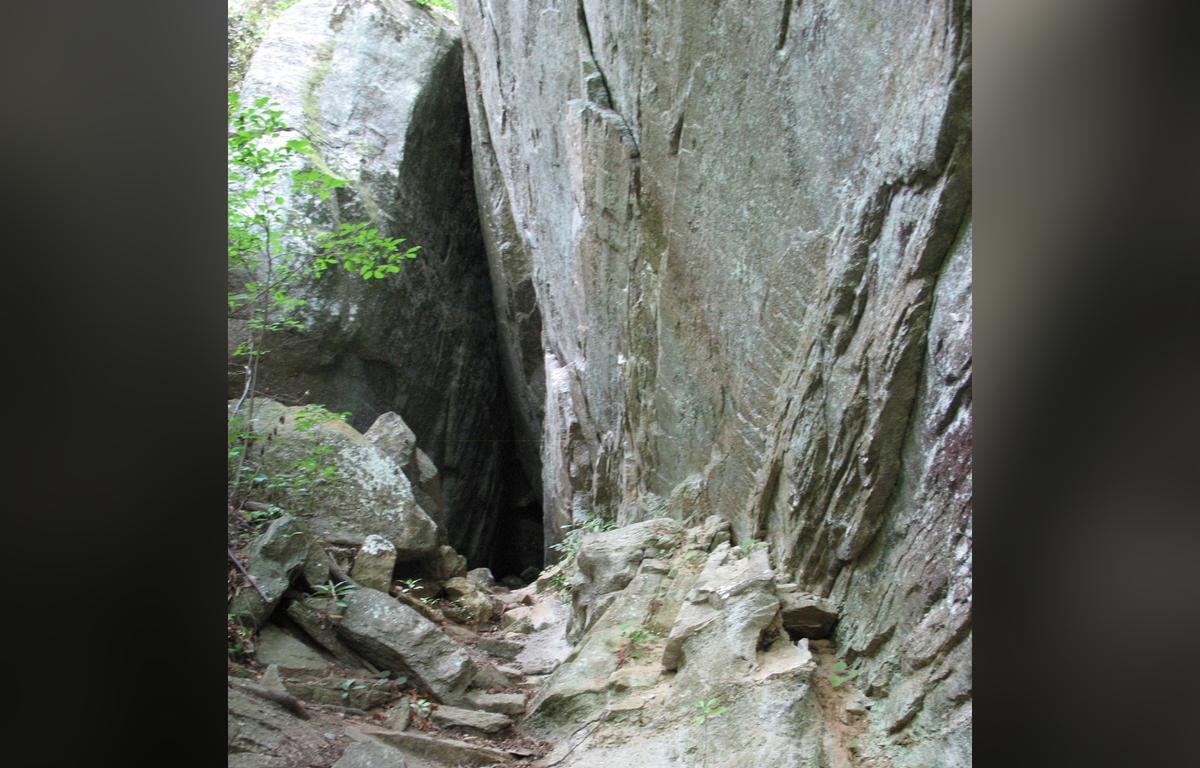
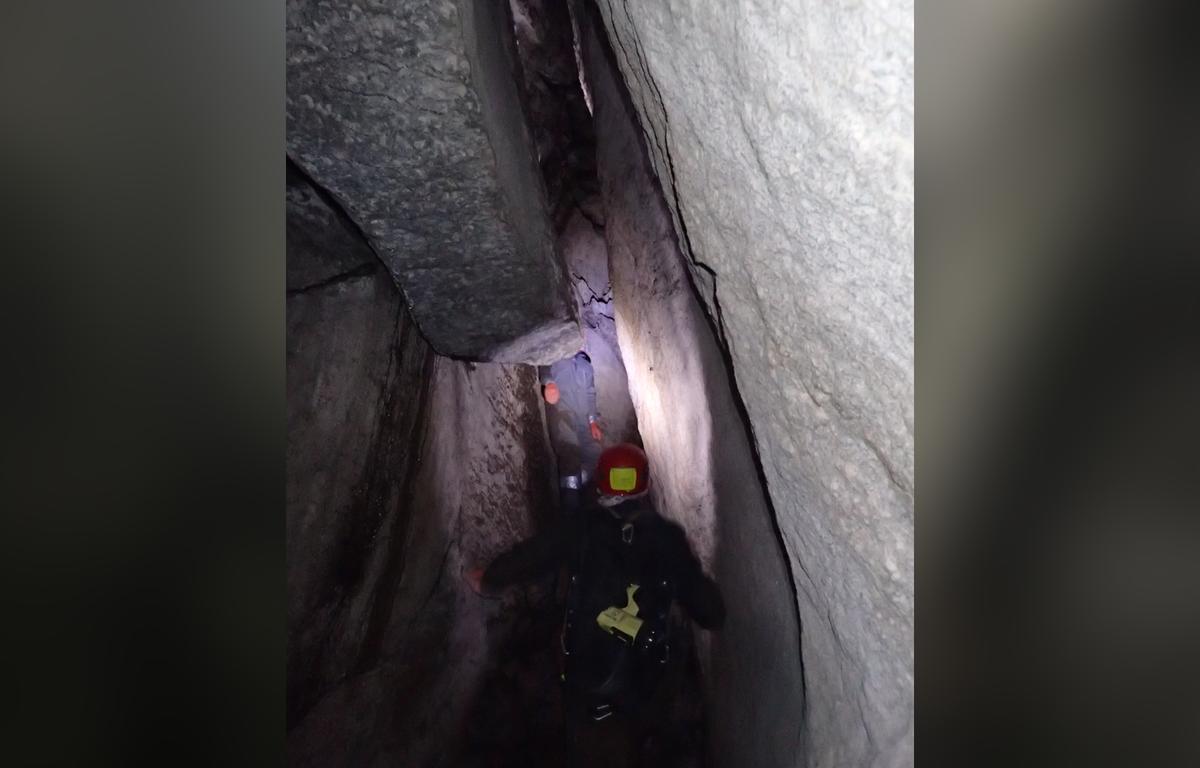
It’s a fissure cave, created when massive sections of rock fractured and shifted, leaving openings between them. The Blue Ridge National Heritage Area describes it as the largest known granite fissure cave in North America.
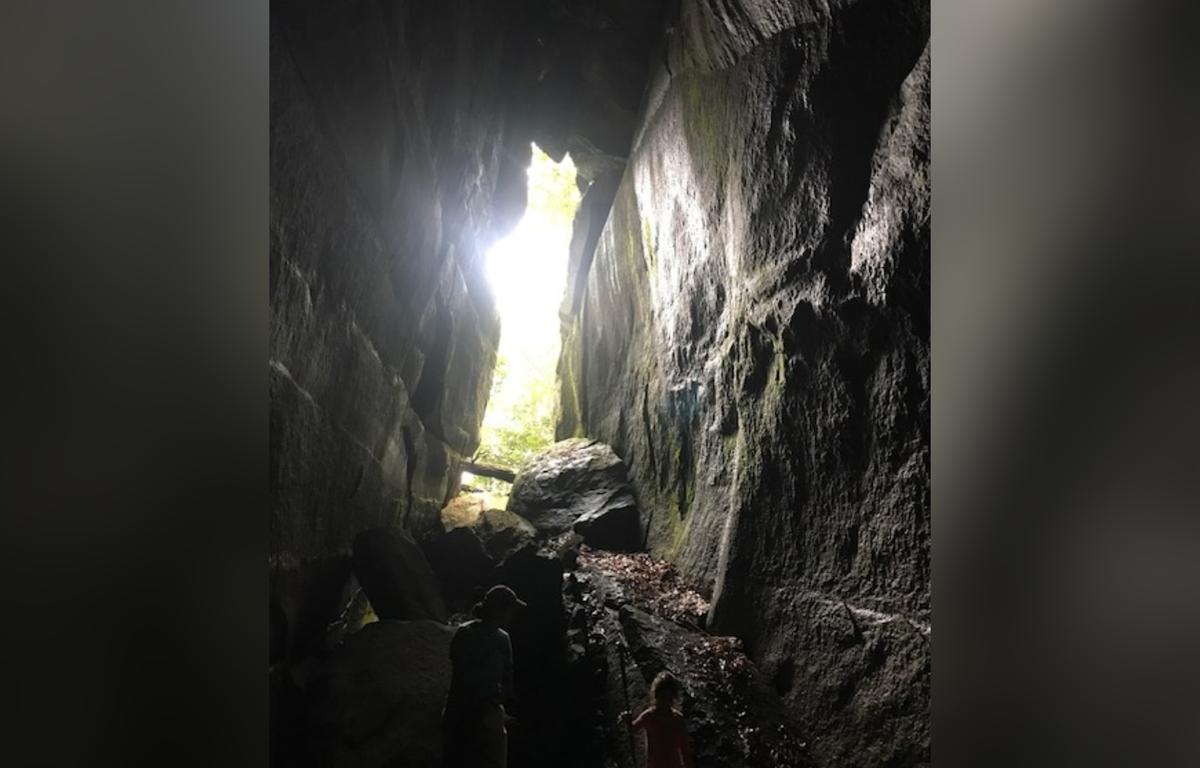
The cave’s passages wind through enormous rock formations, with narrow openings leading into chambers that dwarf the people standing inside them.
The cave’s name comes from the large numbers of bats that once sheltered inside.
According to NCpedia, the cave once supported a substantial bat population, although human intrusion over the years drove away or killed many of them.
The cave remains important habitat for bats, including the endangered Indiana bat.
The legend of the missing gold
Of all the stories associated with Bat Cave, the one involving a wagonload of gold may be the most intriguing.
One version, recounted by Hendersonville Best, dates to the American Revolution.
According to the legend, a group of English prospectors had mined gold near Chimney Rock and were transporting it by wagon to Charleston, South Carolina, where it would be shipped to England.
Along the way, the story goes, they encountered a group of Cherokee people and fled into a cave, where they buried the gold with plans to retrieve it later.
The prospectors were supposedly discovered and all but one were killed. The lone survivor escaped but never returned for the treasure.
Other versions place the missing gold near Round Top Mountain, across from Chimney Rock, rather than inside Bat Cave.
A history timeline compiled by Russ Meade of Lake Lure dates the legend to around 1770. In that version, one of the Englishmen escaped to England and later attempted to draw a map showing where the treasure had been hidden.
A separate account published by Asheville’s Applewood Manor tells a similar story, adding that the survivor had lost his eyesight and dictated the map.
The accounts differ on details, but they share the same basic mystery: A fortune in gold was supposedly hidden somewhere in Hickory Nut Gorge and never recovered.
Historian Clarence W. Griffin also wrote about a lost fortune near Chimney Rock in his 1941 book, Western North Carolina Sketches, according to the Applewood Manor account.
None of the versions establishes that the gold actually existed, much less that it remains hidden inside Bat Cave.
Civil War secrets and hidden passages
The gold isn’t the only mystery associated with Bat Cave.
Another story links the area to the Underground Railroad, the network of people and routes that helped enslaved people escape to freedom before and during the Civil War.
A local history timeline compiled by Meade describes an escape route through the Bat Cave area during the Civil War, reportedly helping people escape from a plantation near Green Hill. The account, however, does not cite documentation establishing that the cave was used to shelter freedom seekers.
A separate legend claims Confederate soldiers discovered Bat Cave while fleeing Union troops and later used its passages to hide guns and ammunition.
Like the buried-gold story, that account remains folklore rather than verified history.
In May 1946, Griffin explored the cave’s history and folklore in an article titled “History and Legend of Bat Cave,” published in The State magazine.
By then, the cave had already become one of the region’s best-known natural curiosities.
When visitors could go inside
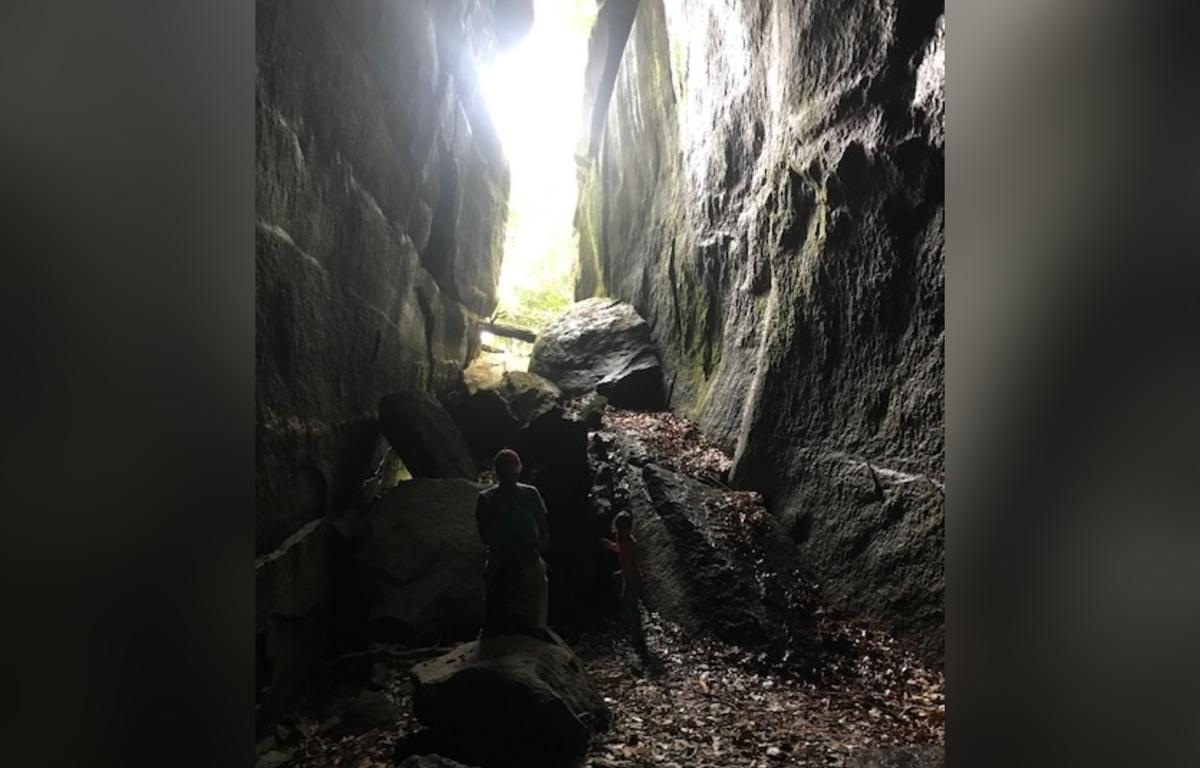
There was a time when people could explore part of Bat Cave.
The Nature Conservancy once offered guided walks through the preserve, allowing visitors to see portions of the entrance passage and a smaller chamber known as Little Bat Cave.
In May 2009, a writer for Carolina Outdoors Guide joined Nature Conservancy volunteer Dana Redfield on one of those walks.
The account describes cold air flowing from cracks in the rock, creating natural vents known as blowholes. Temperatures inside the cave hovered around 50 degrees, even when the weather outside was much warmer.
The Nature Conservancy later discontinued public hikes because of concerns about white-nose syndrome, a fungal disease that has devastated bat populations across North America.
The disease affects hibernating bats, and people can inadvertently spread the fungus between caves on clothing, shoes and equipment.
The Blue Ridge National Heritage Area confirms that concerns about the disease prompted the end of public visits.
The cave remains closed to the public today.
A brush with Batman fame
Bat Cave’s unusual name has attracted attention for reasons having nothing to do with geology or local legends.
In 1989, the release of Batman, starring Michael Keaton, reportedly brought a little Hollywood excitement to the community.
According to Hendersonville Best, people began mailing letters to the Bat Cave post office simply to have them stamped with the town’s name.
The postmark was apparently enough of a souvenir for fans of the fictional superhero, whose secret headquarters is known as the Batcave.
The North Carolina community had nothing to do with Bruce Wayne or Gotham City, of course. But it did have a real cave, and a name that suddenly sounded familiar to moviegoers around the world.
Helene changed the landscape, but not the cave
When Tropical Storm Helene swept through Western North Carolina in September 2024, Hickory Nut Gorge suffered catastrophic flooding, landslides and widespread destruction.
Bat Cave Preserve was hit hard. Trees were toppled, landslides scarred the mountainsides and floodwaters washed away the pedestrian bridge that provided the main access to the preserve.
But the cave survived.
“While the cave itself was not harmed during Helene, the surrounding Bat Cave Preserve experienced massive tree blowdown and landslides,” said Brian Parr, senior land steward with The Nature Conservancy.
“Flooding in the Hickory Nut Gorge washed away the pedestrian bridge that served as the main access to the preserve, which has made land management and conservation work more difficult.”
An assessment by The Nature Conservancy found severe deforestation across about 30% of the preserve, with moderate damage affecting the remaining 70%.
The destruction also threatened one of the region’s rarest animals, the Hickory Nut Gorge green salamander.
Found only in a small area of Western North Carolina, the salamander lives in moist, shaded rock crevices. Before Helene, scientists estimated that only 200 to 500 remained in the wild.
Bat Cave Preserve was home to one of the largest known populations.
Conservation workers collected 25 salamanders for a captive breeding program at the North Carolina Zoo, with hopes of eventually returning captive-bred animals to suitable habitat in the wild.
The mystery behind the name
The bats that gave the community its name have faced threats from human activity and disease. The surrounding mountains have endured devastating floods, including the historic flood of 1916 and the destruction brought by Helene more than a century later.
But the enormous cave beneath the mountainside remains.
Its geology has been studied, its passages mapped and its history documented. The stories of buried gold and Civil War hiding places, meanwhile, continue to be passed along, even if there’s little evidence to support them.
Whether any treasure was ever buried in Hickory Nut Gorge may never be known.
For people traveling through the community of Bat Cave, the cave remains out of sight, tucked into the mountainside and accessible to most only through photographs and historical accounts.