



ASHEVILLE, N.C. (828newsNOW) — Riverside Cemetery is known as the final resting place of some of Asheville’s most recognizable historical figures. Beyond the graves of prominent residents and celebrated writers, the cemetery is also home to stories of violent crimes, unexpected deaths and lives marked by controversy.
Established in 1885 in Asheville’s Montford neighborhood, Riverside Cemetery contains thousands of graves.
Here are six stories connected to the people whose deaths drew widespread attention or shocked the community.
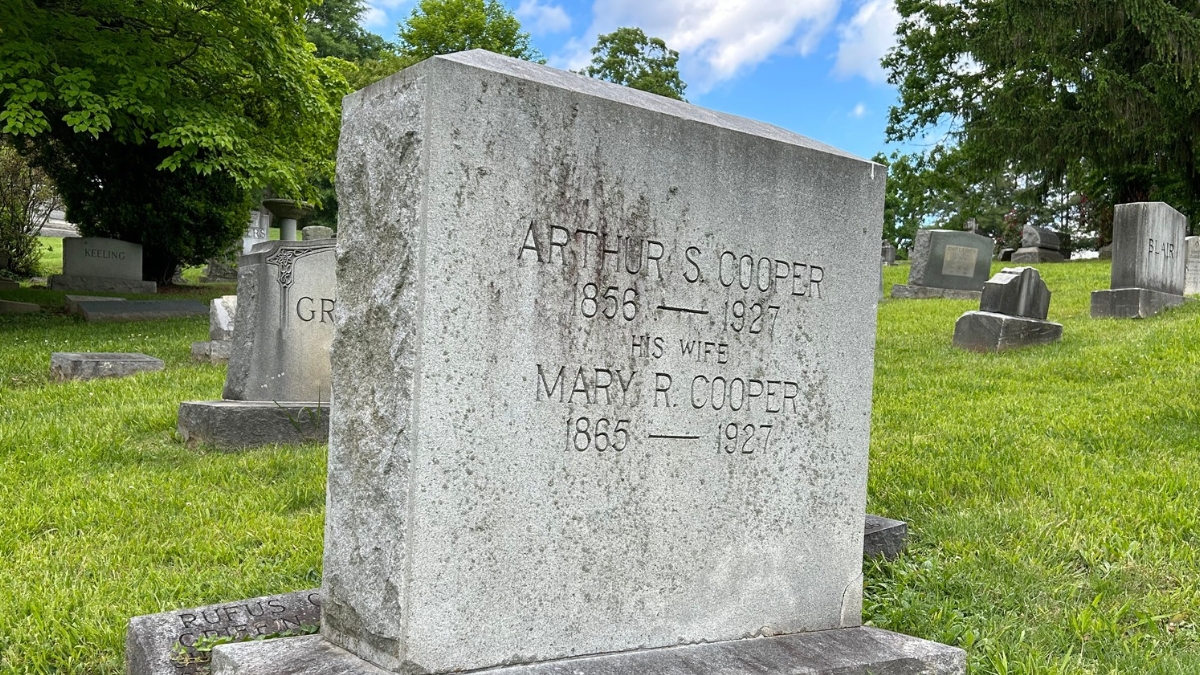
Mary Cooper: A murder on Montford Avenue
In 1927, the death of Mary Cooper, a wealthy Asheville widow, became the focus of a criminal investigation that attracted considerable public attention.
Cooper lived on Montford Avenue, not far from Riverside Cemetery. Her death led to murder charges and a trial that raised questions about the evidence presented by prosecutors.
The case became one of Asheville’s most controversial criminal proceedings. Although a conviction was secured, it was later overturned, leaving the murder without a lasting judicial resolution.
Cooper was buried at Riverside Cemetery, where her grave remains a connection to a case that generated years of legal proceedings and public debate.
The investigation, trial and lingering questions surrounding her death are explored in the Southern Mysteries podcast series, “Mystery on Montford Avenue.”
Fannie Jackson Reynolds: The headless monument
Fannie Jackson Reynolds was just 24 years old when she died of typhoid fever in 1913, a bacterial infection that could be deadly in the years before antibiotics became available.
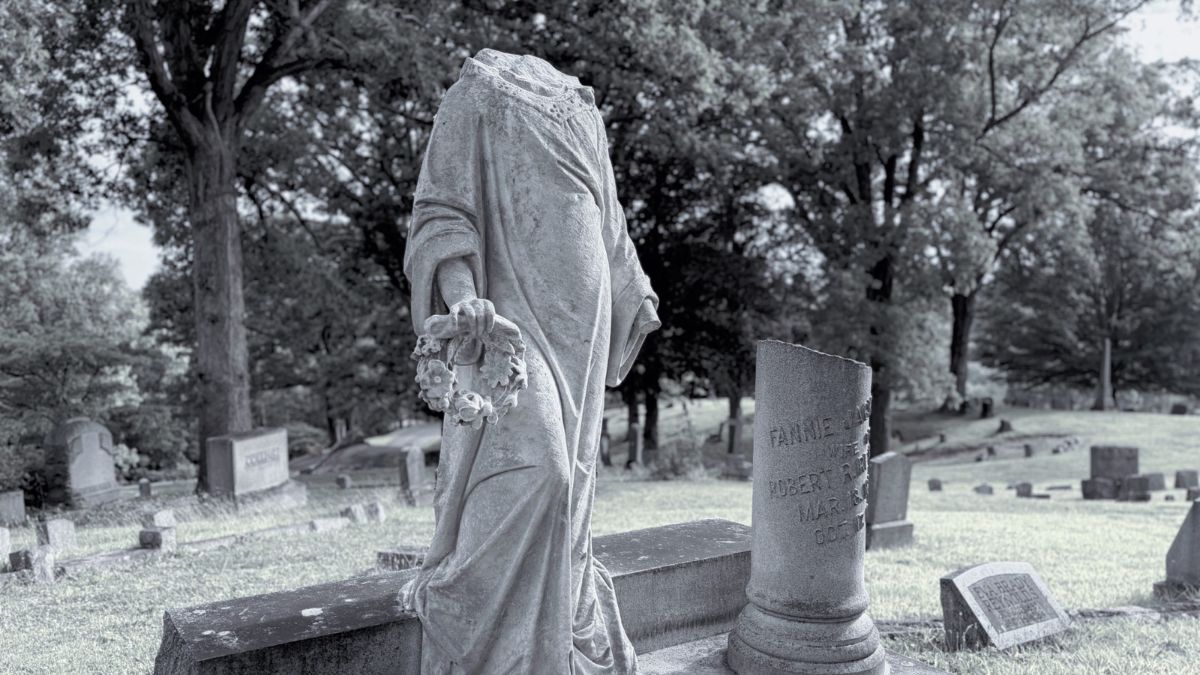
Her grave at Riverside Cemetery is marked by a stone sculpture of a mourning woman, but the figure is missing its head. The damaged monument has become one of the cemetery’s more unusual sights.
Although the circumstances surrounding the sculpture’s missing head have not been conclusively documented, the tragedy behind the memorial is known. Reynolds died young from a disease that claimed thousands of American lives in the early 20th century.
The monument remains a reminder of her brief life, even as its unusual appearance continues to attract attention.

Thomas Wolfe: Literary controversy and an early death
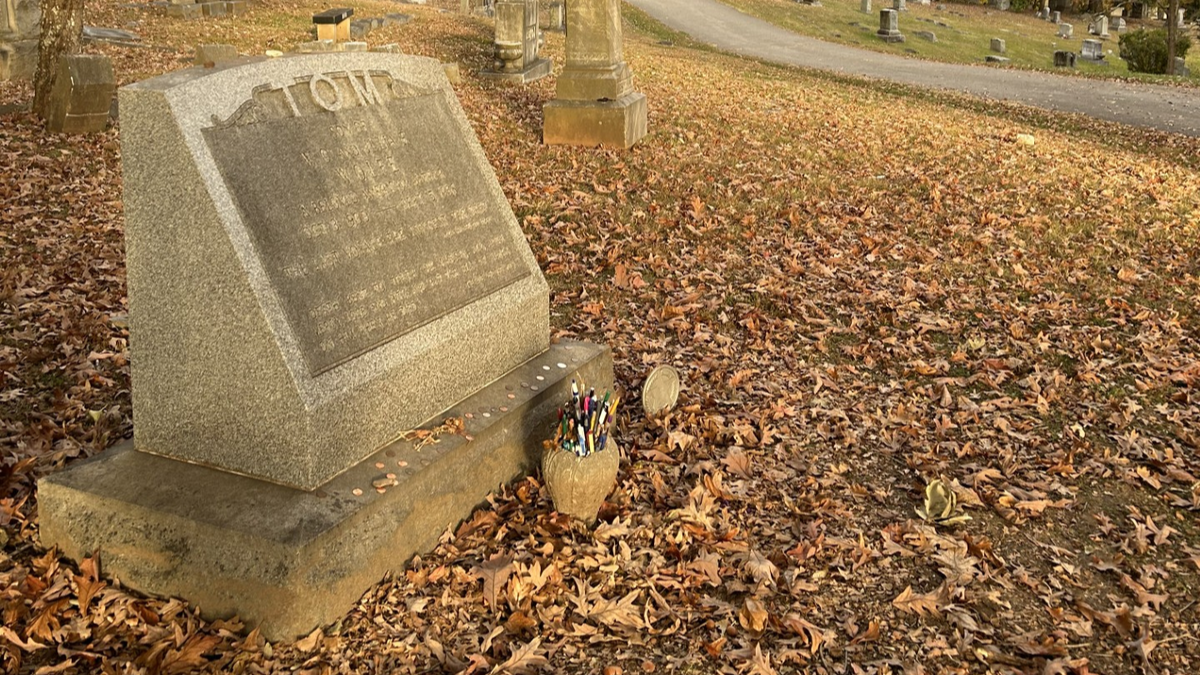
Asheville-born novelist Thomas Wolfe achieved national recognition with the publication of “Look Homeward, Angel” in 1929. The book also created controversy in his hometown.
Wolfe drew heavily from his family, neighbors and experiences growing up in Asheville. Some residents recognized themselves in the novel’s characters and objected to their portrayals.
The resulting tensions complicated Wolfe’s relationship with Asheville, although he eventually returned and began repairing some of those relationships.
His career ended in 1938 when he died at age 37 from tuberculosis of the brain.
Wolfe was buried at Riverside Cemetery near members of his family. His grave remains one of the cemetery’s best-known sites.
O. Henry: A writer’s criminal past
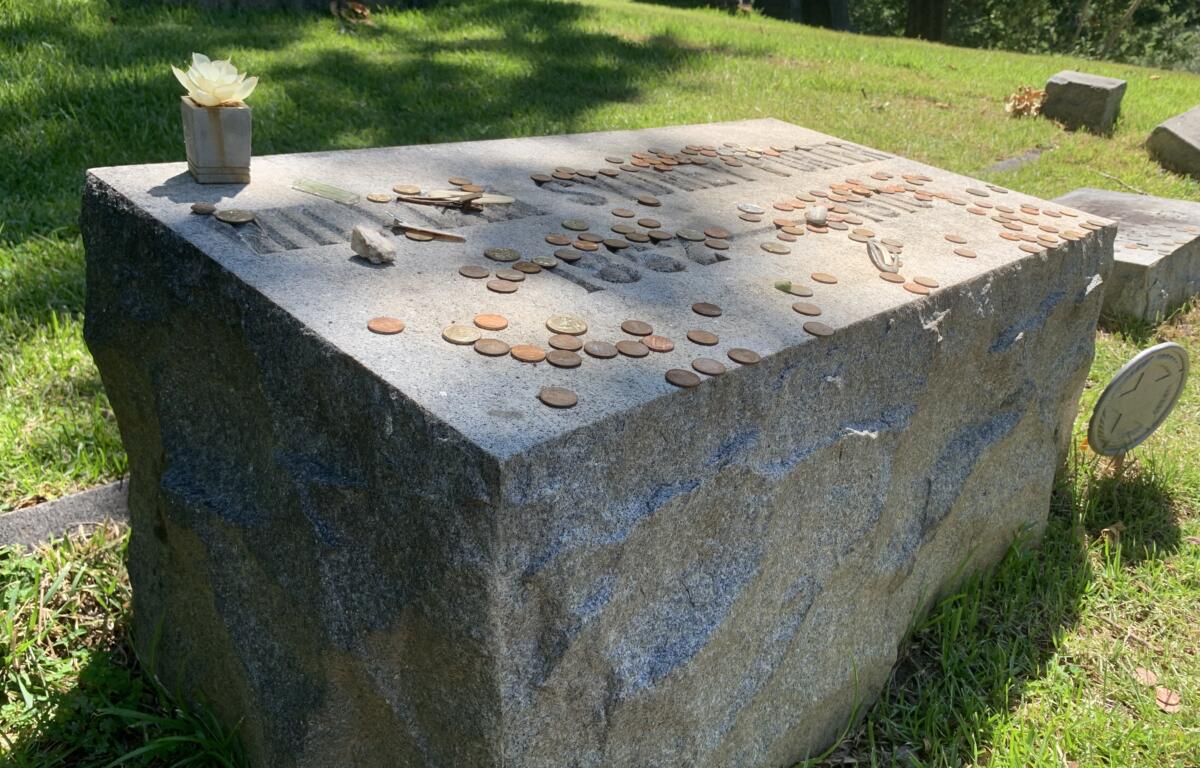
William Sydney Porter, better known as O. Henry, became one of America’s most recognizable short-story writers. Before his literary success, however, he was convicted of a federal crime.
Porter worked as a bank teller in Austin, Texas, before being accused of embezzlement. He fled to Honduras while facing prosecution, later returned to the United States and was convicted.
He served time in a federal penitentiary in Ohio, where he continued writing.
Following his release, Porter built a successful literary career, becoming known for short stories featuring irony and unexpected endings.
He died in New York City in 1910 at age 47 and was buried at Riverside Cemetery in Asheville.
Ben Addison: Killed during a deadly shooting spree
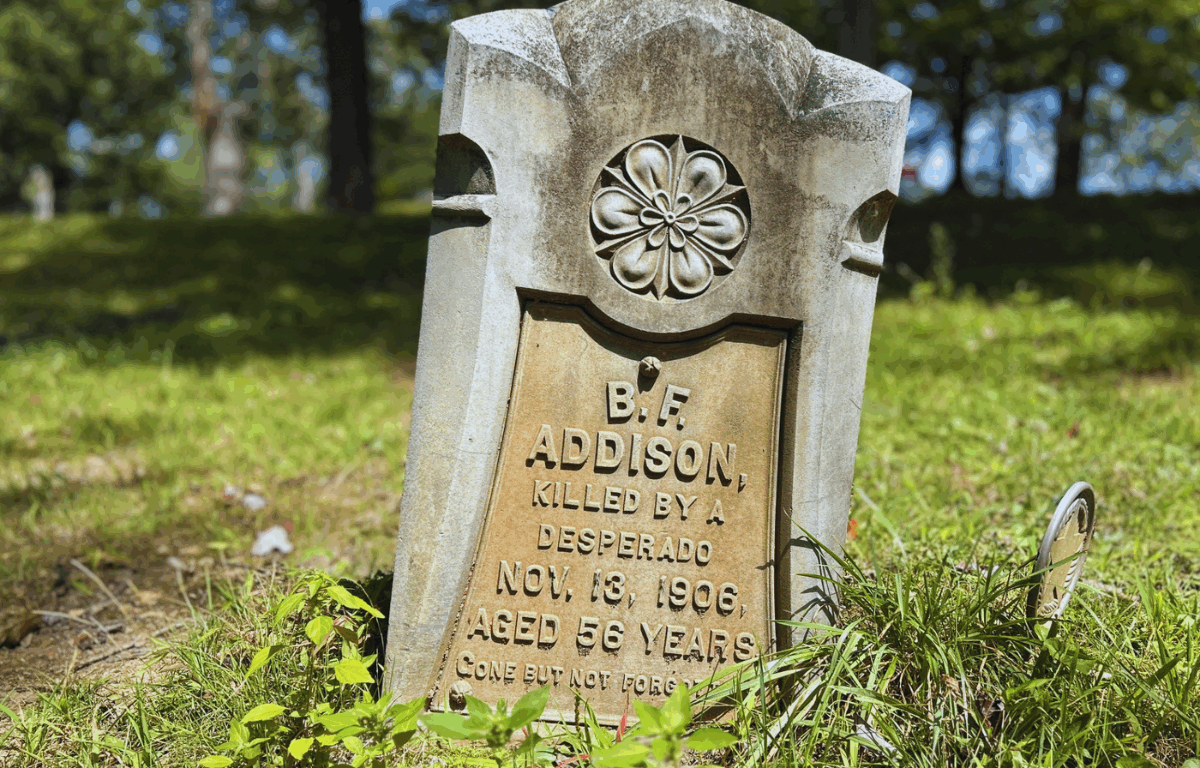
The gravestone of Benjamin Franklin Addison includes an unusually direct description of his death: “Killed by a Desperado.”
Addison was a Black businessman who operated a grocery store on Eagle Street, part of Asheville’s historic Black commercial district.
On Nov. 13, 1906, a gunman known as Will Harris carried out a series of shootings in downtown Asheville. Police officers Charles Blackstock and James Bailey were killed, along with several civilians. Addison was shot at his grocery store and died from his injuries. The violence prompted an extensive manhunt that ended two days later when Harris was located and killed near Fletcher.
Addison’s grave preserves the circumstances of his death during one of the most violent episodes in Asheville’s history.
Mary McDowell: A fatal railroad accident
Mary McDowell died in a railroad collision near Greer’s Station, South Carolina, on Oct. 20, 1887.
The accident occurred when a passenger train collided with a freight train, killing and injuring multiple people. McDowell was among the passengers who died. Her remains were returned to Asheville for burial at Riverside Cemetery.
Her gravestone bears the inscription “Entered into rest suddenly,” a brief reference to the unexpected circumstances of her death.

Riverside Cemetery and Asheville’s history
Founded in 1885, Riverside Cemetery occupies approximately 87 acres in Asheville’s Montford Historic District. The city acquired the cemetery in 1952.
Its graves and monuments reflect the lives of people from many periods of Asheville’s history, including nationally known writers, local business owners and residents whose deaths became part of the city’s historical record.
The cemetery remains an active burial ground and a place where visitors can explore Asheville’s past.
Riverside Cemetery is located at 53 Birch St. in Asheville. Visitors are asked to respect gravesites and follow cemetery regulations.