


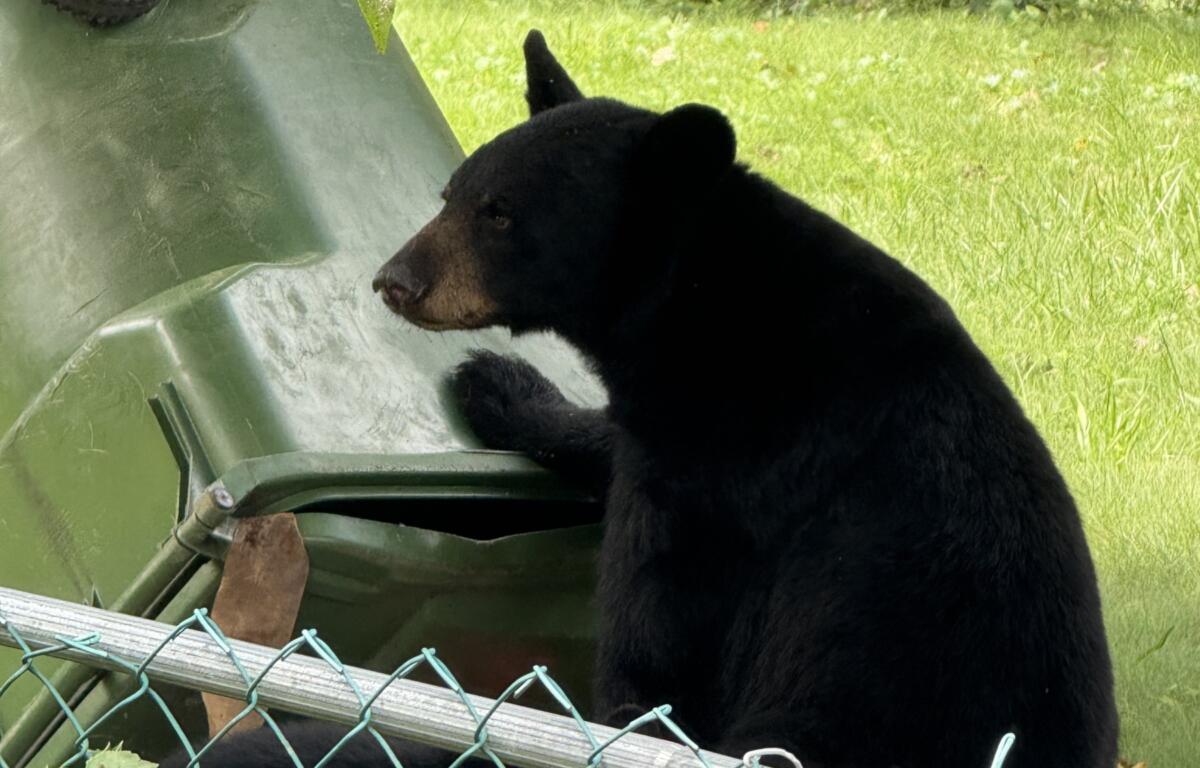

ASHEVILLE, N.C. (828newsNOW) — A new rule to reduce dangerous encounters between people and black bears takes effect Monday, Oct. 19, in Buncombe County, where wildlife officials say bears are entering homes and threatening residents at an alarming rate.
The emergency rule prohibits intentionally feeding bears or placing food and other attractants that draw them. Certain activities, including feeding birds, pets and livestock, are exempt unless wildlife officials determine they pose a danger to people or domestic animals or could cause property damage.
The rule also gives state wildlife officers new authority to enforce those restrictions.
The N.C. Wildlife Resources Commission will hold a public hearing Wednesday, Oct. 21, on a proposed temporary rule that would continue the restrictions. The hearing begins at 6 p.m. at Ferguson Auditorium at Asheville-Buncombe Technical Community College, 19 Tech Drive.
The emergency rule takes effect without a public hearing because state officials determined the growing number of dangerous bear encounters poses an immediate threat to public safety. The proposed temporary rule, which contains identical language, must go through a public comment process.
The numbers help explain the urgency.
Between May 1 and Sept. 30, wildlife officials received 836 reports involving black bears in Buncombe County, accounting for 43% of all bear reports statewide during that period.
Those reports included 71 cases of bears entering homes, 271 reports of people feeling threatened and 30 reports of bears posing a real threat to people. Two residents were injured, five pets were killed and two others were injured.
According to the Wildlife Resources Commission, 115 incidents of bears forcing their way into Buncombe County homes have been documented since 2023. Nearly two-thirds occurred between May and September this year.
In August, a bear entered an occupied North Asheville home and injured a resident. Wildlife officials said the woman was not intentionally feeding the animal, but the bear had repeatedly gotten into pet food inside the home through an unlocked door and had access to unsecured garbage outside.
The woman was treated at a hospital and released.
What the new rule means
Asheville, Black Mountain and Buncombe County already have local ordinances restricting bear feeding. But until now, state wildlife officers lacked the authority to enforce those local laws.
The emergency rule gives them the ability to take action under state regulations throughout Buncombe County.
“Wildlife Law Enforcement Officers do not have jurisdiction to enforce Asheville, Black Mountain or Buncombe County ordinances related to feeding wildlife,” Lt. Anna Barbosa, a spokeswoman for the commission’s Law Enforcement Division, said in a statement.
“This rule standardizes enforcement of bear feeding prohibitions across jurisdictions, enabling wildlife officers to use similar provisions as our partner agencies when responding to calls.”
The rule does not automatically prohibit bird feeders, outdoor pet food or lawful hunting bait. But those activities can become violations if wildlife officials determine they create a potential danger to people or domestic animals or cause property damage.
State wildlife officers can issue warnings or citations, depending on the circumstances. Violations can carry criminal consequences.
The goal, wildlife officials say, is prevention rather than punishment.
“Our priority is helping residents of Buncombe County understand how intentional feeding of black bears can create dangerous situations for both humans and bears,” Maj. Chad Arnold said when the commission approved the emergency rule Oct. 1.
Once bears discover a reliable food source, they often return. Over time, they can lose their natural fear of people and begin entering garages, vehicles and homes in search of food.
That was the concern in the August incident.
“From our active investigation, the victim was not intentionally feeding the bear, but it had repeated access to pet food inside the home through an unlocked door and unsecured trash outside,” state black bear biologist Jenna Malzahn said at the time.
Wildlife officials say repeated access to food around homes can teach bears to associate people and neighborhoods with easy meals.
Fall can make those encounters more likely. During a period known as hyperphagia, bears spend much of their time eating to build fat reserves for winter. Wildlife biologists say bears can consume 15,000 to 20,000 calories a day during this period.
Black Mountain strengthens its own rules
Black Mountain is also taking steps to discourage activities that attract bears.
Town Council voted 4-0 on Oct. 12 to amend its animal nuisance ordinance, adding civil penalties for violations involving feeding or attracting bears and other wildlife. Vice Mayor Archie Pertiller was absent.
The changes do not ban bird feeders outright. However, residents who continue using feeders that attract bears after being directed to remove them by an animal control officer could face enforcement action.
Town Attorney Craig Justus told council the maximum civil penalty would be $500, although the specific fine schedule had not been established at the meeting.
Mayor Michael Sobol questioned whether the penalties would be enough to change people’s behavior.
Council member Ryan Stone said he believed civil penalties were more appropriate than criminal penalties, but asked town staff to return with details about the fines.
The amendments are part of Black Mountain’s effort to become a recognized BearWise community, a program encouraging communities to take steps to reduce conflicts between people and bears.
Buncombe County Animal Control will enforce Black Mountain’s ordinance. State wildlife officers, meanwhile, will enforce the separate emergency rule throughout Buncombe County.
Both measures are intended to discourage activities that attract bears, but they provide different enforcement options.
Asheville residents want broader solutions
The new rules come as some Asheville residents have been urging city leaders to do more than respond to dangerous bear encounters after they happen.
At a Sept. 22 Asheville City Council meeting, three residents called for stronger prevention efforts, including better public education, more effective enforcement and wider use of bear-resistant trash containers.
Hannah Furgiele, who helped lead the campaign to save Dolly, a bear that repeatedly entered Asheville homes, urged the city to address the conditions that lead to dangerous encounters rather than focusing only on individual bears.
Liz Thompson, a longtime Beaverdam Valley resident, questioned whether Asheville’s $50 fine for unsecured garbage is enough to change people’s behavior.
Janice Riordan suggested creating designated areas where repeated bear encounters would trigger requirements for bear-resistant residential trash containers and commercial dumpsters.
Council took no action on those proposals at the meeting.
The new state rule addresses part of that larger problem by expanding enforcement authority, but it does not establish the neighborhood-wide trash container requirements residents proposed.
Wildlife experts have repeatedly warned that bears can become accustomed to human-provided food even when residents have no intention of feeding them.
Garbage, birdseed and pet food are among the most common attractants.
And not every bear encounter means someone has been feeding bears. Residents can take precautions and still find bears wandering through their yards or neighborhoods.
How residents can weigh in
The Wildlife Resources Commission is giving residents an opportunity to ask questions and comment on the proposed temporary rule.
Wednesday’s hearing begins at 6 p.m. at Ferguson Auditorium at A-B Tech in Asheville.
Residents can submit questions in advance. Wildlife officials plan to address those questions during an informational presentation at the beginning of the hearing.
Formal public comments on the proposed temporary rule will be accepted through Nov. 6.
Residents can submit comments online, email them to regulations@ncwildlife.gov or mail them to Rulemaking Coordinator, 1701 Mail Service Center, Raleigh, NC 27699-1701.
Those submitting comments by email should include their name, county and state of residence.
Wildlife commissioners are expected to consider the temporary rule at their December meeting.
In the meantime, the emergency rule allows state wildlife officers to begin enforcing the restrictions as Buncombe County communities continue looking for ways to keep bears and people safe.