



ASHEVILLE, N.C. (828newsNOW) — Two years after Helene, Western North Carolina is still rebuilding what the storm destroyed.
But some of the work underway now isn’t about putting things back the way they were.
Across the mountains, communities are changing how they prepare for floods, landslides, power outages and communications failures. Water and sewer systems are being rebuilt with flooding in mind. Landslides are being mapped. Backup power is being installed. Local governments are rethinking where emergency operations should be based and how residents will get information if cellphones and the internet go down.
In some places, the solutions involve millions of dollars and years of construction. In others, they’re as simple as a siren or a bulletin board.
Together, they reflect one of the lessons left by Helene: Recovering from the last disaster also means preparing for the next one.
Lessons from the storm
Some of those lessons were apparent before the floodwaters had receded.
Asheville began activating its storm response plan Sept. 24, 2024, days before Helene brought catastrophic flooding to the mountains. The city’s emergency operations center opened the next day, with officials coordinating high-water vehicles, search-and-rescue teams and other resources.
Asheville firefighters ultimately conducted more than 250 rescues while also helping with evacuations, clearing debris and responding to hazardous-material incidents.
Assistant Fire Chief Jeremy Knighton, who also serves as Asheville’s chief of emergency management, told 828newsNOW around Helene’s first anniversary that the storm exceeded some of the city’s planning assumptions.
“There were incidents within incidents,” Knighton said. “The complexity was off the charts.”
But he said some earlier investments paid off.
Upgrades to the North Fork Reservoir and the city’s radio communications system helped maintain critical services. Allowing supervisors in the field to make decisions based on what they were seeing also proved important when roads were blocked and conditions changed quickly.
The response also demonstrated something less technical.
Knighton credited residents who checked on neighbors and helped vulnerable people.
“The planning, the rescues and the recovery are critical, but grassroots preparedness made a huge difference,” he said. “Our commitment doesn’t stop with one storm, and neither should anyone else’s.”

A new home for Buncombe’s disaster response
Buncombe County has since made a major investment in how it will coordinate the next large-scale emergency.
The county purchased the former JCPenney building at Asheville Mall for $5 million to create its first standalone Emergency Operations Center.
The facility is intended to bring emergency management and disaster response operations under one roof, with more space for training, planning and coordinating people and equipment during emergencies. Plans also call for potentially moving Public Safety Communications, including 911 operations, into the building.
County Manager Avril Pinder directly tied the decision to the experience of Helene.
“Helene taught us that we needed to improve our infrastructure in order to better respond, manage, and maintain government operations following a disaster,” Pinder said when the project was proposed.
The former department store will require design, engineering, retrofitting and resiliency improvements. The Emergency Operations Center is expected to be ready in 2028.
Watching the mountains
Helene also changed the landscape.
The N.C. Geological Survey has mapped 13,090 landslides, work the state says will help in the development of a landslide early-warning system. The General Assembly allocated another $1 million to continue mapping landslides that threaten critical infrastructure.
North Carolina held its first Landslide Preparedness Week in August, bringing together agencies including the Geological Survey, N.C. Emergency Management and the National Weather Service.
The state also has been using new LiDAR scans — high-resolution measurements of the ground — to document changes to river channels, streambanks and surrounding terrain after Helene.
That information is being processed as part of efforts to improve flood-hazard information for storm-affected areas. Updating regulatory flood maps is a longer process requiring FEMA review.
The information could eventually influence decisions about where homes and infrastructure are rebuilt and how future projects are designed.
Preparing for rising water — and dead phones
Other communities are making changes closer to home.
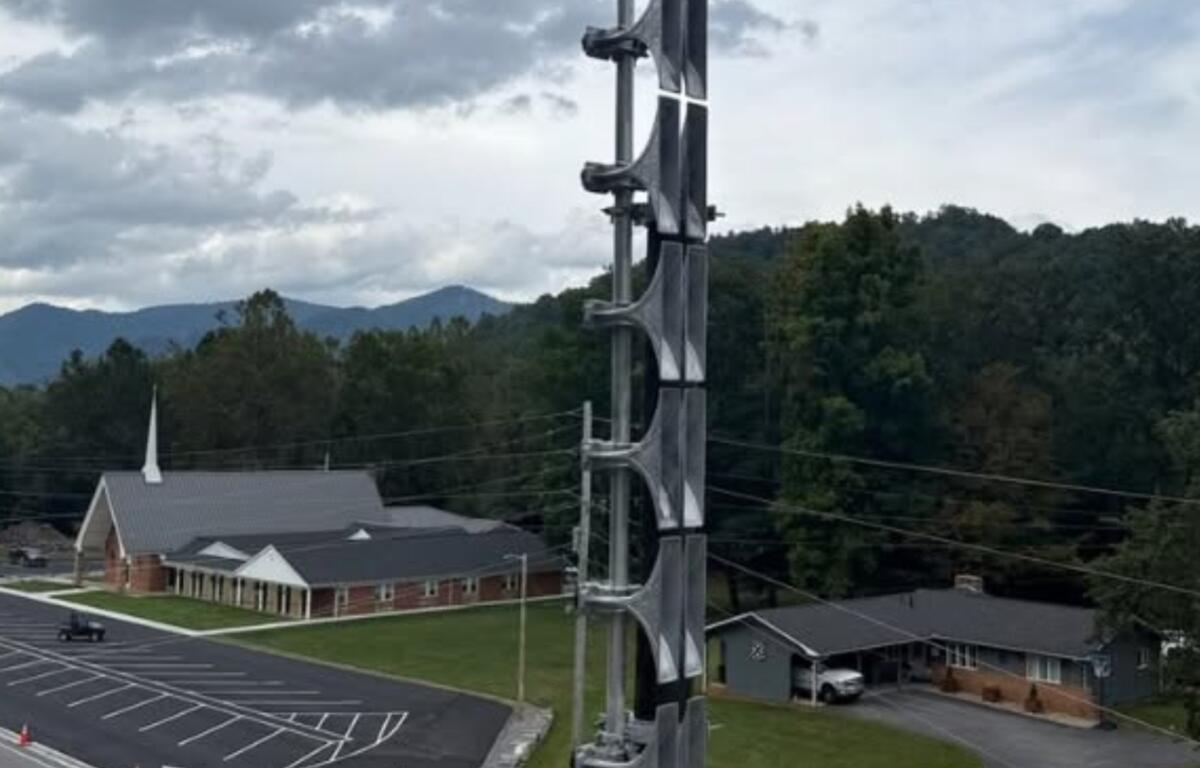
In Haywood County, new flood-warning sirens tied to upstream gauges are intended to give communities downstream more warning when rivers begin rising.
The county also has developed a decidedly low-tech backup for another problem Helene exposed: What happens when the usual ways of communicating disappear?
Cell service, internet and landlines failed across parts of Western North Carolina after the storm, leaving some residents without the tools they normally used to find information.
Haywood County has since established a network of community bulletin boards where official information can be posted during a future communications outage.
It’s a simple idea born from a complicated disaster: If the phones don’t work, residents still need to know where to go for information.
Building differently
Much larger investments are underway in infrastructure people may rarely notice until it fails.
The N.C. Department of Environmental Quality says it has awarded more than $1 billion in grants and loans since Helene for water and wastewater systems, flood mitigation, stream cleanup, dam safety, backup power and other recovery work.
As of July, $906 million in state and federal money had been awarded for damaged drinking water, wastewater and septic systems in 28 counties.
Those projects aren’t simply supposed to replace what existed before Helene. DEQ says they must include measures to make the systems more resilient to future flooding.
More than $10 million is also going to 19 flood-resilience projects in the French Broad River Basin.
Those projects include creating additional places to store floodwater, reconnecting floodplains and moving vulnerable facilities and infrastructure out of harm’s way.
Keeping the lights on
Helene’s widespread power outages prompted another question: How can critical locations keep operating when the larger electric grid goes down?
DEQ has awarded $5 million for permanent solar and battery-powered microgrids in six counties.
As many as 24 stationary microgrids are planned, along with two mobile units that could be deployed elsewhere in North Carolina after disasters.
Local governments are incorporating similar lessons into their planning.
The 2026 Buncombe-Madison Regional Hazard Mitigation Plan identifies flood mitigation, slope stabilization, backup power and reducing hazards from downed trees among its priorities.
Those trees remain another legacy of Helene. The N.C. Forest Service estimates about 822,000 acres of forestland were affected, with roughly $214 million in timber losses.
DEQ has awarded two $1 million grants to convert some downed trees into biochar, reducing potential wildfire fuel while producing material that can be used on agricultural land.
Recovery isn’t finished
Preparing for another disaster doesn’t mean Western North Carolina has finished recovering from this one.
Some permanent road repairs will continue for years. Families are still trying to repair or replace homes. Businesses are still recovering customers. Communities including Swannanoa, Marshall, Chimney Rock and those in Hickory Nut Gorge are still rebuilding homes, businesses and public infrastructure.
More than 1,320 tons of debris had been removed from streams in 16 counties through DEQ-funded programs as of September — a reminder that even some of the physical cleanup continues two years later.
But two years have also changed the questions communities are asking.
It’s no longer only how to rebuild, but where. Not only how to restore power and communications, but what happens if they fail again. Not only how to repair a road, bridge or water system, but whether it can better withstand the next flood.
Some answers are expensive and complicated: redesigned infrastructure, flood-hazard mapping, stabilized slopes and millions of dollars in resilience projects.
Others are remarkably simple: a siren that sounds sooner, neighbors who know to check on one another or a bulletin board where people know to look when their phones stop working.
DEQ Secretary Reid Wilson said the past two years have brought substantial progress, but acknowledged how much remains.
“While we have accomplished a lot, in many ways the work is just beginning,” Wilson said.
Helene changed Western North Carolina in ways that will be visible for decades.
Two years later, the mountains are still repairing what the storm destroyed. But recovery is increasingly about what comes next — using what Helene taught these communities to be better prepared when the rivers rise, the slopes move and the lights go out again.