


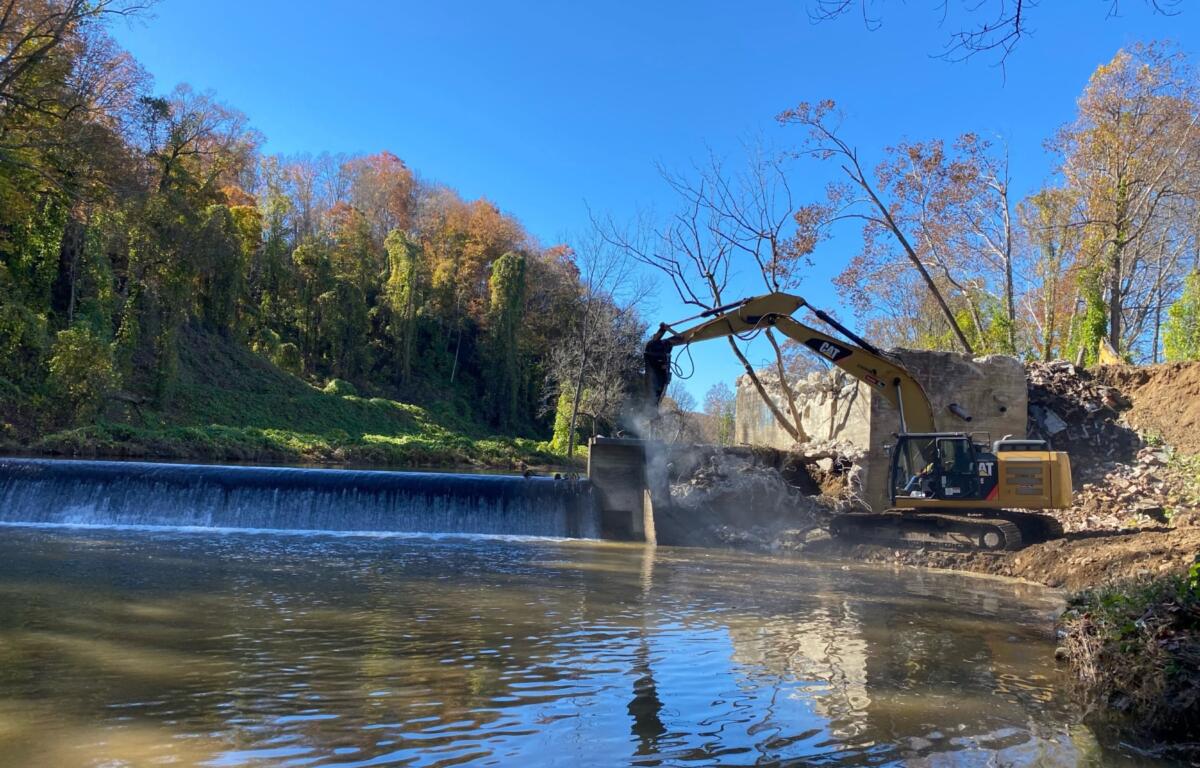

ASHEVILLE, N.C. (828newsNOW) — A decades-old dam on the Catawba River in McDowell County has been removed, reconnecting more than 200 miles of aquatic habitat and eliminating a safety hazard made worse by Tropical Storm Helene.
The Old Fort Finishing Dam, located just below where the Catawba River and West Mill Creek meet, had not generated hydroelectric power in decades. The structure was badly damaged during Helene in September 2024, raising concerns about public safety, recreation and the river’s health.
Watauga Riverkeeper announced Nov. 13 that the main dam structure had been removed after years of planning, fundraising, environmental monitoring and permitting.
The removal reconnects more than 212 miles of streams and other waterways between the Catawba River’s headwaters and Lake James, according to the conservation group.
Among the species expected to benefit are the Seagreen Darter and Brook Floater mussel, two state-listed species whose movement into upstream habitat had been blocked by the dam.
The removal opens the possibility for those species to move into upstream habitat that had been inaccessible.
The removal is also expected to improve flood resilience for Old Fort and communities downstream, according to the conservation groups.
The dam had posed a hazard to people using the Upper Catawba River, particularly after it was damaged during Helene.
Conservation groups say removing the structure should make recreation safer along the Catawba River Blueway and Blue Ridge Snorkel Trail, which offer opportunities for paddling and exploring the river’s aquatic life.
The project brought together several organizations, including Catawba Riverkeeper, MountainTrue’s Watauga Riverkeeper program, the North Carolina Wildlife Resources Commission, American Rivers, Wildlands Engineering and the National Fish and Wildlife Foundation.
Catawba Riverkeeper celebrated the removal in a social media post, calling it a win for the river’s ecological health and public safety.
The project is one of several developments drawing attention to aging dams and fish passage across Western North Carolina.
On the Swannanoa River in Asheville, Helene partially washed out Lake Craig Dam, creating an opening that allowed native fish to reach upstream habitat blocked for more than a century. Wildlife researchers have since documented fish moving into previously inaccessible areas.
The future of another aging dam remains under discussion in Buncombe County. Environmental and recreation groups have urged the Metropolitan Sewerage District to consider removing Craggy Dam on the French Broad River in Woodfin, citing potential benefits for fish passage, recreation and public safety.
Back in McDowell County, the Old Fort project is not yet finished.
Although the main dam structure is gone, crews still must remove the remaining mill building structure, restore streambanks and plant native vegetation to help stabilize the riverbanks.