



ASHEVILLE, N.C. (828newsNOW) — North Carolina is getting another $873 million in federal funding to help repair roads and bridges damaged by Tropical Storm Helene, providing a boost to Western North Carolina’s recovery more than two years after the storm.
The money is part of more than $1.6 billion in emergency relief funding announced Monday, Oct. 19, by U.S. Transportation Secretary Sean Duffy. North Carolina will receive more than half of the funding being distributed to 34 states, the District of Columbia and four U.S. territories.
The announcement came the same day Vice President JD Vance visited Hendersonville, where he told supporters that additional federal money would help rebuild major transportation routes damaged by Helene.
“We’re going to rebuild eight major corridors destroyed by Hurricane Helene, including, of course, the I-40 and Pigeon River Gorge,” Vance said during the campaign event.
Vance cited $858 million in additional disaster relief funding, slightly less than the $873 million announced by the Department of Transportation. The reason for the difference was not immediately clear.
Helene swept through Western North Carolina in September 2024, triggering catastrophic flooding and landslides that washed away roads, destroyed bridges and left some communities cut off for days or weeks.
According to the U.S. Department of Transportation, the storm damaged more than 9,000 transportation sites and caused more than 1,400 road closures across the region.
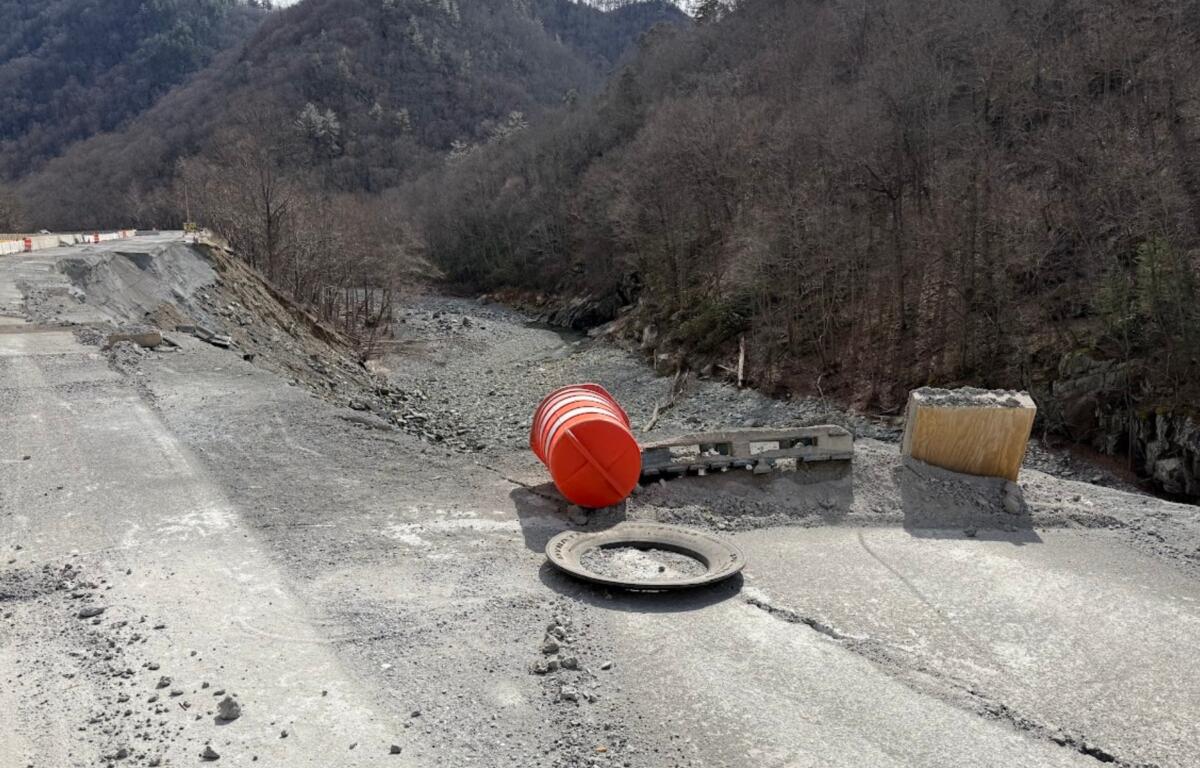
Among the hardest-hit routes was Interstate 40 through the Pigeon River Gorge near the Tennessee state line, where floodwaters washed away sections of the highway.
The N.C. Department of Transportation has been rebuilding the damaged interstate, with a goal of restoring four lanes through the gorge by 2029.
“USDOT is working diligently to deliver dollars needed to rebuild critical transportation and infrastructure links across American communities impacted by catastrophic natural disasters,” Duffy said in announcing the funding.
The money comes through the Federal Highway Administration’s Emergency Relief Program, which helps states pay for transportation repairs following disasters such as flooding and landslides.
Gov. Josh Stein welcomed the announcement, saying rebuilding transportation connections remains essential to the region’s recovery.
“Rebuilding western North Carolina means restoring the roads and bridges that connect our communities and help families and businesses move forward after Hurricane Helene,” Stein said in a social media post.
The latest allocation follows substantial federal assistance already directed toward Helene-related transportation repairs.
In September 2025, the federal government announced $1.15 billion in emergency relief funding for North Carolina. At the time, federal officials said the allocation brought the state’s total emergency transportation relief funding for Helene to nearly $2 billion.
The cost of rebuilding the region’s transportation network remains considerably higher. A state recovery report estimated total transportation recovery costs at $5.8 billion as of March 2026.
Much of the region’s road network has reopened, but permanent repairs are far from finished.
In September, state officials reported that more than 99% of roads closed or affected by Helene had reopened. Only three state-maintained roads remained completely closed, although reconstruction continued at numerous locations.
Reopening a road doesn’t necessarily mean the work is finished. In some places, temporary repairs have restored traffic while crews work on permanent bridges, slopes and roadways.
That is particularly true along major mountain corridors such as I-40, where extensive reconstruction is expected to continue for several more years.
The federal announcement did not provide a county-by-county breakdown of the $873 million or identify how much would be used to reimburse work already completed rather than pay for future construction.
It also did not specify whether the latest allocation would change construction schedules or speed up repairs.
For Western North Carolina communities still dealing with the effects of Helene, those details will help determine what the latest federal funding means for the roads and bridges they rely on every day.