


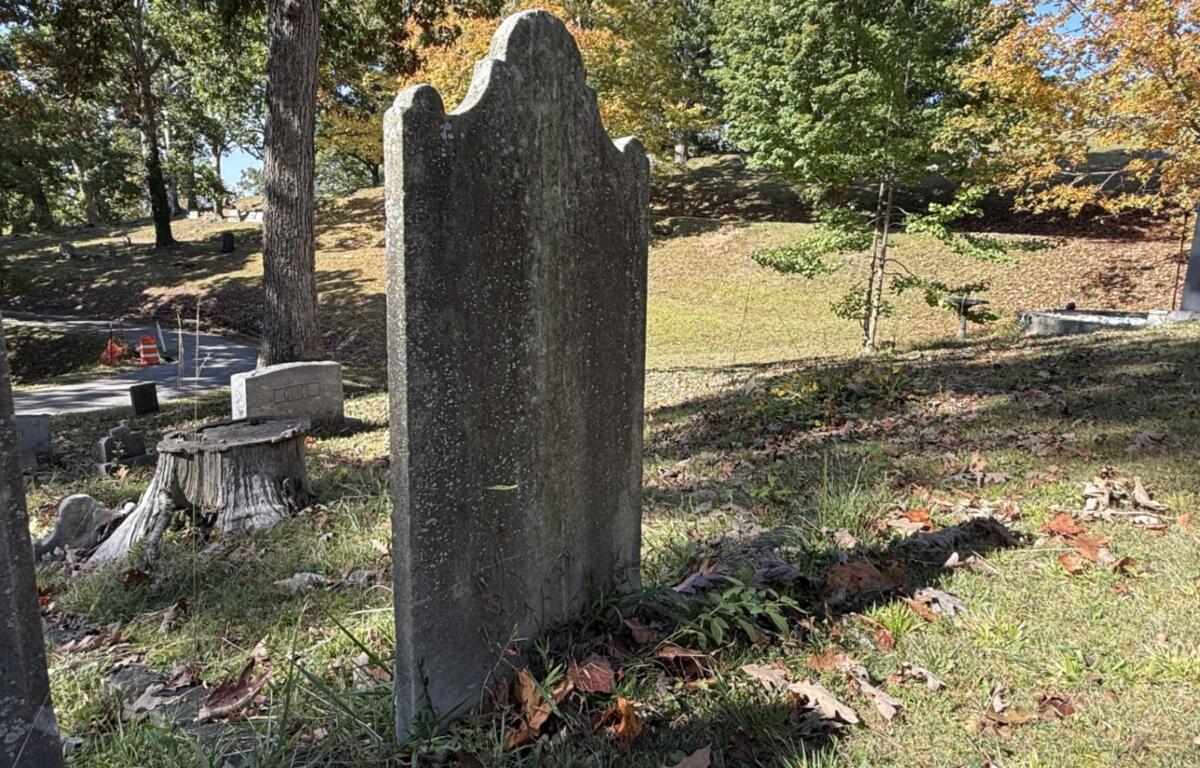

ASHEVILLE, N.C. (828newsNOW) — John Lyon was a Scottish plant hunter whose final journey ended in Asheville — but whose travels weren’t quite over, even after his death.
For years, Lyon traveled through the Appalachian Mountains on horseback, searching for plants that gardeners and collectors in Europe had never seen.
He explored the slopes of Grandfather Mountain, Roan Mountain and other parts of Western North Carolina, often spending weeks in the wilderness.
The work wasn’t easy. He sometimes went without food or shelter, lost horses and endured dangerous weather. On one occasion, he was bitten by a rabid dog and reportedly treated the wound with a hot iron.
But Lyon kept coming back to the mountains.
In September 1814, his travels came to an end in Asheville. He was 49.
His remains, however, would reportedly be moved twice before reaching Riverside Cemetery.
A Scotsman in the mountains
Born in Scotland around 1765, Lyon came to America and was working as a gardener near Philadelphia by 1796.
He eventually began collecting plants for gardeners and nurseries, making repeated trips into the Southern Appalachians.
Traveling through Western North Carolina in the early 1800s was a far different experience from visiting the mountains today.
There were few roads, and getting from one settlement to another could take days. Lyon traveled with a horse loaded with provisions and the supplies he needed to collect roots, seeds and plant specimens.
He ventured into remote areas, including the mountains around the Linville River and what is now the North Carolina-Tennessee border.
According to botanical research cited by Western North Carolina writer George Ellison, Lyon made seven collecting trips to the region.
He is credited with introducing 31 plants into horticulture, helping bring Appalachian plants to gardens far beyond the mountains where he found them.
Lyon also traveled to England, where American plants were in demand among gardeners and collectors.
His name lives on in the botanical world. The shrub genus Lyonia was named in his honor, as was Chelone lyonii, a type of turtlehead.
One last look at the mountains
By September 1814, Lyon was seriously ill.
Historical accounts differ about the nature of his illness and exactly where he spent his final days. One account, recorded by Silas McDowell, places him at Asheville’s Eagle Hotel.
McDowell, who had known Lyon and accompanied him on botanical excursions, described how a Kentucky blacksmith named James Johnston cared for the ailing botanist.
According to McDowell, Johnston stayed with Lyon as his condition worsened.
Near the end, Lyon reportedly asked Johnston to help him to a window so he could watch the sunset over the mountains.
McDowell recalled Lyon looking out at the scene before saying, “Beautiful world, farewell! Friend Johnston lay me down upon my bed.”
Lyon died Sept. 14, 1814.
The account of his final moments was recorded decades after his death, so there is no way to independently verify his exact words. Still, the story has been repeated in historical accounts of Asheville for generations.
A grave that moved with the city
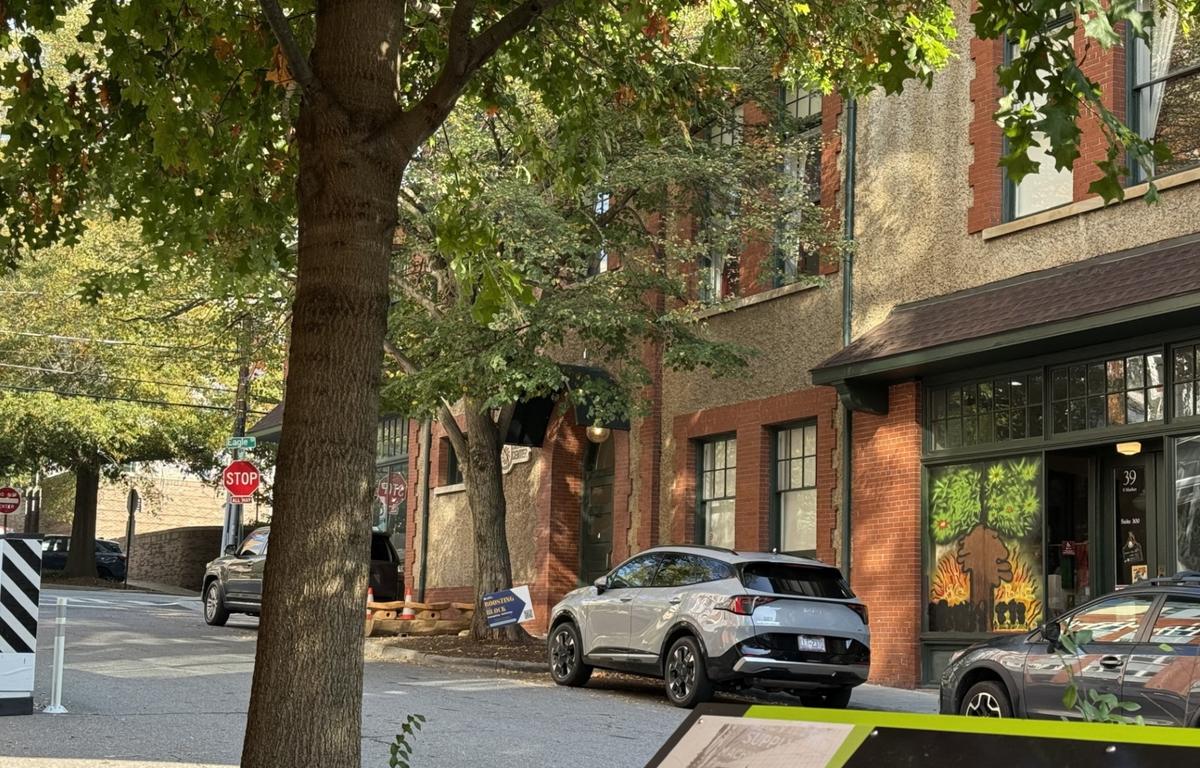
Lyon was reportedly buried first near what is now the intersection of Eagle and Market streets in downtown Asheville.
In 1814, Asheville was a small mountain town, and the streets and buildings that fill downtown today were still decades away.
Historical accounts place an early burial ground near the southeast corner of Eagle and Market streets, although its exact boundaries are uncertain.
The intersection is now part of Asheville’s historic Block district. Nothing visible there today identifies the old burial ground.
According to historian F.A. Sondley’s 1922 book, Asheville and Buncombe County, Lyon’s remains were later moved to a Presbyterian burial ground on Church Street.
That wasn’t the end of the journey.
As Asheville grew, Riverside Cemetery was established in 1885. Lyon’s remains were reportedly moved there from the Church Street burial ground.
Historical accounts do not establish exactly when either move occurred or whether a particular construction project prompted the relocations.
A stone sent from Scotland
The gravestone marking Lyon’s burial has its own history.
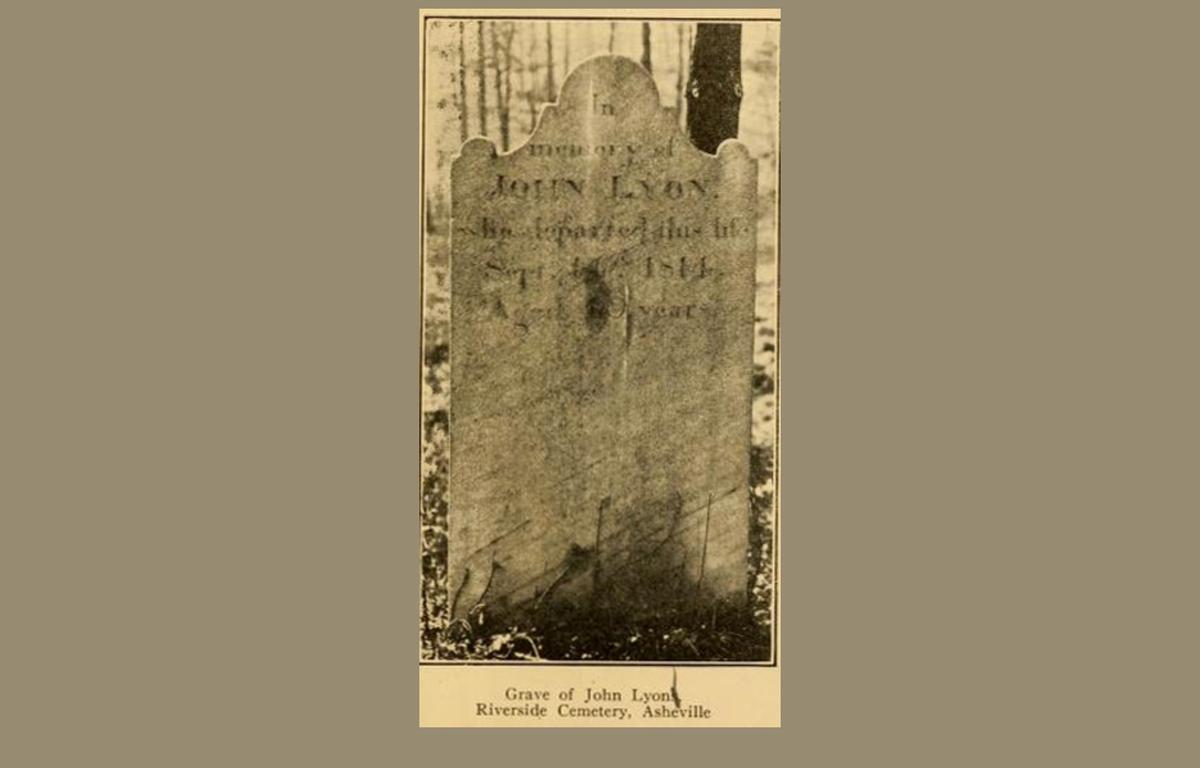
According to historical accounts, friends in Edinburgh, Scotland, sent the stone to Asheville after his death.
Its inscription reads:
“In Memory of John Lyon who departed this life Sept 14th 1814 aged 49 years.”
The stone has survived more than two centuries, although time and weather have worn away much of the lettering.
Lyon’s grave also became the site of a ceremony marking the 150th anniversary of his death.
On Sept. 14, 1964, members of the Asheville-Biltmore Botanical Gardens gathered at Riverside Cemetery to honor the Scottish botanist.
A photograph published in the Asheville Citizen-Times showed three people at the grave: Dr. I.W. Parkins, an Asheville-Biltmore College professor; Mrs. R.L. Joiner, a descendant of Lyon; and local historian D. Hiden Ramsey, who spoke at the ceremony.
The photograph also provided a glimpse of how Lyon’s gravestone looked more than 60 years ago.
Still remembered in Asheville
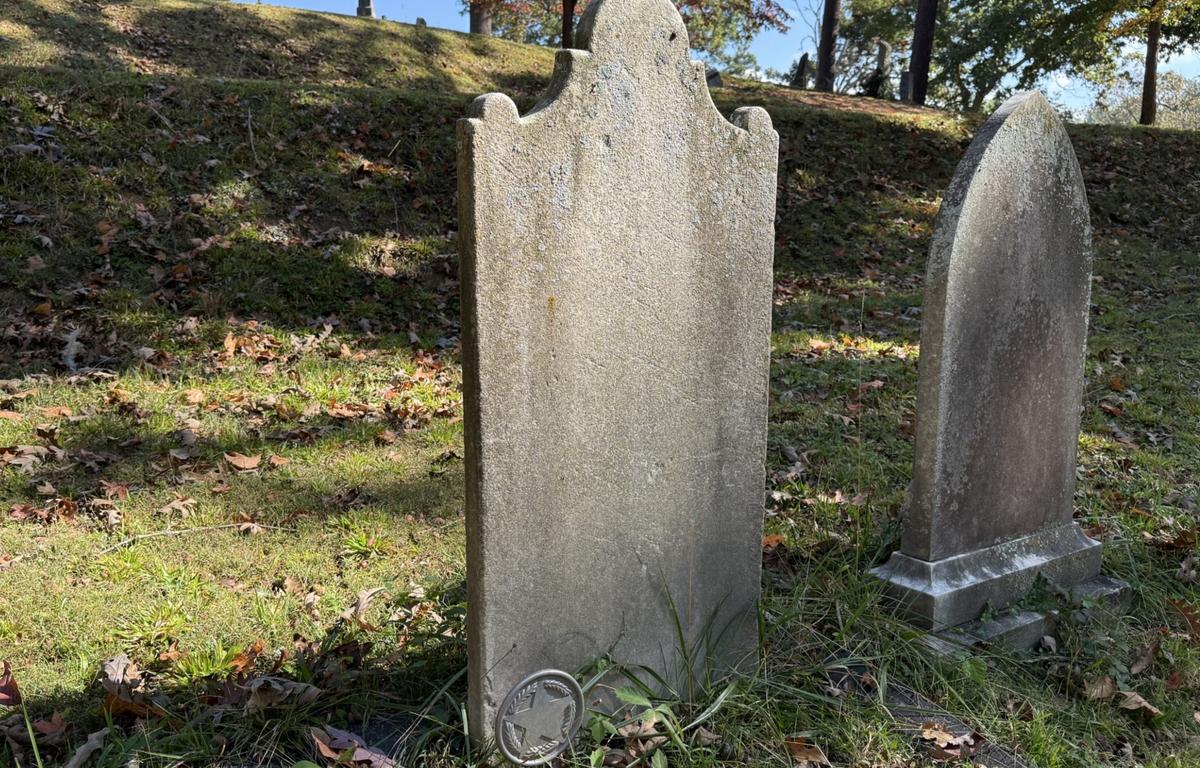
Today, the grave is in Section J of Riverside Cemetery, where records identify it as Lot 97, Grave 6.
The stone is weathered, and much of the inscription is difficult to read. But its distinctive rounded top is still recognizable in historical photographs.
Lyon’s work has lasted even longer than the lettering on his gravestone.
He helped introduce Appalachian plants to gardeners in Europe and elsewhere, and plants bearing his name can still be found today.
For a man who spent so much of his life exploring the mountains, Asheville was where his travels ended.
And more than 200 years later, his gravestone is still here, even if it took a few moves to get there.