


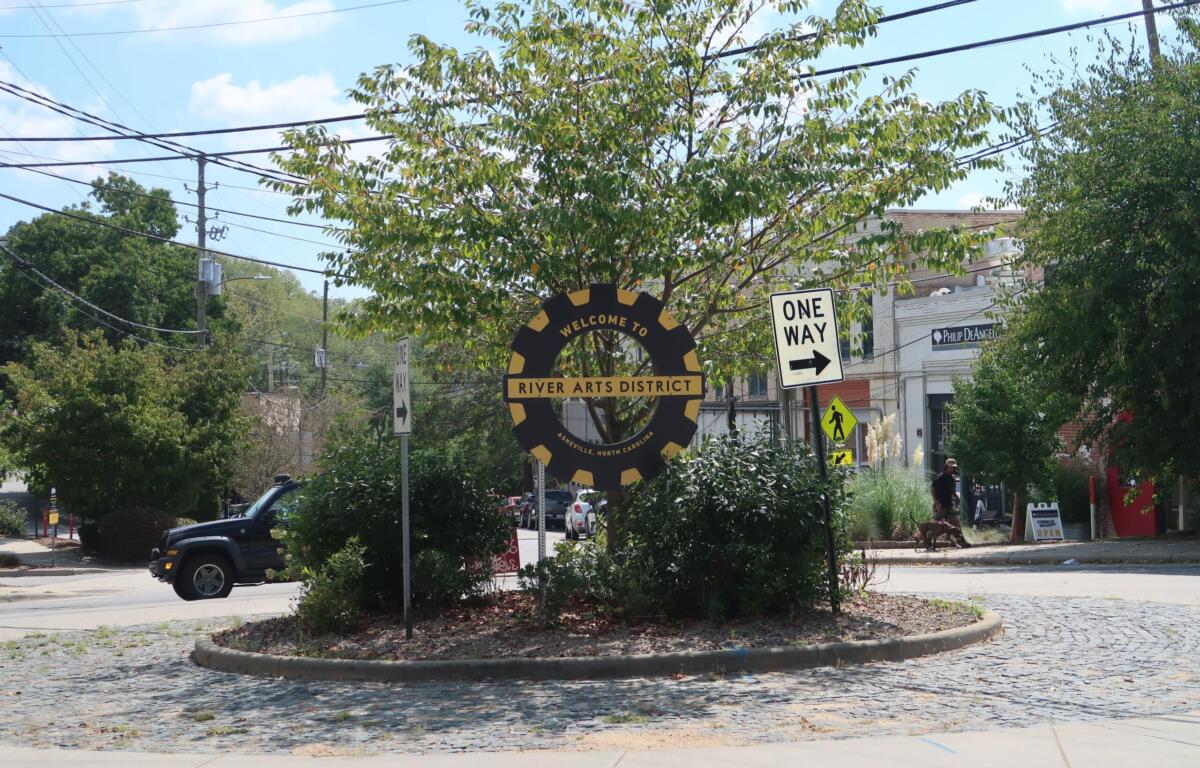

ASHEVILLE, N.C. (828newsNOW) — Two years after Tropical Storm Helene, businesses in Asheville’s hardest-hit commercial districts are still trying to recover. Now, questions about when they’ll receive additional recovery assistance — and whether the city might change how some of that money is used — are raising concerns.
During Thursday’s meeting of Asheville’s Helene Economic Recovery Board, a member questioned whether funding designated for flood-damaged commercial districts, including the River Arts District and Biltmore Village, could be redirected to other projects.
City officials said no formal changes have been proposed.
Jeffrey Burroughs, who owns a business in a flooded commercial corridor, said conversations with public officials had raised concerns that the city might consider using some of the money for purposes other than those outlined in its existing disaster recovery plan.
Burroughs, the board chair, also questioned whether the city might administer the funding rather than use the application process described in the plan.
Those possibilities, Burroughs said, could mean another round of public engagement and additional delays for businesses that are still struggling to stay open.
“Recovery is uneven,” he said, pointing out that commercial districts hit hardest by flooding are having a more difficult time bouncing back.
Burroughs said the funding is critical to sustaining those districts and expressed frustration that the state has already begun distributing money through its own recovery programs while the city’s program has yet to move forward.
City says no changes have been proposed
Charlie Savage, the city’s economic revitalization program lead for Community Development Block Grant Disaster Recovery funding, said discussions about possible changes have taken place, but nothing has been formally proposed.
Any changes to the city’s approved action plan would require a formal amendment process, including an opportunity for public comment, he said.
“We’re not going through that process yet,” Savage said.
The discussion came as the board heard updates on Asheville’s broader economic recovery and plans for a separate workforce development program.
Savage said the city intends to move forward with the flooded commercial corridors funding process before opening applications for the workforce program.
He did not provide a specific date for when businesses in the flooded districts could expect assistance.
Businesses still struggling two years later
The concerns come as many Western North Carolina businesses continue to face financial challenges more than two years after Helene.
During a separate presentation, the executive director of the Land of Sky Regional Council cited regional business surveys indicating that roughly 80% of respondents had not returned to their pre-Helene revenue levels.
The figure reflects businesses that participated in the surveys, not necessarily all businesses in the region.
The region’s job market has improved considerably since the storm, but employment has not fully recovered, particularly in hospitality and food service.
Asheville’s unemployment rate was reported at 3.3%, and the Asheville metropolitan area was tied with Raleigh for the lowest unemployment rate in North Carolina in August.
But employers continue to face worker shortages, while high housing costs, limited child care and transportation challenges make it difficult for some residents to return to work.
Those problems existed before Helene, the presentation noted, but the storm made many of them worse.
Another recovery program still months away
The board also heard details about a separate $5 million workforce development program intended to help Asheville residents train for jobs needed during the recovery.
The program would focus on construction, plumbing, electrical work, heavy equipment operation, environmental restoration and other fields.
Rather than distribute money directly to individuals, the city plans to work with nonprofits, educational institutions and other eligible organizations to provide training.
A program manual is expected by the end of December, but the city does not anticipate seeking applications from organizations interested in administering the program until the second half of 2027.
Officials did not provide a date for when residents could begin receiving training.
Savage said the city wants to use lessons learned from its other recovery initiatives, including the small business support program and flooded commercial corridors program, to help shape the workforce initiative.
A board member questioned whether possible changes to the commercial corridors program could delay the workforce effort.
Savage said the city still expects to open the workforce program’s funding process in the second half of 2027, even if discussions about potential changes to the commercial corridors program continue.
‘Who will be the people that will still be here?’
As the meeting drew to a close, the conversation returned to the businesses and residents still waiting for recovery assistance.
One board member acknowledged the workload facing city employees and thanked staff for their efforts.
But the member also pointed out that many people are still struggling to get by.
“We’re still here representing parts of the community that are hurting,” the member said.
The member then raised a question about whether assistance would arrive in time for the people and businesses that need it.
“Who will be the people that will still be here and the businesses that will still be here by the time these funding opportunities become available?”