



Editor’s Note: This story is part of Beneath the Blue Ridge: The Virginia Olson Case, a special series from 828newsNOW revisiting the unsolved killing of Virginia Olson in Asheville. Through records, reporting and interviews, the series examines what happened and why the case remains unresolved. Read the full series here.
ASHEVILLE, N.C. (828newsNOW) — Virginia Marie Olson left her UNC Asheville dorm room on April 15, 1973, telling her roommate she was going outside to study for a Spanish exam.
She never returned.
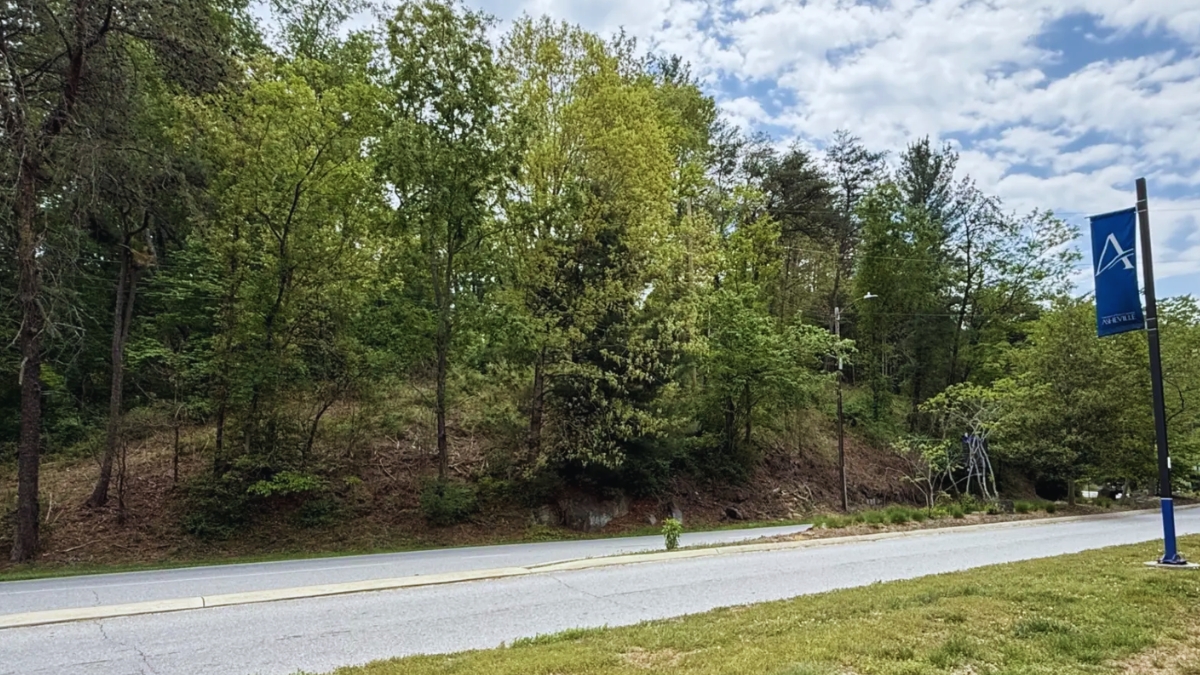
Roughly two hours later, Olson was found dead near the botanical gardens across W.T. Weaver Boulevard from campus.
More than five decades later, the killing of the 19-year-old student remains one of Asheville’s oldest unsolved homicide cases.
What happened that afternoon?
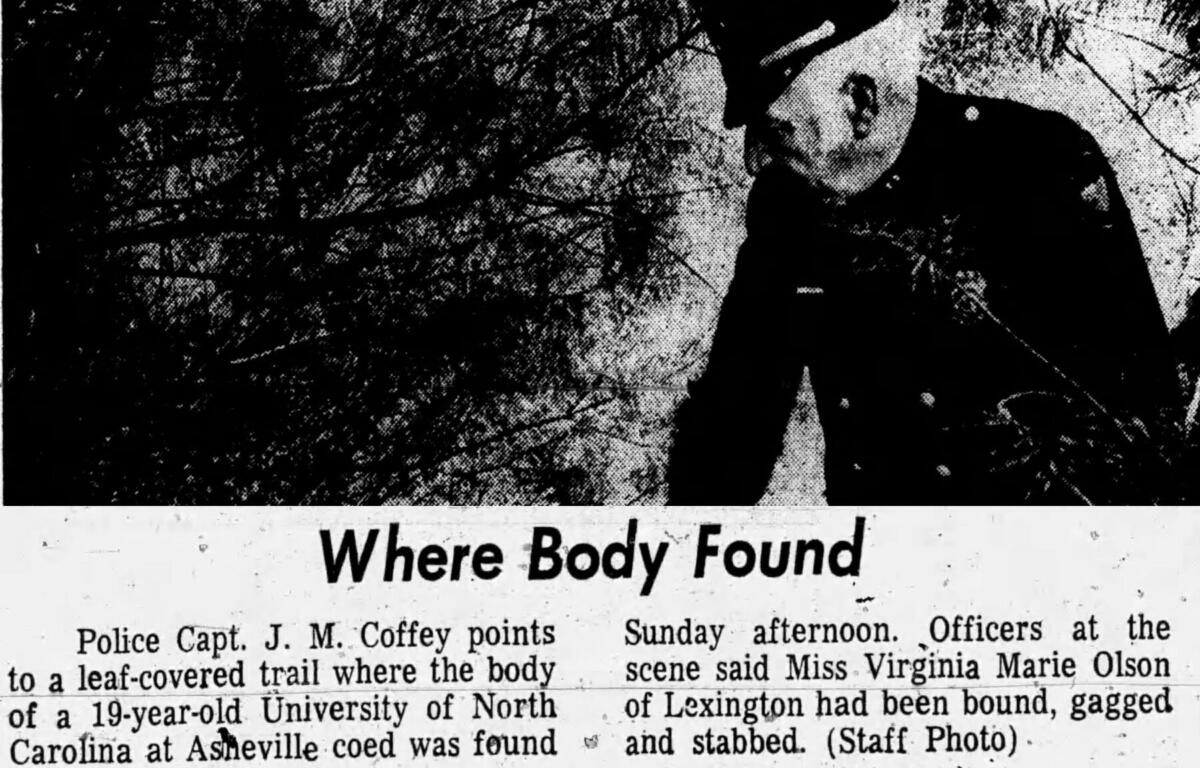
Olson was last seen heading toward a wooded area near the botanical gardens, a place friends and classmates said she often used to study. Investigators believe she arrived there around 1 p.m.
Her body was discovered around 3 p.m. by two teenagers. One of them spoke with 828newsNOW but declined to be interviewed for this story.
An autopsy found Olson was killed in a violent knife attack and sexually assaulted.
Asheville police Detective Kevin Taylor, who worked on the case intermittently during his career and again more recently as part of the cold case team, said investigators believe Olson was likely caught off guard.
“My opinion is that she was probably surprised,” Taylor said. “She had just gone up there into the woods to study, something that was common for her to do.”
Investigators believe Olson was sitting on a large rock overlooking the roadway when she was attacked. Taylor said evidence suggests she was dragged a short distance off the rock and into the woods.
“There were no reports of screaming or any kind of altercation,” Taylor said. “Nobody witnessed the attack.”
Police believe the weapon was a knife, possibly a pocketknife, though no weapon was ever recovered.
While the crime scene indicated extreme violence, Taylor said it is unclear exactly how quickly the attack occurred or whether Olson had time to resist.
“It’s hard to say conclusively,” he said. “We weren’t there, and we have to be careful about making assumptions.”
What evidence do police still have?
Taylor joined the Asheville Police Department in 1987 and worked the Olson case periodically while on active duty and again after returning from retirement. He said renewed efforts over the past few years include submitting evidence for additional forensic testing as technology advances.
“With cold cases, we periodically resubmit evidence and hope new technology can give us different results,” Taylor said. “That’s been done in this case.”
Police confirmed they retain some DNA evidence but declined to discuss specifics, including whether genealogical testing has been attempted.
“We had evidence at the state crime lab (in 2024), but have since gotten the results,” Taylor said.
Investigators have not publicly described what items were tested or whether the results generated new leads.
Why no suspect has been charged
Over the years, investigators have examined multiple leads and persons of interest, but no charges have ever been filed.
“At this time, we don’t have a primary suspect,” Taylor said.
The North Carolina State Bureau of Investigation declined to release additional records related to the case.
“The documents within our case files are part of a criminal investigation and are not public records at any time during the investigation or after disposition in the court system,” an SBI spokesperson said.
Taylor also sought to dispel long-standing rumors surrounding the case, including claims that the killing was covered up because of a suspect’s family wealth or connections.
“None of that is true,” Taylor said. “Those were just rumors that circulated over the years.”
A concert, a campus and unanswered memories
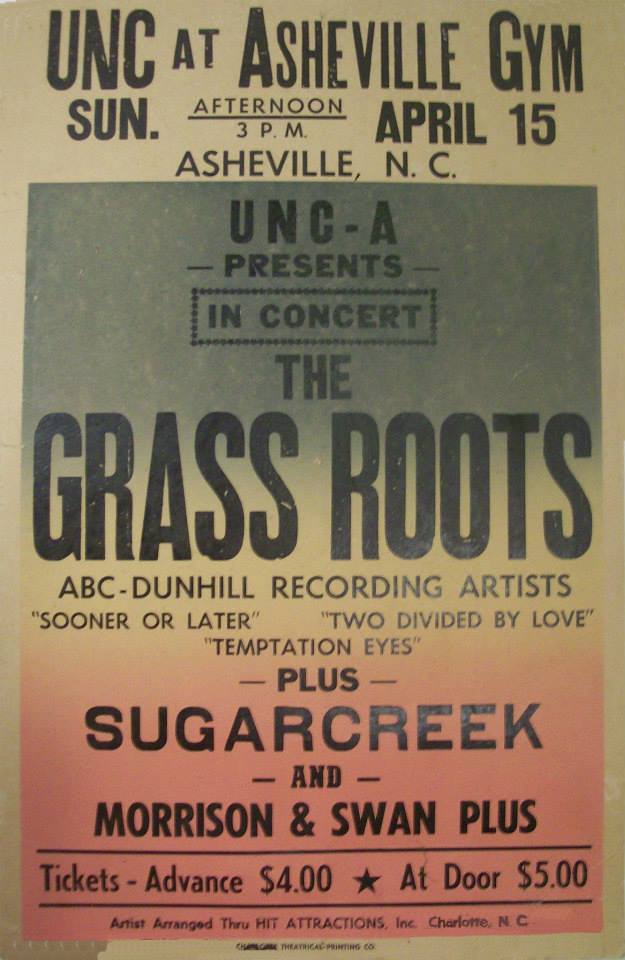
One detail investigators hope might jog memories is that a rock concert featuring the band The Grass Roots was held on campus the same day Olson was killed, drawing additional people to the area.
“That could mean more people were on campus than usual,” Taylor said. “Someone may remember something that didn’t seem important at the time.”
Police are asking anyone who was in the UNC Asheville area on April 15, 1973, or who may recall hearing someone discuss suspicious behavior around that time, to contact the Asheville Police Department.
Why the case still matters in Asheville
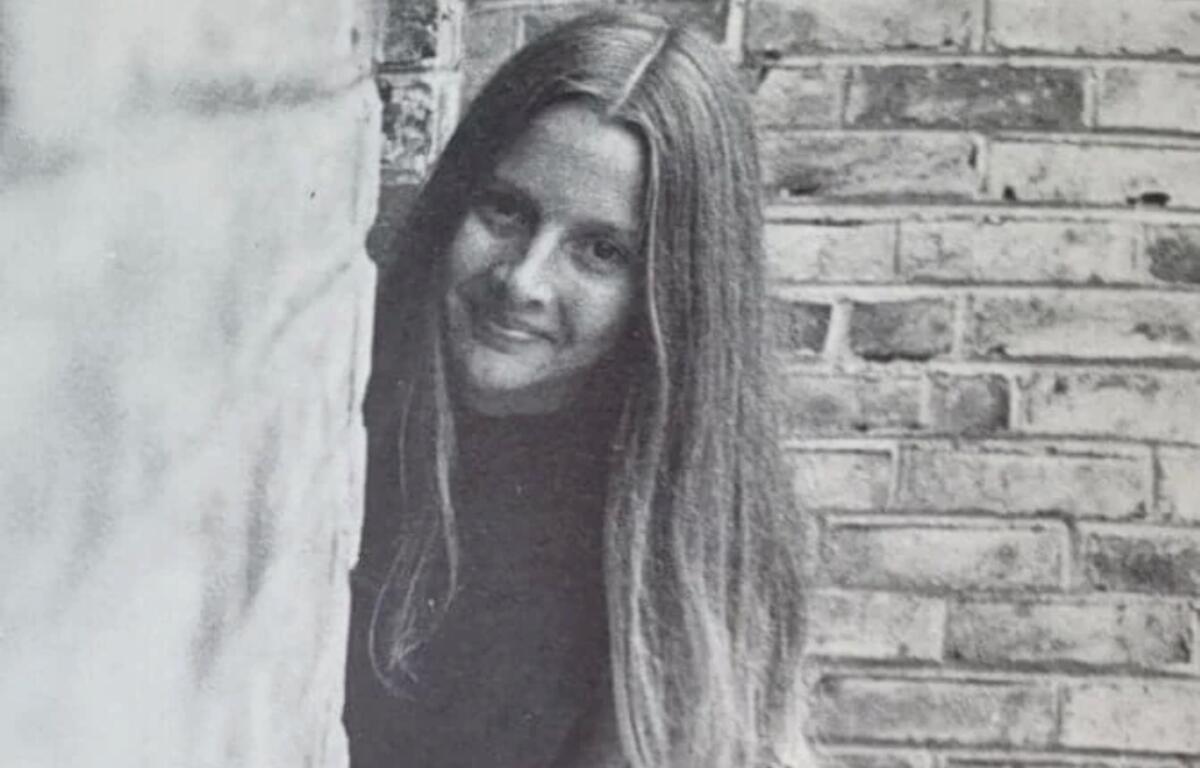
Taylor said Olson’s family has remained in contact with police over the years, though he has not spoken with them recently. Olson’s father died in 2020, and her mother is now in her 90s. She also has a sister and a brother.
Efforts to reach the family for this story were unsuccessful.
More than 50 years later, Taylor said the case continues to weigh on those who work it.
“She was a truly innocent victim,” he said. “She was where she should have been, doing nothing wrong. Those are the cases that stick with you.”
“We walk these hallways with ghosts,” Taylor said. “Until we solve it, we carry her name with us.”
This story is part of Beneath the Blue Ridge, an ongoing series revisiting the Virginia Olson case. Six parts, released over three weeks. Follow along as the story unfolds with new installments each Monday and Wednesday.
Do you have information about the Virginia Olson case?
We are actively reporting this story. If you have information we want to hear from you.
828newsNOW is an independent news organization and is not affiliated with law enforcement.
Missed earlier installments? Start from the beginning.
Read the Full Series
- Part 1: Revisiting Asheville’s Virginia Olson Cold Case
- Part 2: Who was Virginia Olson?
- Part 3: Police investigation
- Part 4: The suspects
- Part 5: Could DNA still solve it?
- Part 6: What’s still unknown