


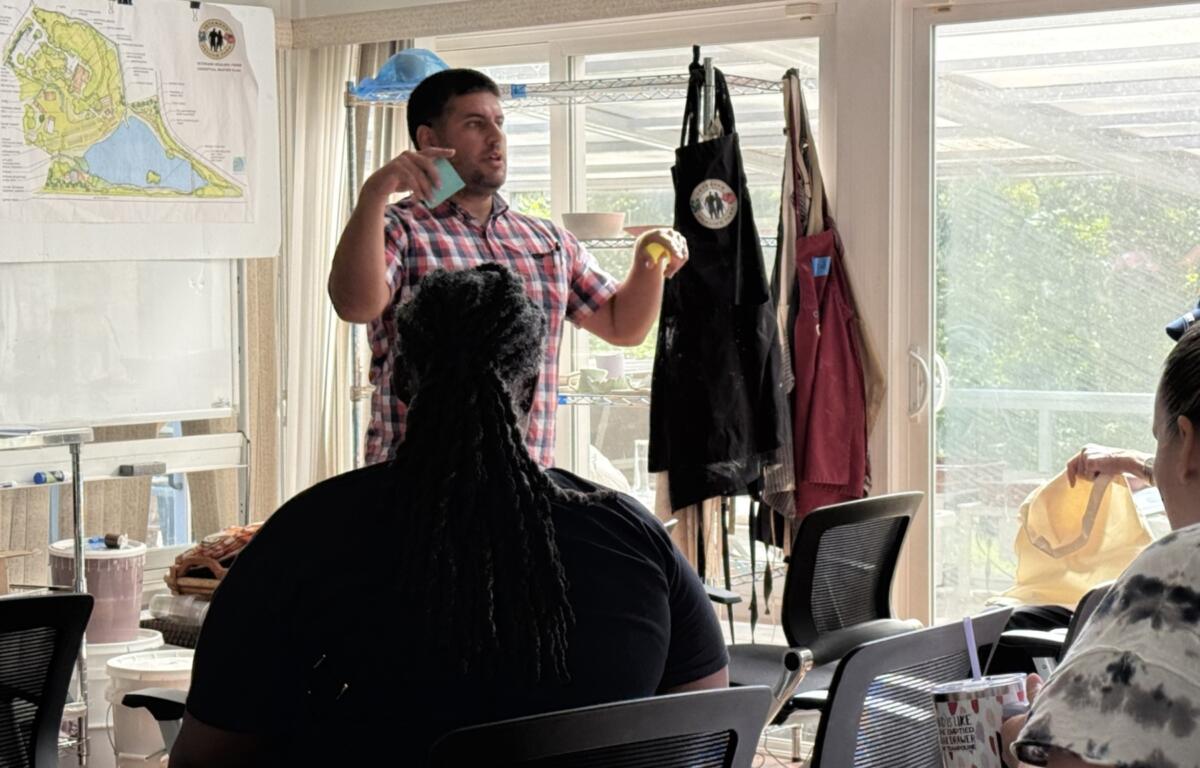

MILLS RIVER, N.C. (828newsNOW) — More than 40 organizations that serve veterans gathered Tuesday at the Veterans Healing Farm in Mills River with a shared goal: Make it easier for service members, veterans and their families to find the help they need.
The Veterans Healing Farm hosted the North Carolina Governor’s Working Group Collaboration Lab, a half-day event focused on improving coordination among organizations that provide services to veterans across the state.
The event brought together representatives from veteran-serving organizations for discussions about gaps in services, community partnerships and ways to create what organizers called a “no wrong door” approach.
The idea is simple: Veterans and their families shouldn’t have to know exactly which agency or organization can help them before they can get assistance.
“We want to work together to establish commitments to the work we are willing to do together and prioritize a ‘no wrong door’ approach that ensures every Service Member, Veteran or family member can more easily find the support they need,” said Al Yeck, executive director of the Veterans Healing Farm.


Participants discussed ways communities can improve access to benefits, health care, education, employment opportunities and other resources.
One presentation focused on a project led by researchers and students at the UNC Greensboro School of Global Public Health that is examining how communities can better support veterans.
The project grew out of concerns about veteran mental health and suicide, but researchers said the work has expanded to look at the broader conditions that affect veterans and their families.
Researchers are developing tools designed to help communities understand where veterans live, where resources are available and where gaps may exist.
One of those tools is an interactive story map covering all 100 North Carolina counties. It includes 64 maps drawing on nine data sources and allows users to explore veteran populations and community conditions.
The goal is to make the information useful to people who aren’t researchers or data analysts.
“We don’t want you to need to be a GIS specialist or a data analyst to be able to use this,” one presenter told the group.
The project also is working on a tool that would help organizations find veteran-specific community resources without requiring them to create another database or resource list.
Organizers said the intended user is often someone already helping a veteran — such as a community organization, health care provider, pastor or other trusted person — who needs to quickly find appropriate resources.
The group also heard from Veterans Healing Farm volunteers about the role of agriculture, beekeeping and community connections in supporting veterans.
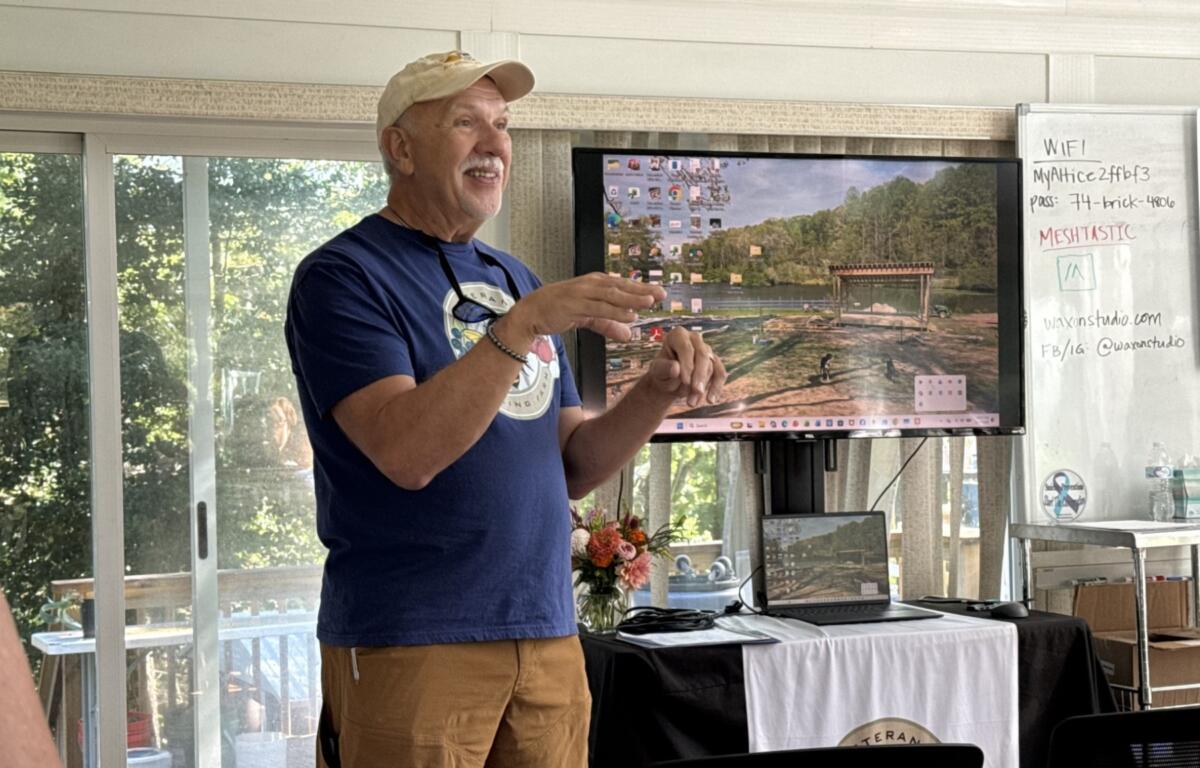
Michael Morano, the farm’s lead beekeeper and a retired U.S. Coast Guard aviator, talked about how beekeeping has helped him cope with isolation and other challenges.
Morano said he first connected with the Veterans Healing Farm in 2018 after seeing information about the organization while looking for ways to get involved in the community.
“I needed to find a way to plug in,” he said.
Over time, he became involved with the farm’s beekeeping program.
The farm now has a dedicated bee barn, and Morano said the beekeeping community has become an important source of connection for him.
“Beekeeping has been amazing,” he said. “It’s been one of my most valuable lifelines.”
The Collaboration Lab also included small-group discussions designed to identify priorities and turn them into potential action steps.
Mark Holliday, who works with the Governor’s Institute and its veteran team, said the event was an effort to move beyond traditional meetings and reports and toward more active collaboration.
Organizers said they hope to use ideas generated during Tuesday’s discussions to shape future efforts across North Carolina.
The Veterans Healing Farm provides agricultural therapy, peer support and community connections for veterans and their families. The farm describes its mission as providing a place of peace, purpose and community for those who served.
The organization is at 138 Kimzey Road in Mills River.
The UNC Greensboro project also is working on a new community-focused website that organizers said is expected to launch in 2027. The site is intended to make veteran-related information and resources easier for communities and organizations to access.