


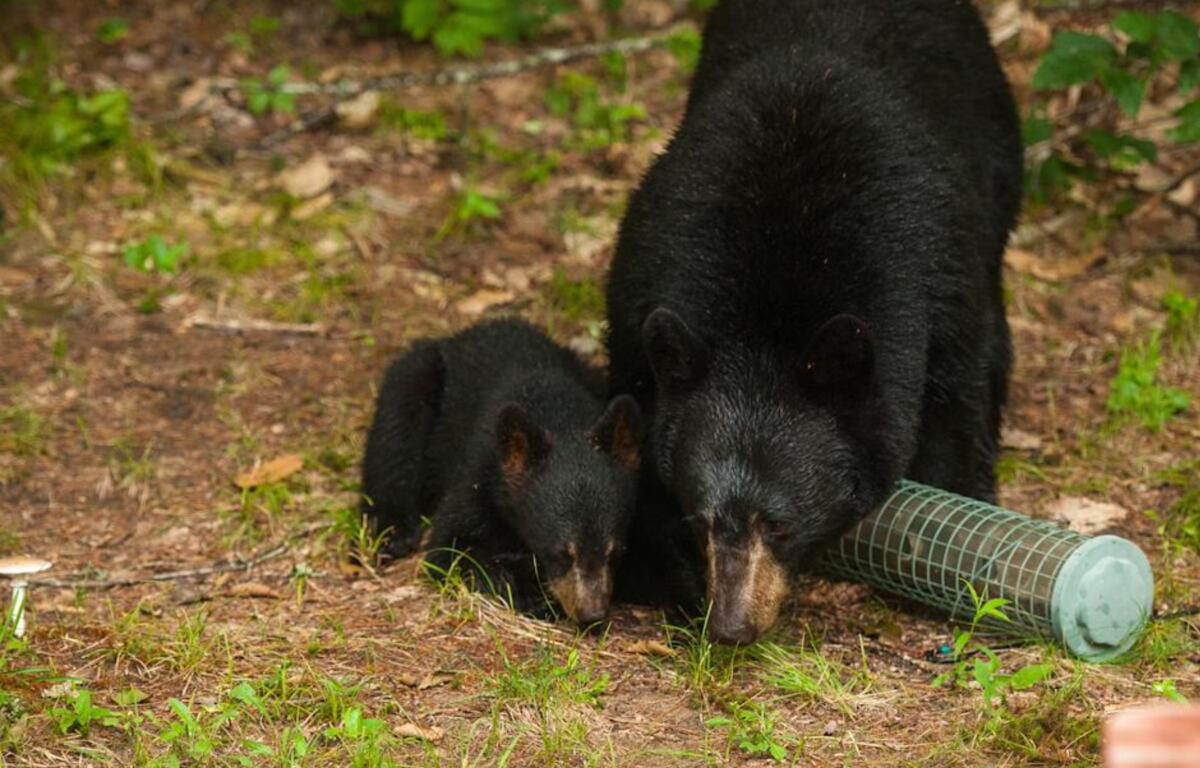

ASHEVILLE, N.C. (828newsNOW) — North Carolina’s black bears are eating everything they can find this fall. And they’re not always sticking to the woods.
As bears prepare for winter, they’re spending much of their time searching for food, increasing the chances of encounters with people in neighborhoods across Western North Carolina.
The N.C. Wildlife Resources Commission is reminding residents to secure trash, bird feeders and other potential food sources during a time of year when bears’ appetites are at their peak.
The feeding frenzy is called hyperphagia, a natural process that helps bears build up fat reserves before winter.
“During the hyperphagia phase, black bears increase their daily calories from 2,000 to 3,500 calories in spring and summer to approximately 15,000 to 20,000 calories a day,” said Jenna Malzahn, a black bear biologist with the Wildlife Resources Commission.
“To put this into perspective, 20,000 calories is equivalent to 9 pounds of acorns, 70 pounds of wild cherries or just one typical birdfeeder that can hold 7 pounds of black oil sunflower seeds.”
Bears can spend up to 20 hours a day searching for food during this period, according to wildlife officials. They can also gain as much as 3 pounds a day, adding anywhere from 20% to 100% of their summer weight.
In the wild, bears feast on acorns, hickory nuts, berries, grapes and other natural foods. But they’re not picky eaters. Unsecured garbage, bird seed, pet food and compost can be just as tempting.
When bears repeatedly find food around homes or businesses, they’re more likely to return. Wildlife officials say that increases the chances of close encounters with people.
When the bears won’t leave
A Biltmore Forest resident says she doesn’t feed bears. But that hasn’t stopped them from making themselves at home on her 5-acre property.
The woman, who asked not to be identified, says she regularly sees three to six bears, sometimes finding them in places she’d rather they weren’t.
One day, she returned home with an armful of groceries and found a bear in her garage.
“My hands full, can’t run, terrified,” she wrote in an email to 828newsNOW.
She said a mother bear that had two cubs last year has been showing up with three this year. Cubs have also scratched her car.
“I can’t eat on my veranda, always looking to be attacked,” she wrote.
She said she’s contacted local authorities for help but hasn’t found a solution. She worries about what could happen if she unexpectedly comes face to face with a bear.
The issue has received increased attention in Buncombe County, where the Wildlife Resources Commission recently approved an emergency rule aimed at reducing dangerous encounters by restricting intentional and passive bear feeding.
The agency received 836 reports of bear activity in the county between May 1 and Sept. 30, including 71 reports of bears entering homes.
The emergency rule still required final state approval when it was announced.
Keeping bears out of your backyard
Wildlife officials say preventing bears from finding easy meals remains one of the most effective ways to reduce encounters.
The Wildlife Resources Commission recommends several precautions:
- Secure garbage and compost so bears can’t get into them.
- Remove bird feeders and avoid leaving pet food outdoors.
- Check yards for bears before letting pets outside.
- Be especially alert when walking or driving at night.
Learn how to respond if you encounter a bear and share that information with neighbors.
Residents should also check around their homes for places where bears might settle in for the winter.
Crawlspaces, decks, porches, sheds and even piles of brush or building materials can provide potential den sites.
“All the extra fat bears build up during hyperphagia allows them to ride out the winter months when natural food becomes scarce,” said Ashley Hobbs, the state’s BearWise coordinator.
Most North Carolina bears will find a den by mid-December, Hobbs said. But bears that have a steady supply of food from people may remain active throughout the winter instead.
“Bears will continue their search for food all year as long as it’s available,” Hobbs said.
Residents with questions about bears or who need to report an incident can contact the N.C. Wildlife Helpline at 866-318-2401, Monday through Friday, from 8 a.m. to 5 p.m.
More information about preventing bear encounters and safely living alongside black bears is available at BearWise.org.