


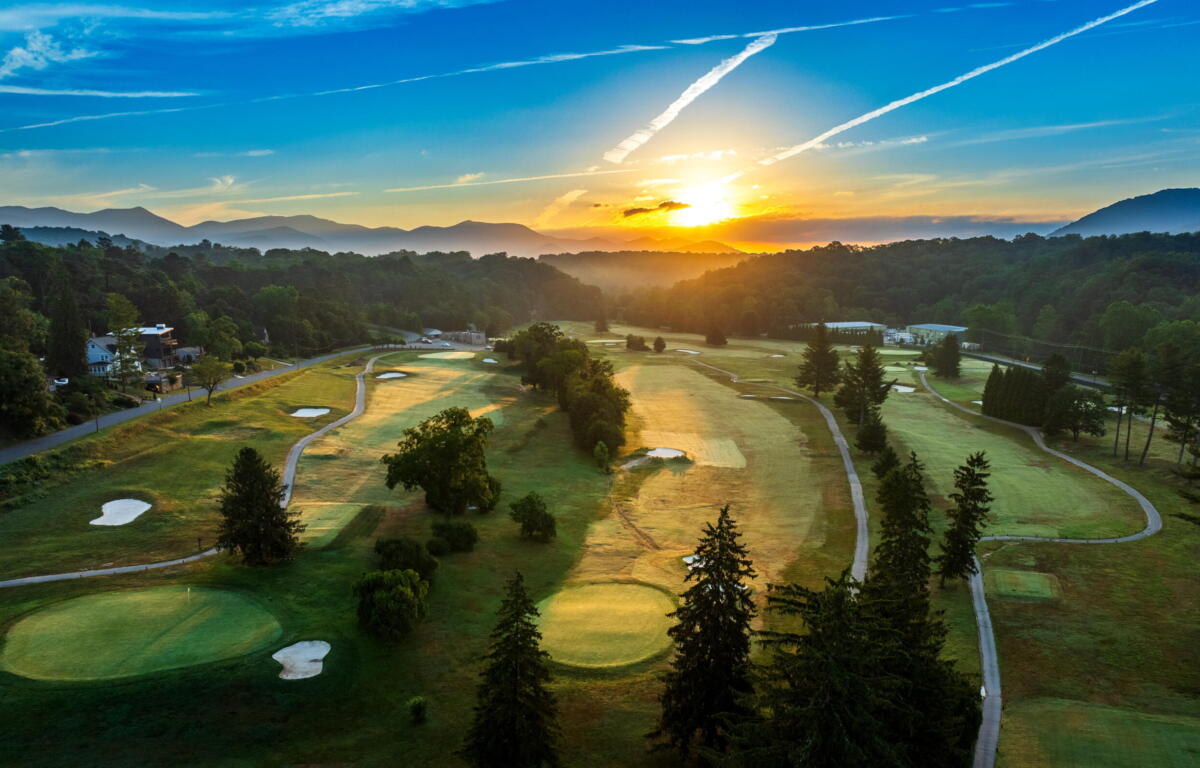

ASHEVILLE, N.C. (828newsNOW) — Nearly two years after Tropical Storm Helene, the Asheville Municipal Golf Course continues to recover from Tropical Storm Helene, supported by the efforts of the Friends of Asheville Muni.
The Asheville Municipal Golf Course, better known as Asheville Muni, has been the signature city golf course since opening in 1927, nearly 100 years ago. The 18-hole course was designed by famed golf course designer Donald Ross and marked the first public municipal course in the Carolinas.
Today, more than 40,000 rounds are played there every year, according to the Friends of Asheville Muni, a nonprofit support group for the golf course.
However, when Tropical Storm Helene brought catastrophic destruction to Western North Carolina in September 2024, Asheville Muni was hit hard.
The front nine holes were completely submerged under Helene floodwaters, causing “significant damage to the irrigation system, portions of the stormwater piping, all 18 tee box complexes, all but 3 bunkers, 8 greens and 8 fairways. The bathroom house was completely washed away as well as a majority of golf cart paths and trees on property,” the city of Asheville summarized.
The front nine is currently under reconstruction. Until it reopens, the area has been fashioned into a temporary 18-hole disc golf course for public play.
After the storm, FOAM has worked diligently to keep up the quality of Asheville Muni through projects like planting four acres of wildflowers and renovating a course bathroom. They have also endeavored to keep the golf course in the public consciousness.
“We serve multiple roles overall, and obviously right now, one is as a public conduit. We represent the people of Asheville in the conversation with the city of Asheville and the management company of the golf course, and do our best to keep the communication flowing between people who live here and pay city taxes and play golf,” said Paul Bonesteel, FOAM president.
Bonesteel said that Asheville Muni is fiscally dependent on offering a full course to play on, making the return of the front nine a pressing issue.
“Operating as a functional and fiscally-sustainable course is really reliant on having 18 holes of play,” Bonesteel said. “The amount of income that the course can generate with 18 holes, it’s more than twice what you can generate with the back nine only.”
Currently, FOAM has funding to keep the course open and operations running for the short term. However, the future is a little more uncertain.
“It’s unclear as to what will and what won’t be funded by the city, moving forward next in the next couple of years while the rebuild is in place,” Bonesteel said. “But hopefully, as they have in the past, the [Asheville] city council will take up a relatively moderate loss and keep the course open without needing private funds to do that.”
Depending on the funding required to restore the front nine and the cost of current operations at Asheville Muni, Bonesteel said that FOAM hopes to improve the back nine to match.
“We hope that in the end, they won’t be needed for operational, and we can use them to invest in the back nine further once the front nine is both rebuilt and, just by the nature of things being new, at a higher quality level than the back nine,” Bonesteel said.
Currently, construction on the Asheville Muni front nine is projected to begin in 2027, and Bonesteel hopes that the course will reopen in early 2028. The public can follow updates on the city of Asheville project page.
In the meantime, FOAM is focused on who Asheville Muni has supported for 99 years: the golf-playing public.
“We’re there on call, so to speak, to do what’s necessary to keep Muni open. But in a more day in, day out role, our goal is to do what we were doing even before Helene, which is continue to build community and encourage community around the municipal golf course,” Bonesteel said.
For more about the Asheville Municipal Golf Course, visit www.ashevillegc.com.
For more about Friends of Asheville Muni, visit www.friendsofashevillemuni.com.