



ASHEVILLE, N.C. (828newsNOW) — A bit of St. Joseph’s remains at Mission Hospital.
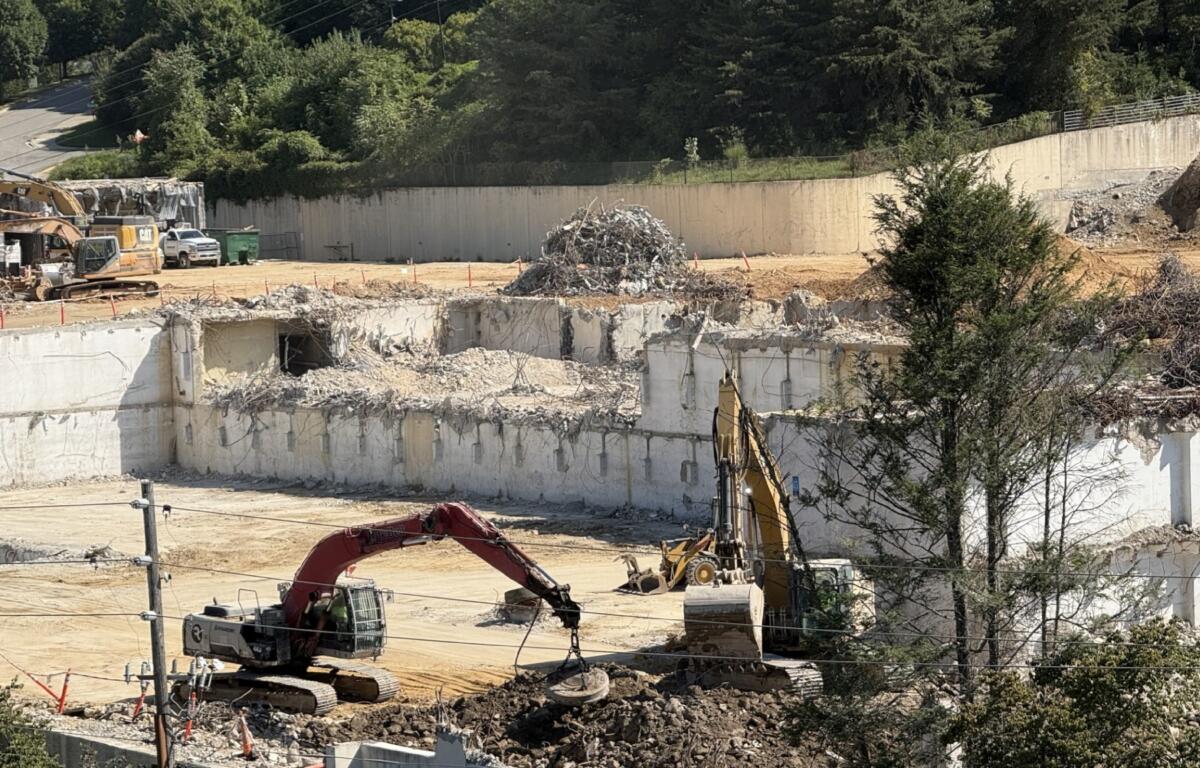
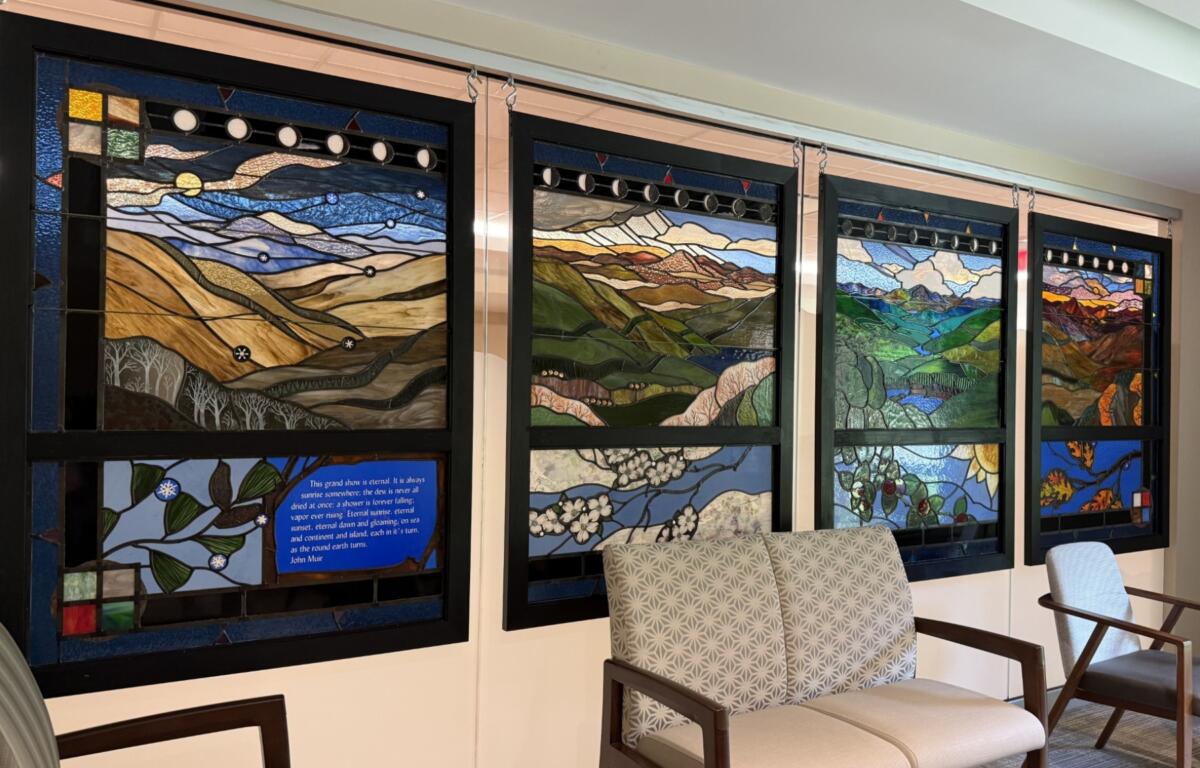
Four large stained-glass panels depicting mountain scenes now hang in the chapel in the North (K) Tower. Across Biltmore Avenue, heavy equipment is working through the last portions of the old hospital, leaving piles of concrete and debris where the building once stood.
For people who worked at St. Joseph’s, those final days are bringing back a lot of memories.
Melina Arrowood knows that feeling.
The chief operating officer of Mission Hospital worked at the St. Joseph’s campus for about seven years during her 20-year career with Mission Health. She started her career there in 2007, later returning as a behavioral health leader and serving as a nursing director for acute care units.
She also has a family connection to the hospital. Her father was born there in the 1950s, and her grandmother was a candy striper there as a teenager.
“It’s been emotional,” Arrowood said Wednesday. “Honestly, it’s strange.”

A hospital that felt like a family
Arrowood said she understands why St. Joseph’s closed.
She said the aging building had significant infrastructure problems and could not be renovated to meet modern patient-care standards. Tropical Storm Helene also caused significant damage to the building, she said, adding to the challenges.
But Arrowood still has trouble watching it disappear.
“I see a place where I started my career,” she said.
Her memories aren’t just about the work.
St. Joseph’s had a different feel, Arrowood said. It was part of a larger health system, but it still felt like a small community hospital.
“The hospital felt different, and the people felt different,” she said.
Employees knew one another, and the cafeteria staff knew people by name.
And Arrowood remembers the food.
“It sounds silly,” she said, “but the cafeteria food over there tasted better than any other hospital cafeteria food I’ve ever had.”
The Sisters of Mercy were another part of what made St. Joseph’s different. Some of the sisters were still working there when Arrowood began her career, including Sister Carmen, whom Arrowood remembers making rounds and stopping by her office.

Generations of memories
St. Joseph’s history stretches back much further than Arrowood’s time there. According to Arrowood, the hospital was started by the Sisters of Mercy and began as a tuberculosis sanitarium before eventually becoming a general hospital and expanding along Biltmore Avenue.
Over the years, generations of Asheville residents were born there, worked there or received care there.
That is clear in the memories former employees and patients have shared.
In comments on a Mission Health Facebook post about the demolition, former employees described St. Joseph’s as a family and recalled decades of working there.
One former radiology employee said she started there in 1981 and remembered employees working hard and looking out for one another.
Another former nurse said she started her career there 26 years ago, describing the hospital as a place where she learned from experienced nurses and made lifelong friendships.
Patients have their own memories.
Some people commenting on the post said they were born at St. Joseph’s. Others remembered having children there, undergoing surgery there or spending weeks as patients.
One former patient recalled a nurse taking her outside during a long hospital stay in 2013 so she could get some fresh air.
What remains
For Arrowood, the stained glass now hanging in the North Tower is a reminder of what St. Joseph’s meant to so many people.
She said the pieces were moved from the St. Joseph’s chapel after the campus closed. She went to see them after demolition began to make sure they were safely in place.
“Anytime I walk through there now, it makes me smile and reminds us about St. Joseph’s for sure,” she said.
The services that operated at St. Joseph’s have also moved.
Medical units were relocated to Mission Hospital’s North Tower, while behavioral health services moved to the Sweeten Creek campus.
“We could not renovate it and make it meet patient standards of today,” she said of St. Joseph’s. “It just wasn’t basically possible.”
Mission has said it eventually plans to put something new on the St. Joseph’s property, although there is not yet a specific plan for what that will be. For the time being, the area will be used for staff parking.
For Arrowood, what eventually goes there is less important than what happened there.
She hopes people who drive along Biltmore Avenue and notice the familiar building is gone will remember the people who worked there, the patients who were treated there and the families who passed through its doors.
“My hope is when people drive down Biltmore Avenue and don’t see St. Joe’s that they don’t just think about the fact that the building’s no longer in the skyline,” Arrowood said. “I really hope that they think about the generations of people who walked through those doors.”
She still has photographs of the hospital, pictures of artwork and murals from the building and a few small items bearing the St. Joseph’s name.
She’ll keep them.
“There is a ton of emotion around that building coming down,” Arrowood said. “I knew there would be because I was emotional about that building coming down and I worked in it.”
The heavy equipment will eventually leave, and the skyline will look different.
But four stained-glass panels from the old hospital are still catching the light across the street.