


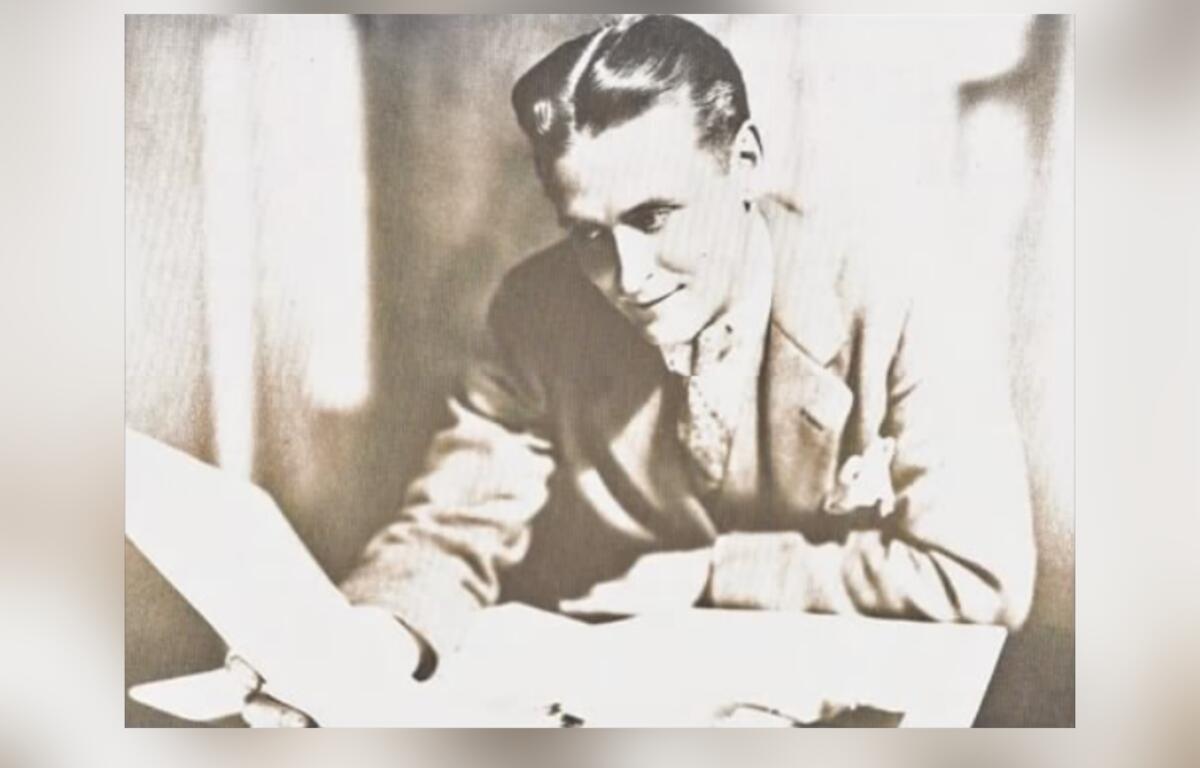

ASHEVILLE, N.C. (828newsNOW) — F. Scott Fitzgerald had two rooms at the Grove Park Inn. One was for sleeping. The other was for writing.
It was 1935, and the author of “The Great Gatsby” had come to Asheville hoping the mountain air might improve his health. His literary career was faltering, his marriage was troubled, and he was struggling with alcohol.
A few miles away stood the childhood home of another celebrated novelist, Thomas Wolfe.
The two writers knew each other from Paris. During his time in Asheville, Fitzgerald persuaded a young writer named Tony Buttitta to accompany him to the boardinghouse operated by Wolfe’s mother, Julia.
Fitzgerald didn’t introduce himself as the famous novelist. According to Buttitta’s later account, Julia Wolfe dominated the conversation and made it clear she didn’t rent rooms to drunks.
Fitzgerald wasn’t seriously looking for a room. He wanted to see the place where Wolfe had grown up.
There was another connection between the two literary families. Zelda Fitzgerald, Scott’s wife, actually stayed at Julia Wolfe’s boardinghouse for a week.
Asheville historian Bruce Johnson, author of “Tom, Scott, and Zelda: Following in Their Footsteps,” says Zelda paid $3.50 for her stay and left her signature in the boardinghouse records.
The stories offer an unusual glimpse of a time when some of America’s most recognizable literary figures crossed paths with Asheville.
But the region’s literary history reaches far beyond Fitzgerald and Wolfe. It includes writers who came to the mountains seeking solitude, others who spent their lives documenting mountain communities, and a storytelling tradition that began centuries before Asheville existed.
A storytelling tradition older than Asheville
Long before the first celebrated American novelists arrived in Western North Carolina, Cherokee people were passing down stories, history and cultural knowledge from one generation to the next.
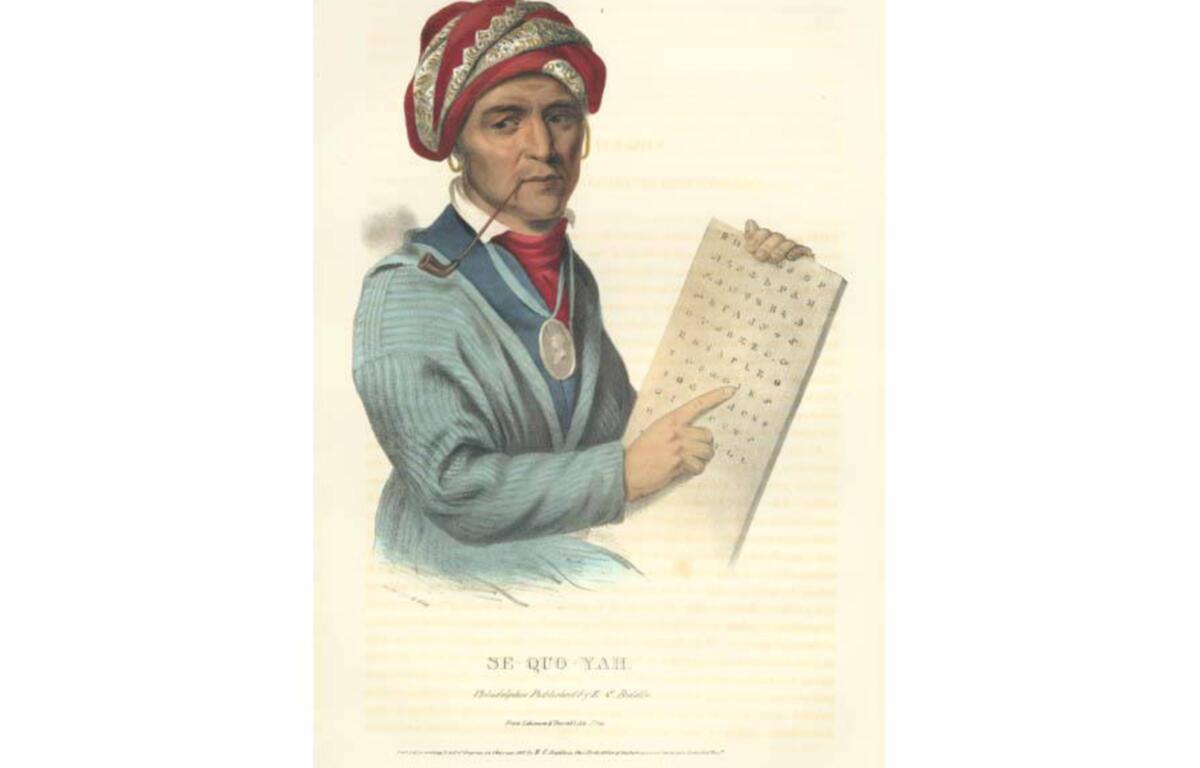
Those oral traditions were already centuries old when Sequoyah began developing a writing system for the Cherokee language in the early 1800s.
Although he could not read or write English, Sequoyah recognized the power of written communication. He spent roughly 12 years creating symbols representing the sounds of spoken Cherokee, completing his syllabary in 1821.
According to the National Geographic Society, Sequoyah and his daughter, A-Yo-Ka, demonstrated that the system worked by exchanging written messages while separated from one another.
The Cherokee Nation adopted the syllabary in 1825. Three years later, the “Cherokee Phoenix” began publication in New Echota, Georgia, printing material in Cherokee and English.
The writing system helped preserve and share the Cherokee language during a period of mounting pressure on Cherokee communities, including forced removal from their homelands.
Cherokee storytelling continues today through writers such as Annette Saunooke Clapsaddle, an enrolled citizen of the Eastern Band of Cherokee Indians who lives in Cherokee.
In 2020, Clapsaddle made literary history with “Even As We Breathe,” the first published novel by an enrolled citizen of the tribe.
Set during World War II, the novel follows Cowney Sequoyah, a young Cherokee man who leaves his mountain community to work at Asheville’s Grove Park Inn.
The hotel was being used to house detained foreign diplomats, and Cowney finds himself caught up in events shaped by war, suspicion and prejudice.
It’s the same hotel where Fitzgerald had stayed only a few years earlier, but Clapsaddle tells a very different story.
“Even As We Breathe” won the 2021 Thomas Wolfe Memorial Literary Award and was named one of NPR’s best books of 2020.
Clapsaddle, a former Swain County High School teacher, has also worked to encourage other Indigenous writers. She helped launch Confluence, an Indigenous writers’ workshop series developed with the Museum of the Cherokee People.
When famous writers came to Asheville
By the turn of the 20th century, Asheville was attracting writers from some of the country’s best-known literary circles.
George Vanderbilt’s Biltmore Estate was among their destinations.
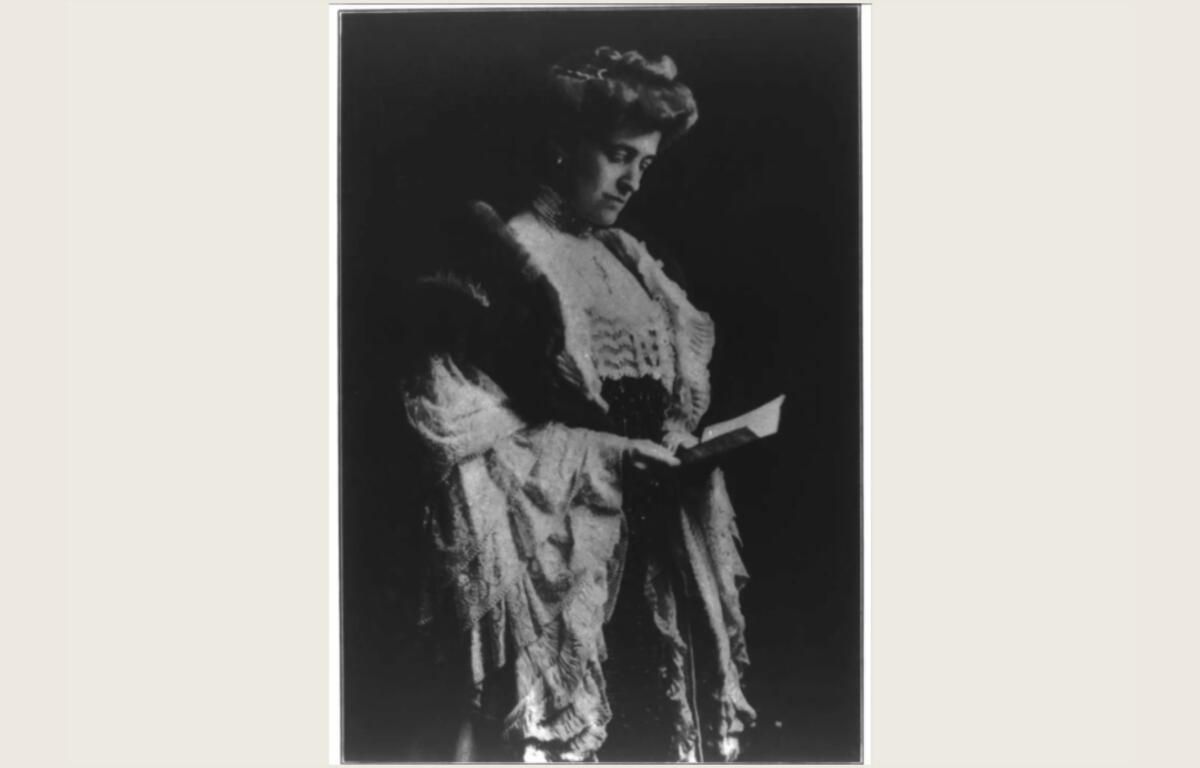
Edith Wharton, who later won the Pulitzer Prize for “The Age of Innocence,” visited Biltmore with her husband in November 1902 and December 1905.
Henry James, author of “The Portrait of a Lady” and “The Turn of the Screw,” arrived Feb. 3, 1905, and stayed several days.
Biltmore curators Lauren Henry and Meghan Forest-Singer confirmed the visits through the estate’s guest books and correspondence.
Novelist Paul Leicester Ford also visited between 1897 and 1900. He wrote part of his historical novel “Janice Meredith” while staying at Biltmore and dedicated the book to Vanderbilt.
The writers weren’t attending public literary events. They were personal guests of the Vanderbilts, enjoying the estate and the company of friends.
Another familiar literary name can be found at Asheville’s Riverside Cemetery.
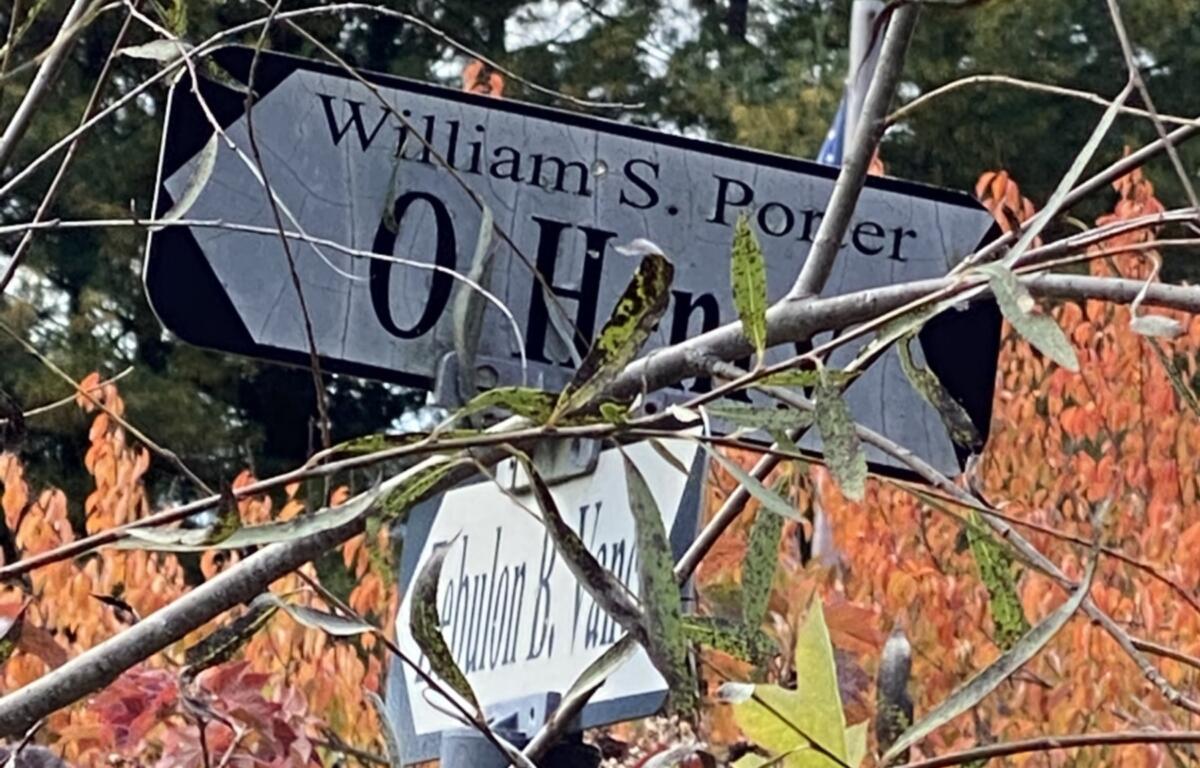
William Sydney Porter, better known as O. Henry, became famous for short stories with surprise endings, including “The Gift of the Magi” and “The Ransom of Red Chief.”
Porter spent time in Asheville late in his life. After his death in New York City in 1910, he was buried at Riverside Cemetery, where his grave remains a destination for literary admirers.
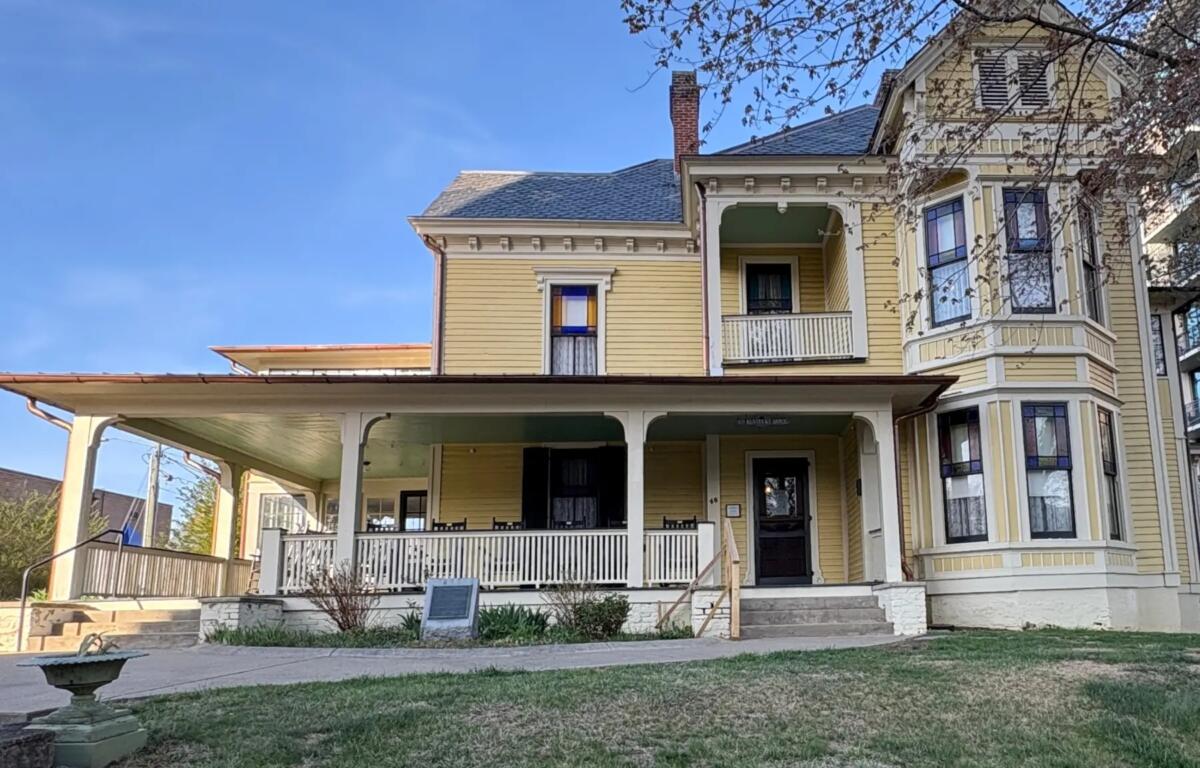
For Thomas Wolfe, however, Asheville wasn’t a place to visit. It was home.
Born in 1900, Wolfe grew up surrounded by the family arguments, ambitions and personalities that would eventually fill his fiction.
His mother operated the Old Kentucky Home boardinghouse, where guests came and went and young Thomas had plenty of people to observe.
He transformed those experiences into his first novel, “Look Homeward, Angel,” published in 1929.
Asheville became the fictional town of Altamont. Readers familiar with the city recognized people and places behind Wolfe’s characters, and some weren’t happy about what they read.
The novel strained Wolfe’s relationship with his hometown, but Asheville remained central to his writing.
He died in 1938 at age 37.
Today, the Old Kentucky Home is preserved as the Thomas Wolfe Memorial, where visitors can walk through the rooms that inspired his most famous novel.
And thanks to the Fitzgeralds, it has a connection to another chapter of American literary history.
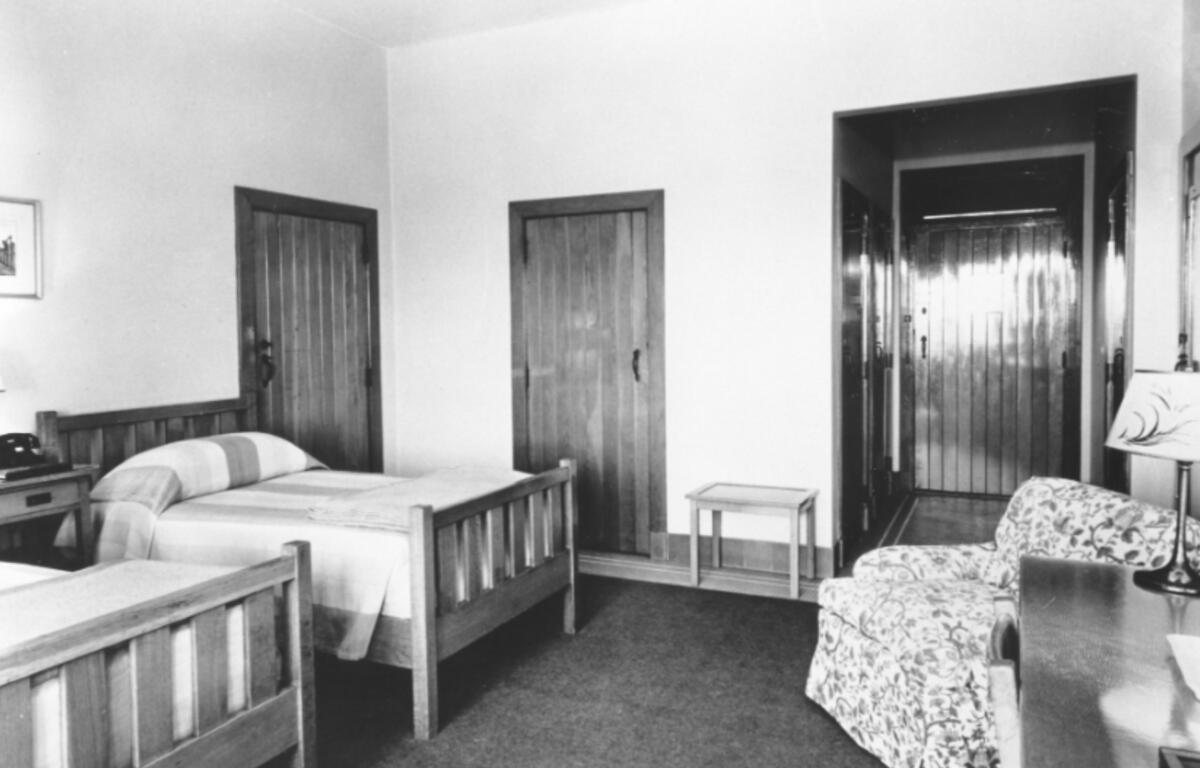
Fitzgerald first arrived at the Grove Park Inn on May 16, 1935, and returned in July 1936. Correspondence places him at the hotel as late as December 1936, although his stays were not necessarily continuous.
He occupied Rooms 441 and 443 in the historic Main Inn, using one as a bedroom and the other as a workspace.
The rooms are still guest accommodations, now known collectively as the F. Scott Fitzgerald Suite.
But the mountain setting didn’t offer much relief from his troubles.
Fitzgerald struggled with alcohol, financial problems and declining health. Zelda received psychiatric treatment at Asheville’s Highland Hospital beginning in 1936.
Still, he was writing.
In a 1989 article for “Blue Ridge Country,” Asheville writer Ray Hardee recounted a hotel housekeeper’s recollection of baskets of typed pages and empty beer bottles being removed from Fitzgerald’s rooms.
Another Asheville acquaintance, Laura Guthrie Hearne, met Fitzgerald while reading palms for hotel guests.
Hearne, a Columbia University journalism graduate who had come to Asheville for her health, later worked as Fitzgerald’s secretary. She kept a journal documenting his activities during the summer of 1935.
Fitzgerald also befriended Buttitta, who operated a book rental business at the George Vanderbilt Hotel.
Buttitta later wrote about their encounters in “After the Good Gay Times,” including the visit to Julia Wolfe’s boardinghouse.
Despite his difficulties, Fitzgerald continued producing work. Three autobiographical essays associated with his personal crisis appeared in “Esquire” in early 1936.
His connections to Western North Carolina extended beyond Asheville. He also spent time in Tryon and Hendersonville during the 1930s.
The Grove Park Inn remains closely associated with Fitzgerald, occasionally opening his former rooms for tours.
Poets, experiments and a mountain retreat
While Fitzgerald was staying in Asheville, another literary community was taking shape in nearby Black Mountain.
Black Mountain College opened in 1933 with an unconventional approach to education. Artists, musicians, dancers and writers worked alongside one another, and experimentation was encouraged.
Poets Charles Olson and Robert Creeley became closely associated with the college and the influential poetry movement that took its name.
Their work challenged conventional poetic forms and helped shape American poetry in the decades that followed.
The college closed in 1957, but its influence continued through the writers and artists who studied and taught there.

Farther south, in Flat Rock, Carl Sandburg found a place to settle down.
The Pulitzer Prize-winning poet, journalist and Abraham Lincoln biographer moved to Connemara, a farm in Flat Rock, in 1945.
Sandburg was already famous when he arrived. His wife, Lilian, raised goats on the property while he continued writing.
He lived there until his death in 1967.
Today, the Carl Sandburg Home National Historic Site preserves the house and farm where Sandburg spent his final decades.
The mountains weren’t just a backdrop
Some writers came to Western North Carolina for its scenery or solitude. Others wrote about the lives of people who worked, struggled and raised families here.
Olive Tilford Dargan and her husband, Louis Peagram Dargan, moved to Almond in Swain County in 1906.
Nine years later, her husband drowned.
In 1923, fire damaged her mountain home. Dargan later moved to Asheville, where she spent the rest of her life.
She wrote poetry, plays and fiction, often focusing on mountain communities, working-class families and women whose experiences rarely appeared in popular portrayals of Appalachia.
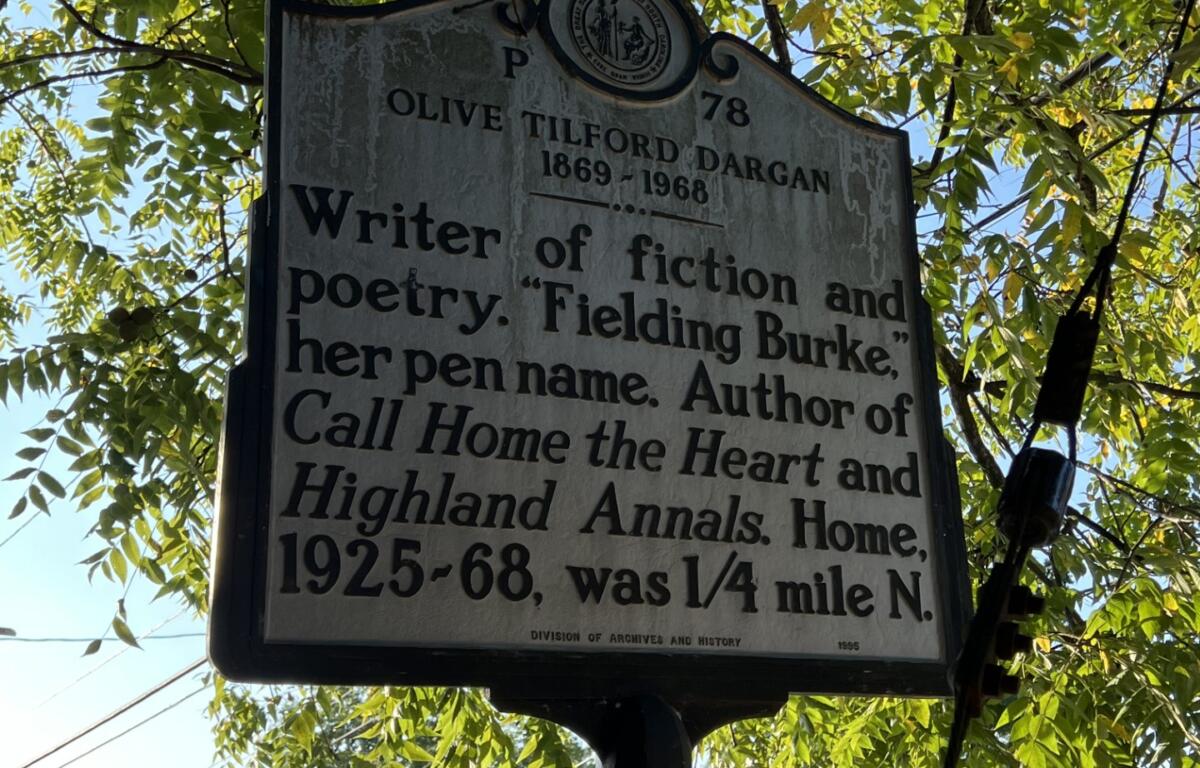
Under the pen name Fielding Burke, she published “Call Home the Heart” in 1932, a novel about the Gastonia textile strike.
Dargan eventually made her home in a West Asheville log cabin called Bluebonnet Lodge.
She died in 1968 at age 99 and is buried at Green Hills Cemetery. Her cabin was later demolished, but a historical marker near the West Asheville Library commemorates her life.
Another Asheville-born writer, Wilma Dykeman, turned her attention to a river that ran through the region.
Her 1955 book, “The French Broad,” combined history, environmental concerns and stories of the communities along the river.
One chapter carried the pointed title “Who Killed the French Broad?” — a question that reflected Dykeman’s concern about pollution and the river’s future.
The book received the first Thomas Wolfe Memorial Literary Award in 1955.
Horace Kephart wrote about the people and customs of the Smokies and advocated for the creation of Great Smoky Mountains National Park. John Parris spent decades collecting mountain stories for his “Roaming the Mountains” newspaper column.
John Ehle explored the region’s history through novels including “The Land Breakers,” while Fred Chappell, Robert Morgan and Kathryn Stripling Byer drew on Appalachian landscapes, families and voices in their poetry and fiction.
Making the invisible visible
Ann Miller Woodford grew up in Happy Top, a Black community in Andrews established by her grandfather, William Cleveland “Cleve” Miller, in 1912.
Her grandfather had left Cumming, Georgia, amid the expulsion of Black residents from Forsyth County. He found work on the railroad and built the first house in the community that became Happy Top.
Woodford attended a one-room segregated school, sometimes as the only student in her grade.
Because the local school for Black children ended at eighth grade, she left Andrews to attend Allen High School, a boarding school for Black girls in Asheville. She graduated in 1965.
Years later, after returning to Andrews, Woodford helped establish One Dozen Who Care, a women’s community organization.
During a gathering celebrating African American history, she listened as people shared memories of families, churches and communities whose stories had seldom been recorded.
Woodford began collecting those histories.
Her research became “When All God’s Children Get Together: A Celebration of the Lives and Music of African American People in Far Western North Carolina,” published in 2017.
The book documents Black families, churches, music and community life in a part of Appalachia where those experiences were often missing from written histories.
Woodford has described her goal as making the invisible visible.
In a National Park Service oral history interview, she also recalled how segregation shaped her family’s experience of the mountains. They avoided visiting Great Smoky Mountains National Park because they feared discrimination and did not feel safe traveling through certain communities.
Her work earned the Western North Carolina Historical Association’s 2020 Outstanding Achievement Award.
From Montreat to the bestseller lists
Patricia Cornwell grew up in Montreat, where her family became close to evangelist Billy Graham and his wife, Ruth Bell Graham.
Ruth Graham played an important role in Cornwell’s early life and encouraged her interest in writing.
Cornwell’s first book wasn’t a crime thriller. It was “A Time for Remembering,” a biography of Ruth Graham published in 1983.
Seven years later, Cornwell introduced forensic pathologist Kay Scarpetta in “Postmortem,” launching a bestselling series that helped popularize forensic crime fiction.
The novels generally take place far from the mountains where Cornwell grew up, but her writing career began with a book about someone she had known in Western North Carolina.
More recently, Charles Frazier drew on the region’s Civil War history for his 1997 novel, “Cold Mountain,” which won the National Book Award and was adapted into a film.
Ron Rash has explored Appalachian history, family relationships and hardship in novels including “Serena” and “The Cove,” as well as poetry and short stories.
Both writers have taken mountain stories well beyond Appalachia.
The stories that remain
Fitzgerald came to Asheville looking for a place to write. Decades later, Annette Saunooke Clapsaddle would set part of her first novel in the same hotel, telling the story of a young Cherokee man whose experience of the mountains was far different from Fitzgerald’s.
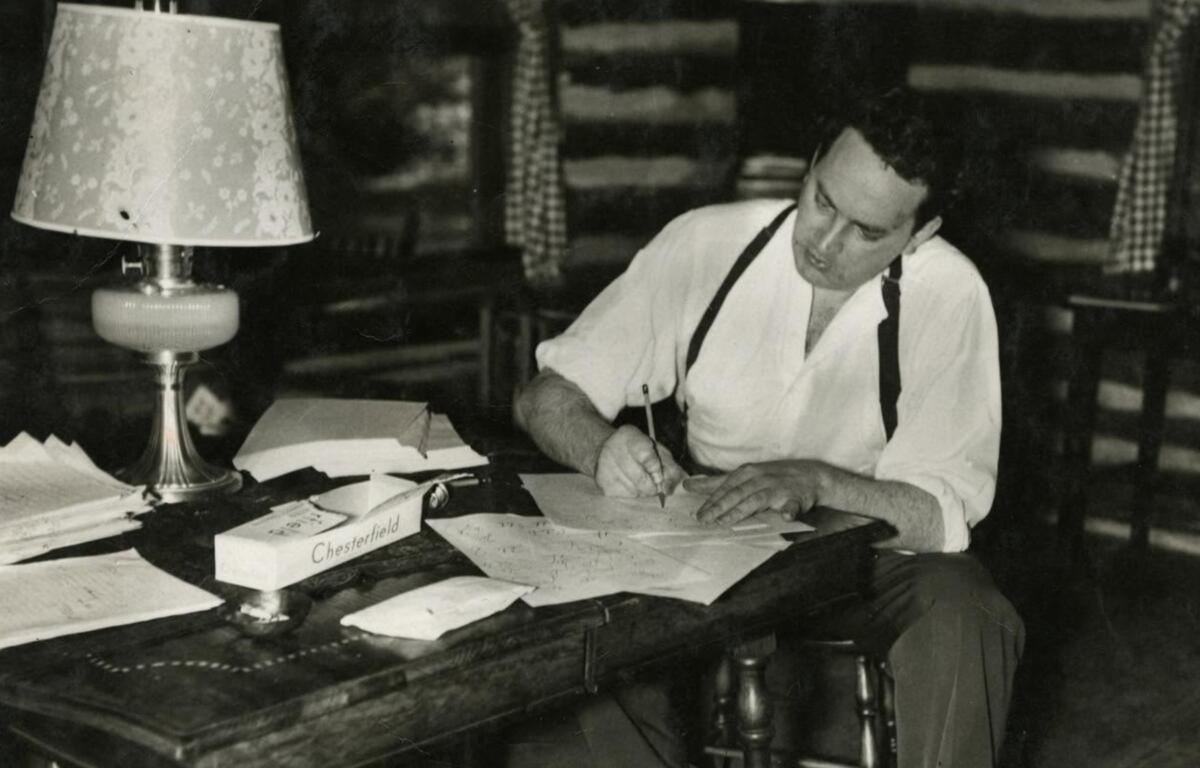
Thomas Wolfe wrote about the hometown he couldn’t escape. Wilma Dykeman wrote about a river she feared people were destroying. Ann Miller Woodford collected the histories of Black mountain communities that had too often gone unrecorded.
Some of the places associated with those writers still stand. Visitors can tour Wolfe’s childhood home, stay in Fitzgerald’s former rooms or walk the grounds of Sandburg’s farm. Others, like Dargan’s Bluebonnet Lodge, are gone.
Nearly a century after Fitzgerald checked into the Grove Park Inn with plans to write, Clapsaddle brought readers back to the same hotel through the eyes of a young Cherokee man.
The building was the same. The story was entirely different.