


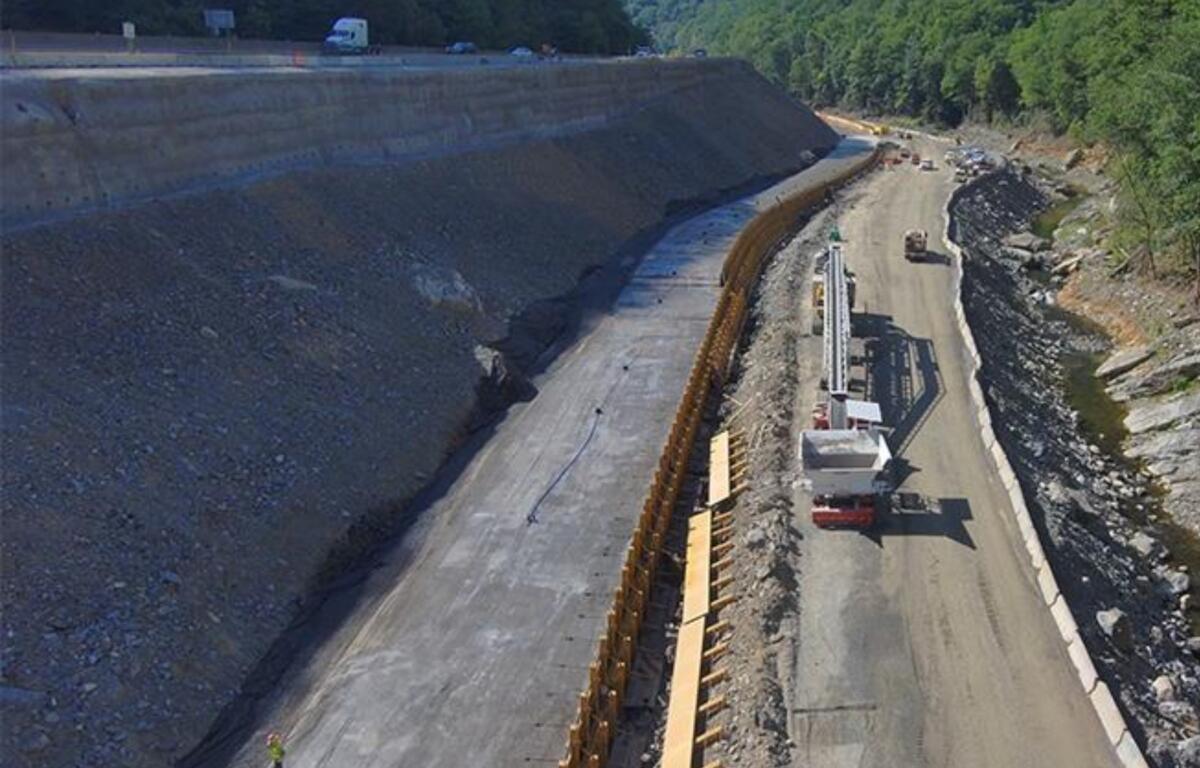

ASHEVILLE, N.C. (828newsNOW) — The cost of rebuilding Interstate 40 through the Pigeon River Gorge has increased by about $800 million, with N.C. Department of Transportation officials now estimating the project will cost about $2.8 billion.
NCDOT said Wednesday that new geotechnical information gathered as crews have gained better access to the gorge has given engineers a clearer picture of what is beneath the interstate — and some of the conditions are more difficult than initially expected.
The department now estimates that four lanes of I-40 will be restored by late 2029.
“We are rebuilding while we continue to investigate and design, which means our understanding of the work becomes more precise as construction advances,” N.C. Transportation Secretary Daniel Johnson said.
The latest estimate is up from about $2 billion earlier this year.
New information from the ground
When the initial designs, estimates and schedules were developed, engineers relied largely on borings taken from the existing interstate level.
That changed after crews constructed a causeway that gave them access closer to the river.
Engineers have since been taking additional borings roughly every six feet along the 5 1/2-mile project area.
Wesley Grindstaff, NCDOT’s Division 14 engineer, said the amount of geotechnical testing being done is unprecedented for a transportation project.
The testing has also revealed that the depth of bedrock varies significantly along the gorge.
In some areas, bedrock is exposed. In others, it is more than 50 feet below the surface.
That difference is important because reaching deeper bedrock requires longer steel piles, increasing the amount of work and the cost of the project.
“The variability of the depth of bedrock is tremendous, much more than our designers had anticipated,” Grindstaff said.
Three lanes by late 2028
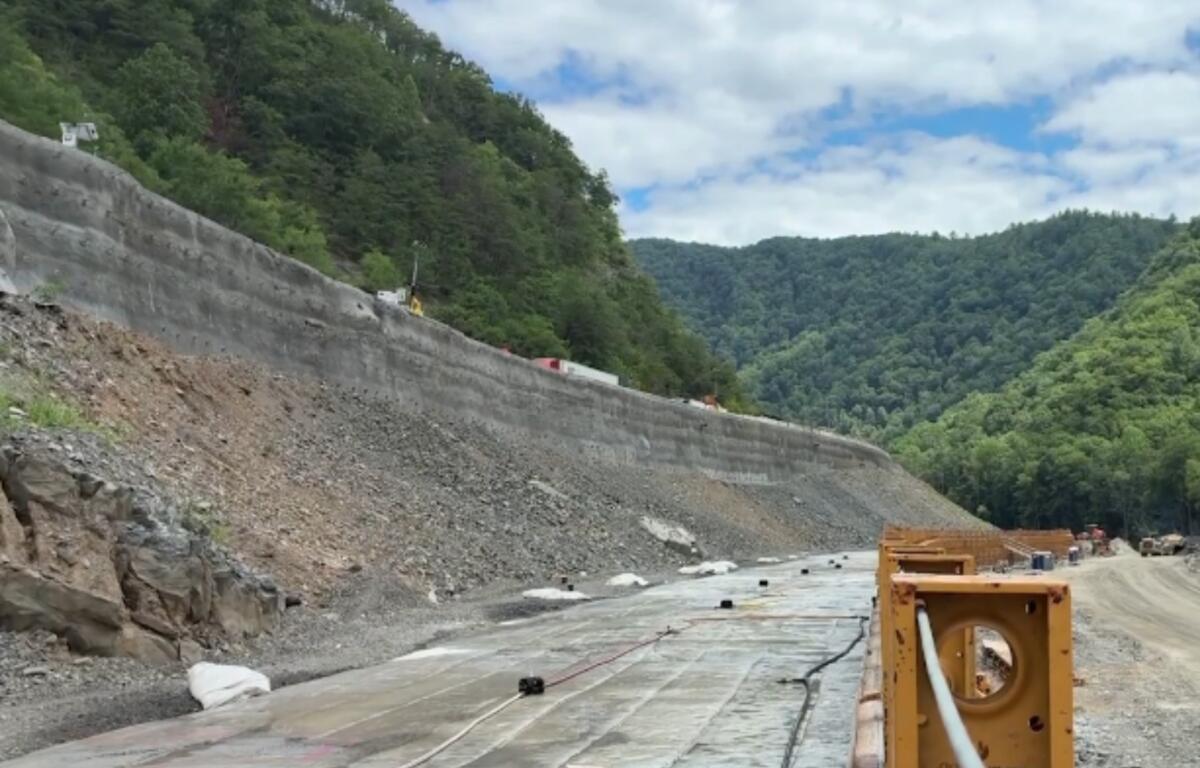
NCDOT currently expects three lanes to be open by the end of 2028 — two westbound lanes and one eastbound lane.
The department’s current target for restoring all four lanes is late 2029.
Grindstaff said NCDOT and its design and construction teams are continually looking for ways to shorten the schedule and reduce costs.
“That’s always our goal,” he said. “What can we do to shorten this schedule and decrease construction costs?”
The department is using a construction manager/general contractor, or CMGC, approach that allows design and construction work to move forward at the same time.
Ames Construction was selected as the project’s contractor and is involved in the design process, providing input on construction methods, pricing and scheduling.
That approach has allowed NCDOT to gather additional information while construction is underway, including through the construction of the causeway, excavation and other work.
Built to withstand another storm
The reconstruction is also being designed to address the damage caused by Helene and reduce the risk of another major failure.
Helene destroyed or severely damaged about five miles of I-40 through the gorge, where the interstate runs between steep mountain slopes and the Pigeon River.
The reconstruction includes roller-compacted concrete walls, interlocking pipe pile walls and other features designed to withstand the hydraulic forces that damaged the interstate during the storm.
NCDOT said it considered other construction options, including a tunnel, viaduct, new alignment and several types of retaining walls. The alternatives did not meet the project’s requirements for factors including construction, scheduling, maintaining traffic or federal reimbursement.
“We are reconstructing it to withstand future extreme weather and reduce the risk of another catastrophic failure,” Grindstaff said.
The cost and schedule estimates could continue to change as construction and design work move forward and engineers learn more about conditions in the gorge.
For now, NCDOT’s goal is to restore traffic as quickly as possible while building a replacement capable of handling another major storm.
“The department recognizes the importance of the I-40 corridor,” Grindstaff said. “It’s our goal to rebuild this corridor in a safe manner, one that’s durable, that’s going to withstand the next storm or be a resilient solution, and ultimately manage taxpayer dollars spent on this project.”