


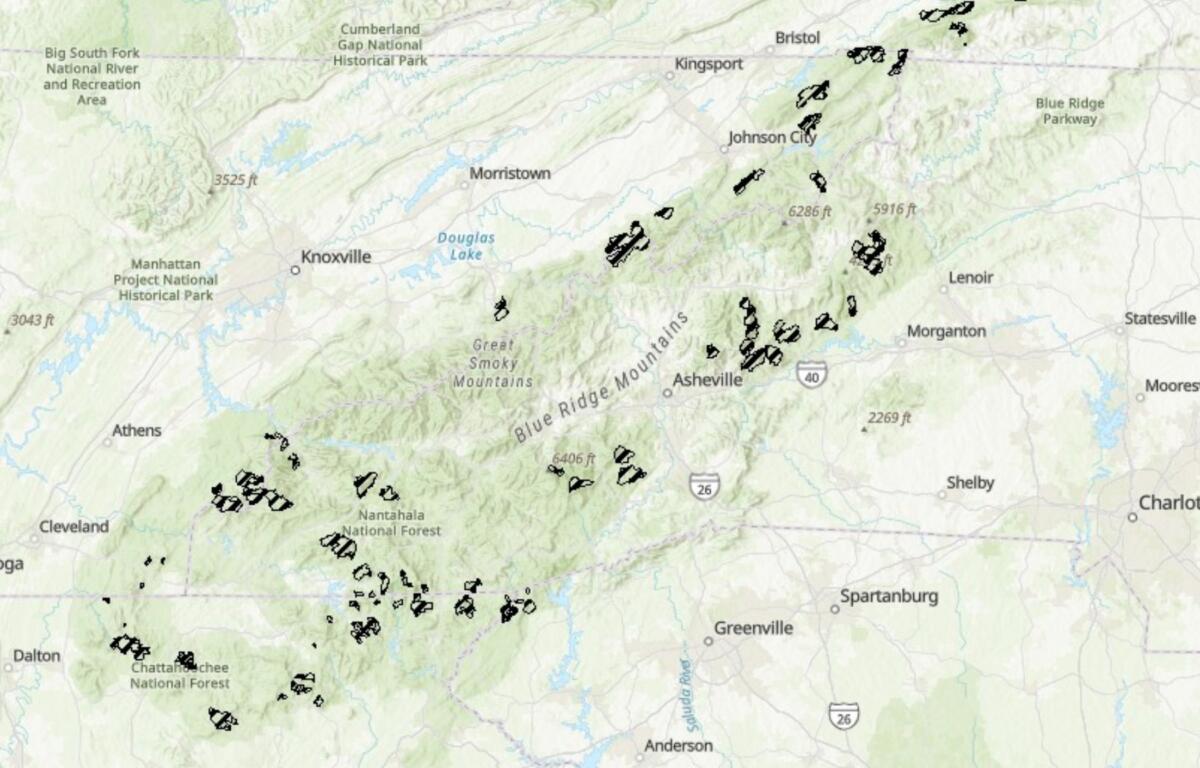

ASHEVILLE, N.C. (828newsNOW) — The public can now weigh in on a proposal from the U.S. Department of Agriculture that could end nationwide protections for millions of acres of roadless national forest, including areas of Western North Carolina.
The U.S. Forest Service on Tuesday formally proposed rescinding the 2001 Roadless Area Conservation Rule, opening a public comment period that runs through Sept. 21.
The rule has restricted road construction and certain types of forest management in inventoried roadless areas for the past 25 years. The Forest Service says rescinding it would give local forest managers more flexibility to address wildfire risk, forest health and other conditions.
Agriculture Secretary Brooke Rollins said the existing restrictions have made it harder for managers to address overgrown forests, insect outbreaks and disease that can contribute to wildfire risk.
“Our forests can’t afford another decade of inaction,” Rollins said in announcing the proposal.
The proposed change would eliminate the nationwide restrictions imposed by the 2001 Roadless Rule. It would not automatically authorize logging, road construction or other development in those areas.
Instead, decisions about road construction, timber harvest and other management activities would generally be made through individual national forest planning processes and remain subject to other applicable laws and regulations.
What it could mean for Western North Carolina
The proposal has drawn attention in the mountains, where roadless areas include portions of the Nantahala and Pisgah national forests.
Blue Ridge Public Radio reported in April that about 416,000 roadless acres across the Southeast are covered by the rule, including ecologically significant areas around the South Mills River near Brevard.
The Carolina Climbers Coalition estimates the Roadless Rule covers roughly 172,000 acres in North Carolina, including portions of Linville Gorge and other areas used for hiking, climbing and backcountry recreation.
The North Carolina Sierra Club cites about 144,000 acres in the state that could be affected by the proposed rescission.
Outdoor recreation and conservation groups say rescinding the rule could make some currently protected areas more vulnerable to road construction, logging and other development.
The Carolina Climbers Coalition said the protections help preserve hiking and mountain biking trails, rivers, wildlife habitat and climbing areas.
Conservation groups argue the rule has helped keep some of the region’s more remote forests free of roads and large-scale timber harvest, protecting wildlife habitat, water quality and opportunities for backcountry recreation.
Supporters of the change argue that the current rule is too broad and limits forest managers’ ability to reduce wildfire hazards.
Forest Service Chief Tom Schultz said more than 40 percent of inventoried roadless areas have high or very high wildfire hazard potential, while only about 5 percent have received hazardous-fuels reduction treatments since 2014.
He also noted that about 11.3 million acres of roadless lands are already near existing roads.
“Active forest management is not an option. It’s essential,” Schultz said.
The Forest Service’s environmental review also acknowledges potential downsides, including possible effects on scenic values, water quality, wildlife, fisheries and recreation if road construction and timber harvest increase.
What happens next
The USDA filed the proposed rule and a draft environmental impact statement in the Federal Register on Tuesday.
The agency is accepting public comments on both documents through midnight Sept. 21.
The proposal does not specifically target North Carolina or Western North Carolina. More than 95% of inventoried roadless areas are located in 10 Western states, according to the USDA.
The proposed rescission also does not apply to national forests in Colorado and Idaho, which are covered by separate state-specific roadless regulations.
If finalized, the proposal would end the nationwide restrictions of the 2001 Roadless Rule and shift decisions about individual roadless areas to forest-level planning processes.
Public comments can be submitted through Regulations.gov through Sept. 21.
Public comments open
The 30-day comment period for the proposed rule and draft environmental statement ends at midnight Sept. 21, 2026. The following links point to information that could be helpful to you in reviewing the documents and providing substantive comments:
- Learn about the regulatory process and the tips for submitting effective comments
- Read the Federal Register notice (Note: This link is available Aug. 19 in the Reading Room and final on Aug. 20)
- Enter the Regulations.gov portal to read the proposed rule, draft environmental impact statement and other key documents and to submit comments
- Read rulemaking documents and additional supporting analyses available through the online public folder
- View an interactive online map that features multiple layers for comparison, including the three alternatives to the roadless rescission; roads, cities and landmark labels; National Forest System lands; and the wildland-urban interface, among others. Get more information about how to read the map.
- Engage in ongoing tribal consultation, which remains open for federally recognized tribes and members