
EDITOR’S NOTE: Strangeville explores the curious and unexplained stories that have long defined Asheville and Western North Carolina. The region is full of unanswered questions, from old folklore and local legends to eerie encounters, unsolved moments in history, and the true-crime mysteries that still leave people wondering. Each week, we look back with an open mind and a sense of curiosity, trying to understand why some stories take hold and why some can never be explained.
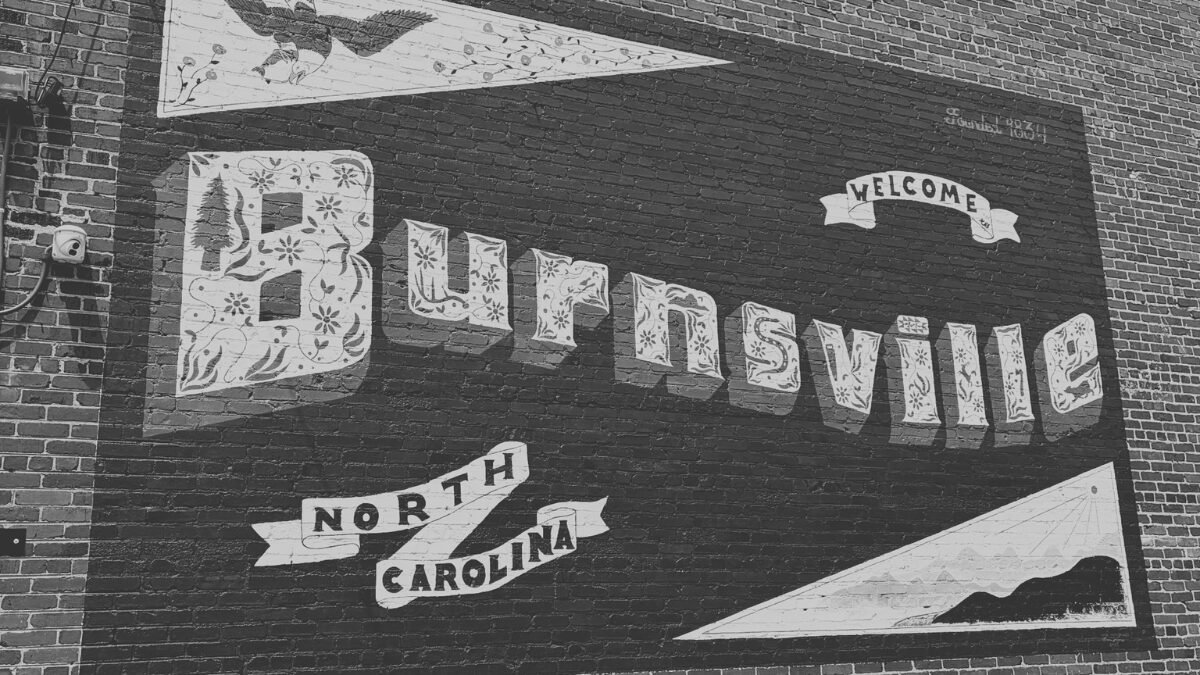
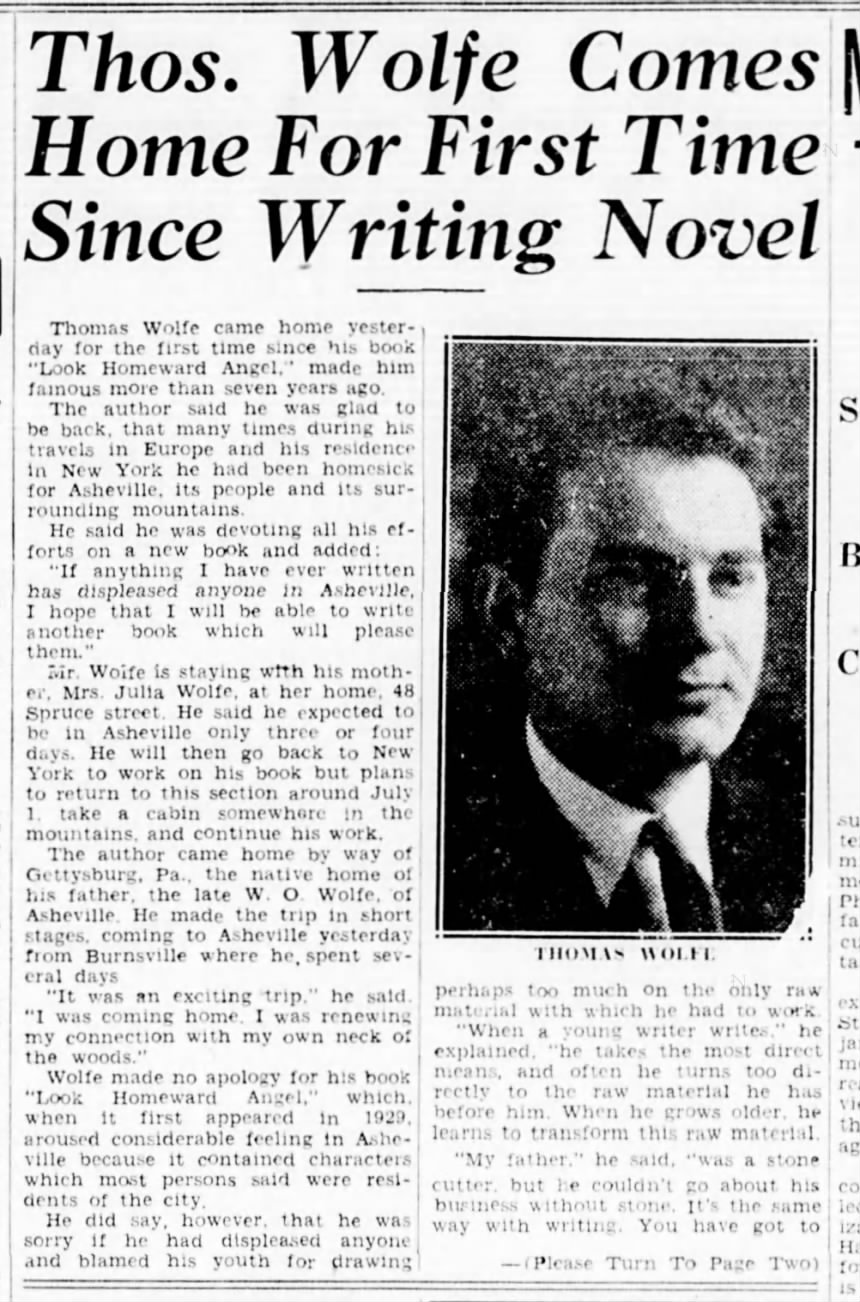
BURNSVILLE, N.C. (828newsNOW) — Thomas Wolfe returned to the North Carolina mountains in 1937 after years of staying away from Asheville, the hometown that had made him famous and left him unwelcome.
The author of Look Homeward, Angel avoided Asheville after the novel frustrated some residents who believed they recognized themselves in its pages. When Wolfe returned to Western North Carolina in 1937, he stepped into an entirely different kind of story: a murder case in Burnsville.
What did Thomas Wolfe witness in Burnsville?
On his way home to Asheville, Wolfe was visiting Burnsville, the Yancey County seat northeast of Asheville. On May 1, 1937, he stopped at the Gem City Soda Shop for a soft drink and cigarettes about 10:30 p.m.
As he walked out of the shop, he witnessed a confrontation involving Philip Ray, Otis Chase and James Higgins. The years long feud between the men turned violent. That night, Ray and Higgins argued, and shots were fired at or near Higgins’ car.
Ray was arrested for public drunkenness and released under bond the next day.
A mountain feud turns deadly
One week later, on May 8, James Higgins was dead and Philip Ray was arrested and charged with murder.
According to eyewitnesses, the men exchanged words on Main Street in Burnsville before both drew revolvers and began firing at one another. Higgins was struck and killed instantly.
The Asheville Times described Higgins as a 36-year-old Burnsville man who left behind a wife and four children. Ray, 26, of Burnsville, was arrested and transported to the Buncombe County jail.
Ray later went on trial for first-degree murder in Higgins’ slaying along with Otis Chase, a 21-year-old Burnsville man who was accused of helping Ray escape the scene of the crime.
Thomas Wolfe called to testify in murder trial
Ray and Chase stood trial in Yancey County Superior Court in August 1937.
Wolfe, a state’s witness, testified that on May 1 he came out of the Burnsville soda shop and saw Ray, Chase and Higgins on the street. He heard Higgins tell Ray that he was going too far and should leave him alone.
Wolfe said someone tried to separate the men before Ray backed away with his hand in his pocket and pulled a pistol.
About that time, Wolfe said, he moved behind a car. From there, he heard three or four shots. He also heard air escaping from a tire that had been punctured by a bullet, according to The Asheville Citizen-Times account of his testimony.
Wolfe did not witness the fatal shooting. His testimony concerned the earlier confrontation, one week before Higgins was killed.
Witnesses describe threats before the killing
Several eyewitnesses took the stand and described a tense week between the first confrontation and the fatal shooting.
Ransom Higgins, identified as the victim’s brother, testified that Ray had said before the killing that he intended to get even with James Higgins.
The victim’s wife also testified that Ray and Chase were around her house on the Wednesday night before the Saturday evening shooting. That testimony placed the two defendants near the Higgins home in the days between the May 1 confrontation witnessed by Wolfe and the deadly shooting on May 8.
Ray and Chase were convicted of second-degree murder. The North Carolina Supreme Court upheld the convictions on January 5, 1938.
How the case inspired Thomas Wolfe’s fiction
For Wolfe, the Burnsville case became a new chapter in an uneasy homecoming. After years away from Asheville, he had returned to the mountains only to be pulled into a murder trial.
It was a strange episode for Wolfe that did not stay confined to the courthouse. He later drew on the Burnsville experience in his fiction, “The Return of the Prodigal.”
For a writer whose work so often turned memory into story, the Burnsville episode offered a different kind of ending. Wolfe’s words were preserved not as fiction, but as testimony in a Yancey County murder trial.
-
Strangeville: Elvis, Asheville and a tiny Cherokee museum

Just off of Highway 19 on the way down to Cherokee, N.C., eagle-eyed drivers might spot the silhouette of Elvis Presley on the side of a small brown building. Inside, visitors will find the Elvis Museum, owned and curated by Dorothy “Dee” Smith.
-
Strangeville: Revolutionary War Ghosts of the Carolina Backcountry

Ahead of America 250, Revolutionary War folklore links Western North Carolina’s Overmountain Men to ghostly legends from the Battle of Kings Mountain.
-
Strangeville: Harry Gardiner, the ‘Human Fly’ Who Climbed Asheville’s Flat Iron Building
A century before viral stunts, Harry Gardiner drew crowds to downtown Asheville by scaling the Flat Iron Building without ropes — part spectacle, part fundraiser and part civic promotion.
-
Strangeville: Devil’s Den and the outlaw legends of Iron Mountain

On the North Carolina-Tennessee line, Devil’s Den became part of a darker mountain history shaped by moonshiners and outlaws.
-
Strangeville: Why Thomas Wolfe testified in a Yancey County murder trial
The Asheville author testified in a Yancey County murder trial after witnessing a Burnsville confrontation one week before a deadly shooting.