


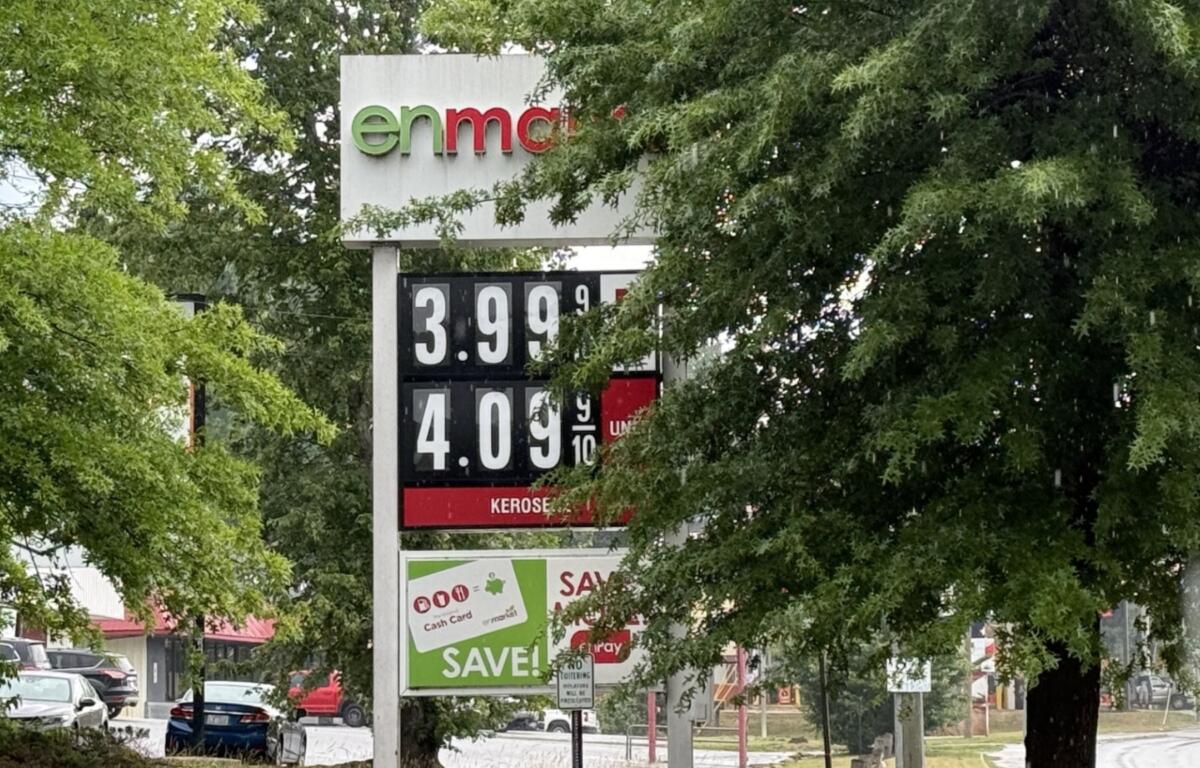

ASHEVILLE, N.C. (828newsNOW) — North Carolina drivers could soon see some relief at the gas pump, but don’t expect prices to automatically drop 41 cents a gallon.
Gov. Josh Stein signed House Bill 3 into law Friday, Oct. 9, temporarily suspending the state’s motor fuels tax beginning Saturday, Oct. 10, through Nov. 30.
The idea is simple: Eliminate the state gas tax for several weeks and give drivers a break from high fuel prices.
But how much of those savings will actually reach consumers?
The new law requires fuel tax savings to be reflected in consumer prices, but it doesn’t guarantee that prices will fall by the full 41 cents. It also doesn’t establish specific new penalties or an enforcement process for retailers that fail to pass along the savings.
Even legislative leaders acknowledge drivers might not see the full reduction.
House Speaker Destin Hall, R-Caldwell, told reporters Wednesday that he expects prices to fall by 30 to 35 cents a gallon, based on what happened when other states suspended their gas taxes, according to NC Newsline.
Why might gas prices not drop the full 41 cents?
Part of the answer comes down to how gasoline is taxed.
North Carolina collects its motor fuels tax before gasoline reaches the pump. Gas stations may already have fuel in their underground tanks that was purchased with the tax included.
The new law specifically says retailers aren’t required to lower prices on fuel for which the tax was already paid.
That means drivers might not see an immediate difference as stations sell their existing inventory and receive new shipments.
Gas prices also fluctuate based on wholesale costs, competition and other market conditions. Those changes could offset some of the savings or make the overall price reduction harder to measure.
But the legislation does include a requirement intended to protect consumers.
It says the cost of motor fuel must exclude the suspended tax so that the price paid by consumers reflects the savings.
The unanswered question is how that requirement will be enforced.
During Wednesday’s legislative debate, Sen. Jay Chaudhuri, D-Wake, proposed an amendment that would have given the state attorney general authority to pursue retailers that failed to pass along the savings.
The amendment was ruled out of order and never received a vote, according to NC Newsline.
Without a specific enforcement provision in the legislation, it’s unclear which state agency would investigate complaints or how officials would determine whether retailers had passed along the savings.
That doesn’t necessarily mean gas stations can legally keep the tax savings, but it raises questions about how the state will ensure consumers receive them.
How much could drivers save?
If the full 41-cent reduction reaches the pump, a driver filling a 15-gallon tank would save $6.15.
At the 30- to 35-cent reduction Hall predicted, that same fill-up would cost $4.50 to $5.25 less.
For someone buying 15 gallons of gas every week, that would mean savings of about $18 to $21 over four weeks.
Those figures are estimates, not guaranteed savings. They assume the tax reduction is reflected in pump prices and other fuel costs remain unchanged.
According to AAA figures reported by WUNC, North Carolina’s average price for regular gasoline was $4.09 a gallon Friday morning.
What happens to road funding?
North Carolina’s gas tax helps pay for highway construction, bridge repairs, road maintenance and other transportation needs.
The temporary suspension means the state won’t collect that revenue during the tax holiday.
But lawmakers included a provision to replace the lost money with transfers from the state’s Stabilization and Inflation Reserve.
The money will go to the Highway Fund, Highway Trust Fund and four other state funds and accounts that ordinarily receive motor fuels tax revenue.
That means the suspension is designed to avoid an immediate loss of funding for transportation projects, although it will draw money from state reserves.
The legislation received overwhelming bipartisan support Wednesday, passing 111-1 in the House and 41-0 in the Senate.
Stein says more relief is needed
Stein signed the bill Friday during a visit to a farm in Buncombe County.
“Rising grocery, utility, and gas prices are making the costs too high for people across our state,” Stein said in a statement.
“I am signing this bill to keep more money in people’s wallets, but this temporary relief is just one step.”
Stein also called for additional efforts to address housing, health care, utility bills and child care costs.
The legislation includes separate provisions providing relief for certain agricultural and related users of red-dyed diesel fuel through Dec. 31.
What should drivers expect?
The gas tax suspension begins Saturday, but drivers may need to wait before seeing lower prices.
Stations can continue selling fuel purchased before the suspension at prices that reflect the tax already paid.
As untaxed fuel enters the supply chain, the law requires the savings to be reflected in consumer prices.
But with wholesale prices and other costs continuing to fluctuate, it may be difficult to determine exactly how much of the tax savings is reaching consumers.
Whether drivers see the full 41-cent reduction — and how the state will make sure they receive it — remains uncertain.