


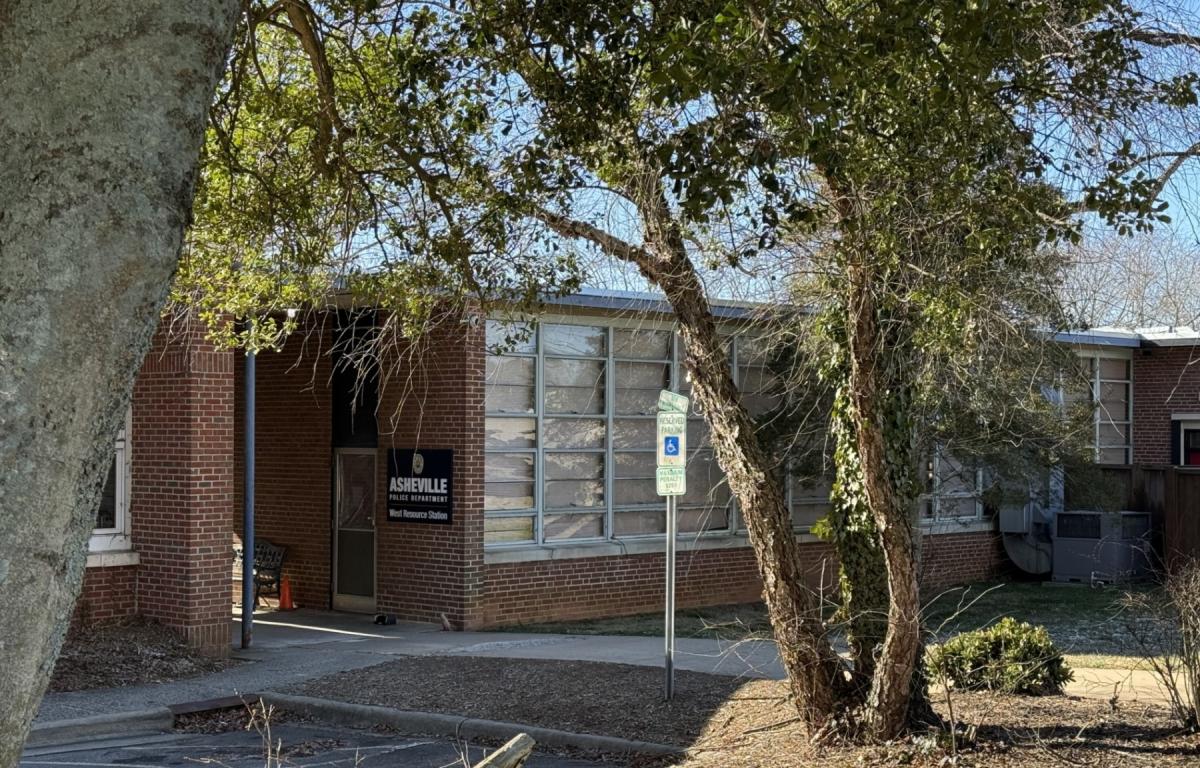

ASHEVILLE, N.C. (828newsNOW) — Asheville officials say a new police resource center at Tanger Outlets will provide a safer, more functional space for officers while maintaining police services in West Asheville, responding to questions about the city’s public safety investments and long-term capital priorities.
The response comes after a West Asheville resident raised questions about the city’s decision to lease private property for the Asheville Police Department rather than renovate the existing police resource center at 970 Haywood Road or build a city-owned facility.
According to city documents, the Haywood Road building was constructed in 1953 as a combined fire station and library before being converted into a police resource center in 1999. Officials say the aging facility no longer meets modern public safety standards.
Among the concerns cited were security vulnerabilities created by large single-pane windows, limited parking that required the city to lease off-site spaces and a layout that police officials say did not adequately support employee safety and wellness. The site also experienced vehicle security issues, including the arson of two marked patrol vehicles.
The city said the new resource center at Tanger Outlets will nearly double the available space, growing from about 1,800 square feet to more than 4,000 square feet. Officials say the location will provide improved security, more parking and a dedicated space where residents can file reports and interact with officers during regular business hours.
The lease begins at $6,000 per month during the first year and increases by 3% annually over the initial 10-year term. The total lease cost is capped at approximately $837,339 over that period, with two optional five-year renewal periods available. City officials also noted Tanger Outlets is contributing about $1 million toward renovation costs, significantly reducing the city’s upfront investment.
Officials emphasized that patrol coverage in West Asheville will not change because officers are assigned by geographic area rather than by the location of a police substation. The officers currently serving the Haywood Road area will continue working in those neighborhoods.
The city acknowledged the lease is temporary and that it does not own the property, but said it provides an immediate solution while meeting current operational needs.
Regarding broader public safety infrastructure, city officials said facilities across Asheville are continually evaluated as community needs evolve. However, they did not identify a location for a future West Asheville fire station or announce any new public safety construction projects in the area.
The city also addressed criticism that neighborhood infrastructure has taken a back seat to downtown projects and other investments.
Officials pointed to the city’s five-year Capital Improvement Program, which outlines priorities based on safety, maintenance needs, project readiness and available funding. The plan notes that recovery from Tropical Storm Helene will consume a significant share of the city’s capital resources over the next five years, with $7 million set aside as a contingency fund to support approximately $250 million in recovery work.
The capital plan includes funding for street resurfacing, bridge maintenance, school zone safety improvements, pedestrian projects, City Hall renovations and future fire station projects, while relying heavily on grants and other outside funding for many large-scale initiatives.
The city also responded to questions about community land trusts, saying the affordable housing model is designed to preserve long-term affordability while still allowing homeowners to build equity.
Officials acknowledged that resale restrictions limit appreciation compared with traditional homeownership but said community land trusts allow public investments in affordable housing to benefit multiple generations of homeowners rather than a single family. They described the model as one of several tools needed to address Asheville’s housing affordability challenges, rather than a replacement for conventional homeownership.