



ASHEVILLE, N.C. (828newsNOW) — The biggest threat to Asheville’s view of Thursday night’s deep partial lunar eclipse may not be the eclipse — it may be the clouds.
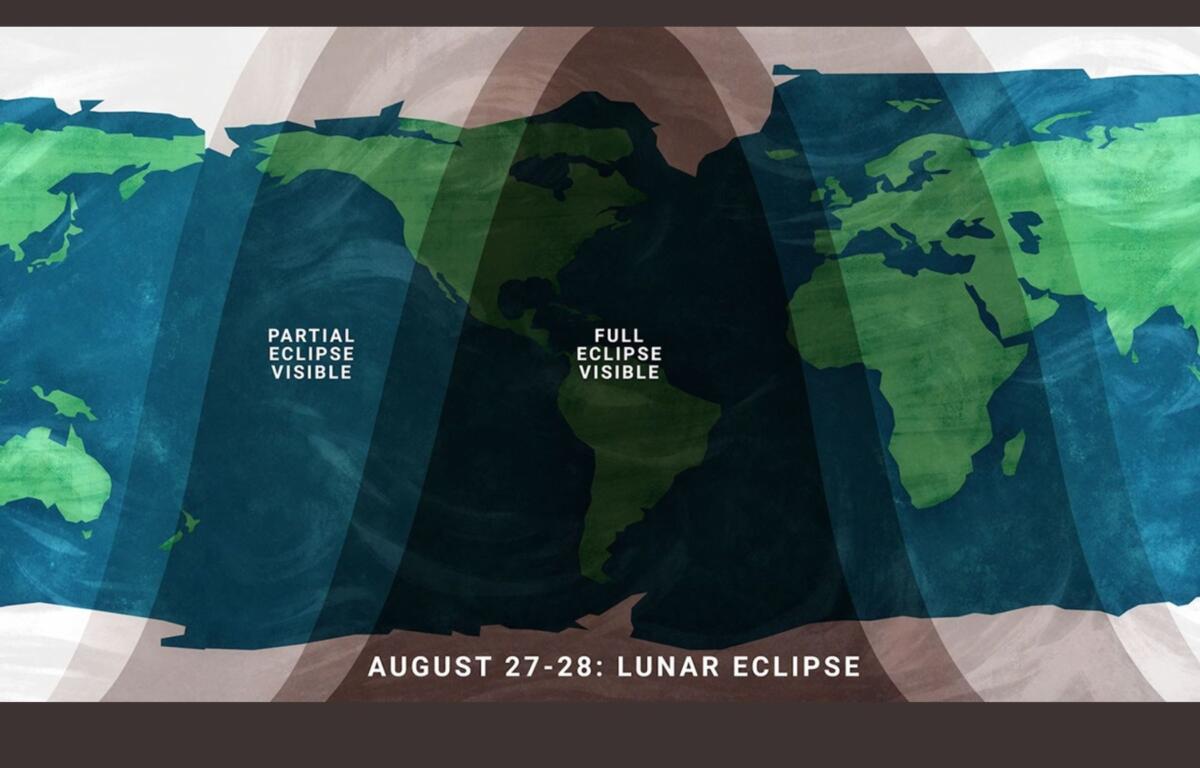
A nearly full moon will pass through Earth’s shadow Thursday night into early Friday, creating a deep partial lunar eclipse that will be visible across North America.
At maximum eclipse, about 96.3 percent of the moon’s disk will be inside Earth’s darkest shadow, according to NASA. The moon could take on a darkened, coppery or reddish appearance as sunlight passes through Earth’s atmosphere and reaches the moon.
For Asheville, the partial eclipse begins at about 10:34 p.m. Thursday, with maximum eclipse occurring shortly after midnight. The partial phase ends at about 1:52 a.m. Friday.
Weather could make viewing difficult
The National Weather Service is forecasting an unsettled pattern across Western North Carolina as the eclipse approaches.
Thursday is expected to be the most active day of the week, with showers and thunderstorms possible during the day. The latest Asheville forecast calls for mostly cloudy and humid conditions Thursday, with thunderstorms possible during the afternoon.
That could leave lingering clouds Thursday night, potentially obscuring the moon during portions of the eclipse.
The forecast is still several days out, however, and conditions could change before Thursday night. The most important forecast question for skywatchers will be how much cloud cover remains after the afternoon and evening storms move through.
When to look
The eclipse will be a gradual process rather than a single moment.
The moon will begin entering Earth’s faint outer shadow earlier Thursday night, but that phase can be difficult to notice. The more obvious partial eclipse begins around 10:34 p.m., when Earth’s darker inner shadow begins moving across the moon.
The most dramatic portion will occur around midnight, when nearly the entire lunar disk will be within the umbra.
NASA’s calculations show about 93 percent of the moon’s diameter will be inside Earth’s darkest shadow at maximum eclipse. The distinction between that figure and the 96.3 percent figure refers to different ways of measuring the eclipse; NASA describes the event as a deep partial eclipse rather than a total eclipse.
Unlike a solar eclipse, a lunar eclipse is safe to watch with the naked eye. Binoculars or a small telescope can provide a closer view of Earth’s curved shadow moving across the moon.
The eclipse will be visible across much of North and South America, as well as parts of Europe and Africa.
For Asheville residents, the best strategy may be simple: keep an eye on the clouds Thursday night and look up whenever the moon breaks through.