



ASHEVILLE, N.C. (828newsNOW) — Construction continues to move forward on Asheville’s long-awaited I-26 Connector project, with state transportation officials highlighting new progress Friday as crews begin laying the groundwork for future bridges and highway ramps.
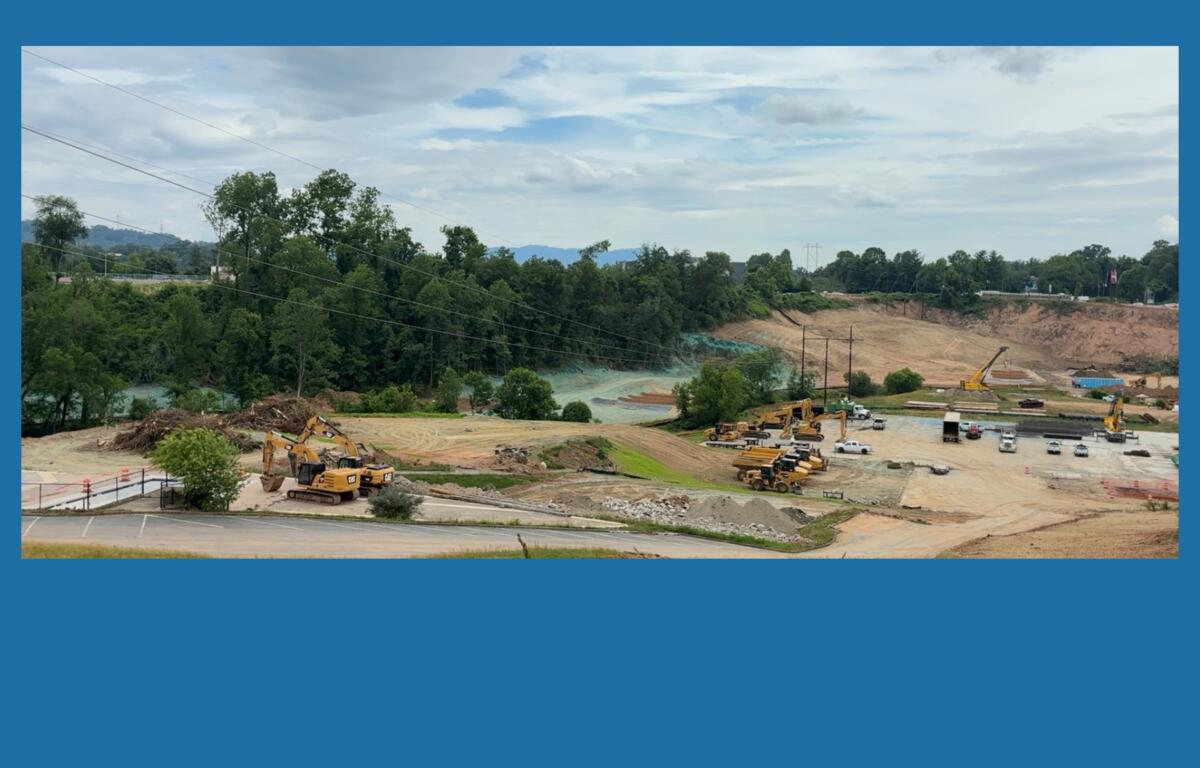
In a social media update, the North Carolina Department of Transportation said construction activity has advanced near the Asheville Racquet Club and Interstate 240, where workers have cleared project areas, removed buildings within the future roadway footprint and mobilized cranes and drill rigs.
The agency said foundation work for new bridges and ramps is now beginning, marking another milestone in the massive transportation project.
“These early construction activities mark another milestone as the project moves forward,” NCDOT said in the Facebook post.
The update comes about two months after state and local leaders gathered in April to officially break ground on the long-awaited project, which is designed to improve safety, reduce traffic congestion and strengthen transportation connections throughout western North Carolina.
Once completed, the I-26 Connector will create a continuous interstate route linking Interstate 26 south of Asheville with U.S. 19/23/70 north of the city. The corridor is expected to improve freight movement between the mountains and the Port of Charleston in South Carolina while addressing one of the region’s most heavily traveled highway bottlenecks.
The project is now expected to cost between $1.8 billion and $2 billion, significantly higher than earlier estimates. Planning for the connector dates back decades, with discussions appearing in long-range transportation plans as early as 1989.
Construction also requires extensive property acquisitions. NCDOT has identified more than 900 parcels affected by the project, including properties owned by major organizations such as Duke Energy Progress and the Asheville City Board of Education, as well as numerous private property owners.
Transportation officials have said they do not discuss details of ongoing right-of-way negotiations with property owners.
The connector is expected to be completed in phases, with major construction continuing through the end of the decade and full completion anticipated by 2031.