



ASHEVILLE, N.C. (828newsNOW) — A science experiment developed by students at Asheville-Buncombe Technical Community College is headed to the International Space Station.
The experiment is scheduled to launch aboard a SpaceX Falcon 9 rocket Tuesday, Oct. 13, from Cape Canaveral Space Force Station in Florida. Liftoff is scheduled for about 6:33 a.m.
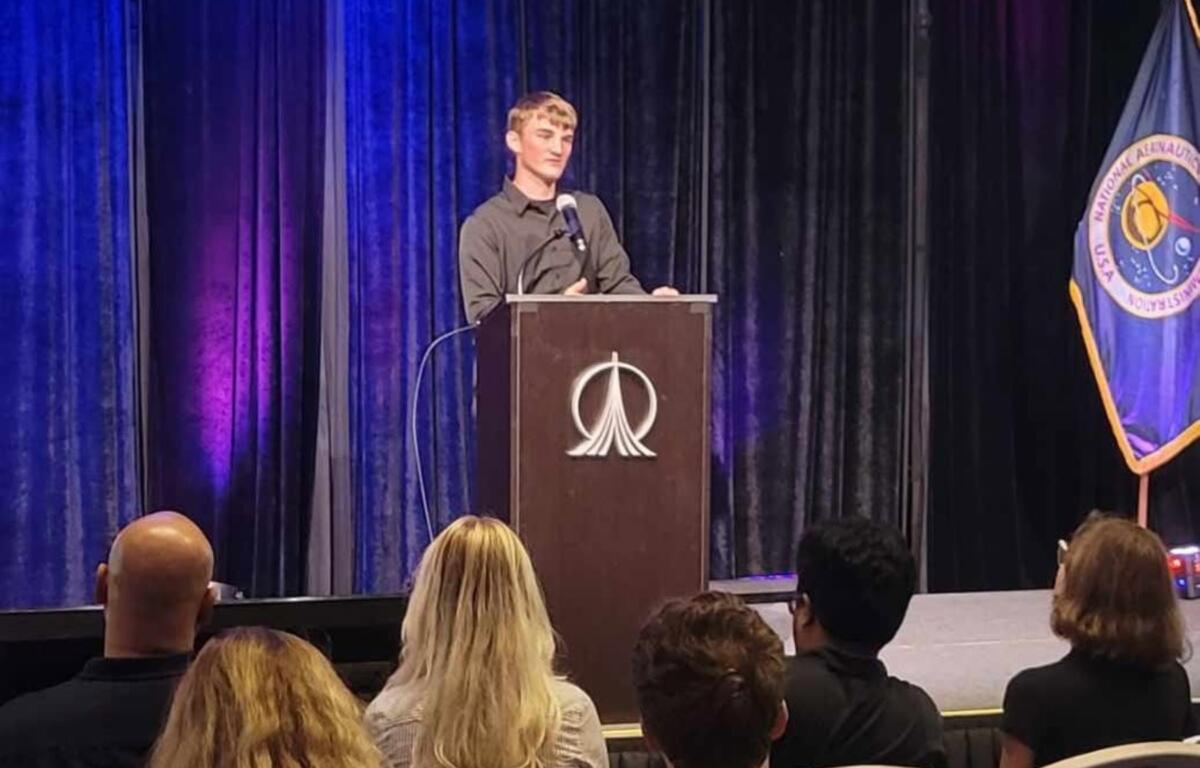
A-B Tech student Curtis Epley and chemistry instructor Evan Lunt plan to be there to watch, joining about 70 other students, teachers and guests.
The experiment is part of the Student Spaceflight Experiments Program, which is sending projects from 21 colleges to the space station aboard the SpaceX CRS-35 mission.
A-B Tech’s project looks at how lubricating oils behave in microgravity. The students hope their findings will help astronauts keep engines and other moving parts working properly in space.
Epley, who is studying Diesel and Heavy Equipment Technology to become a truck mechanic and diesel engine specialist, led the three-student team that developed the experiment.
Physics instructor Shannon Bonomi, who started the project, said the goal is to give astronauts more options for lubricating equipment aboard spacecraft.
The experiment was selected for the mission in December 2025, and Epley has spent months refining it.
While the experiment is in space, Lunt will conduct a similar test back at A-B Tech, keeping a test tube of lubricant in his office.
“This is so we can compare how it reacts on Earth versus in zero gravity,” Lunt said. “The experiments will be up in the space station for a week or two, then they send them back down and they get shipped back to us so we can compare the space tubes with the ones down here.”
The experiment will be among student projects from across the United States and other countries, exploring subjects ranging from seed germination and crystal growth to cell biology.
A-B Tech is also sending two mission patches into space. Both were chosen through a student design competition last spring.
Lunt, who has a personal interest in space, said he’s excited to be involved in the project. But he’s especially proud of Epley’s work.
“Curtis has done an incredible job,” Lunt said. “I am proud to be able to support him. With the incredible caliber of experiments submitted, for him to be participating is amazing.”