



ASHEVILLE, N.C. (828newsNOW) — Two years after Tropical Storm Helene tore through Western North Carolina, people who lived through the disaster are telling its story in ways that go beyond news reports and recovery statistics.
Writers have turned their experiences into poetry and essays. Filmmakers have documented survivors and communities rebuilding. Musicians have written songs about the storm, while photographers, dancers and other artists have found their own ways to preserve what happened.
Some projects focus directly on Helene. Others document its aftermath or were created to raise money for communities still recovering from the storm.
The result is a growing collection of work about one of the most destructive disasters in Western North Carolina history.
Here are some of the books, films, music, art and other projects inspired by Helene, documenting its impact or created to support Western North Carolina’s recovery.
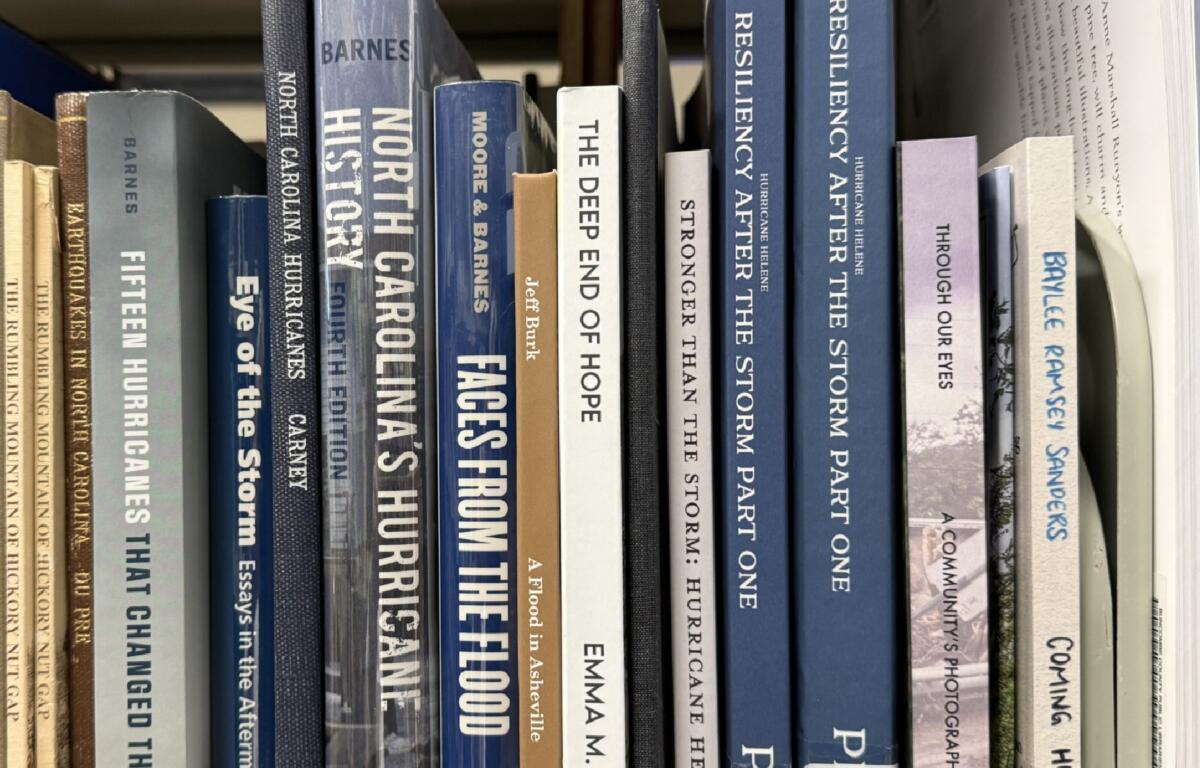
Books and writing
“Stronger Than the Storm: Hurricane Helene in Western North Carolina” — Edited by Shelley McKechnie and published by Asheville-based Haw Creek Press, the collection brings together work from more than two dozen regional writers and artists responding to Helene. Profits from the book benefit MANNA FoodBank.
“Understory: A Full-Color Anthology for Hurricane Helene Recovery” — Loblolly Press assembled work by 87 writers, poets and artists, most from the mountains hit by Helene. The 189-page collection includes poetry, prose, photography, paintings and drawings. It first appeared as a digital anthology in November 2024, with the full-color print edition following in November 2025. A portion of print sales benefits Swannanoa Communities Together.
“Had I a Dove: Appalachian Poets on the Helene Flood” — Edited by Hilda Downer and published by Redhawk Publications in September 2025, the 202-page anthology brings together Appalachian poets responding to Helene and the flooding that devastated the mountains.
“Proud Roads: Poems in the Aftermath of Hurricane Helene” — Kelly Riedesel began writing the poems as the disaster unfolded and continued through the first six months of recovery. Loblolly Press released the collection on Sept. 27, 2025, the first anniversary of the storm. Proceeds benefit Swannanoa Communities Together.
“Through Our Eyes: A Community’s Photographic Memory of Hurricane Helene” — The Hot Springs community created its own photographic history of Helene through more than 200 images, stories and oral histories contributed by more than 45 people. The book follows the town from the first warnings through the disaster, rebuilding and reopening. Half the proceeds from print editions benefit Rebuild Hot Springs Area.
“Islands in the Sky: A People’s History of Hurricane Helene” — The Appalachia Comics Project paired real Helene survivors with comic writers and artists to tell 11 survival stories in graphic form. The anthology reached comic shops in 2026 and includes work by nationally known comics creators including Brian Michael Bendis, Gene Luen Yang, Matt Fraction, Nate Powell and others.
“The Story of Asheville’s Water: Before & Beyond Hurricane Helene” — Michael L. Holcombe began researching Asheville’s water system after the city’s Christmas 2022 water outage, but Helene changed the ending of the story. Published in January 2025, the book traces the history of the system through the destruction caused by Helene and the beginning of its recovery.
Documentaries and films
“Scars on the Mountain” — Christopher Pike’s 67-minute documentary focuses on Yancey County and tells the story through survivors of the flooding and landslides that struck the county. The film was released for streaming July 30, 2026.
“Watermark” — Released by PBS North Carolina on Sept. 24, 2026, the 26-minute program consists of three short documentaries made by students at the UNC Hussman School of Journalism and Media. The films follow Western North Carolinians two years after Helene as they rebuild homes, livelihoods and connections to their communities.
“Rising Above Helene: Western North Carolina’s Journey to Recovery” — Produced by 100 Strong Productions for the N.C. Association of County Commissioners, the documentary examines Helene’s impact and recovery in Ashe, Avery, Buncombe, Haywood, Madison, Mitchell and Rutherford counties. It premiered in 2025.
“Helene: What We Lost, What We Found” — WRAL reporters and photographers traveled through Western North Carolina in 2025, visiting communities including Fairview, Chimney Rock, Swannanoa and Marshall. The documentary focuses on people dealing with loss and rebuilding nearly a year after the storm. It premiered in September 2025.
“Winds of Change” — Blue Ridge Community College Film and Video students and faculty produced the 30-minute documentary featuring more than 20 interviews with first responders, nonprofit leaders, government officials, church members and others. The film was completed and released in July 2025.
“Elderflower” — The short documentary follows the destruction Helene caused at Elderflower Homestead Camp in Fairview and efforts by its staff to rebuild and reopen. It screened at the 2025 Asheville Film Festival.
“Swannanoan Silt” — Filmmakers Isaac King and Tristan Turner, working with musician Agis Shaw, took an experimental approach to documenting Helene. Film used in the project was developed with contaminated water from the French Broad and Swannanoa rivers, allowing the water itself to leave marks on images of the landscape it damaged. The film has been shown with a live score by Shaw.
Music
“After the Flood: Songs Inspired by Hurricane Helene” — More than 70 original songs written after Helene were submitted for the project organized by Asheville’s Experience Music, with 16 selected for the album. Twelve were recorded at Landslide Studio in North Asheville. The collection, released Sept. 22, 2025, includes songs by Andrew Scotchie, Abby Bryant, Hustle Souls, Chuck Brodsky, Deborah Silverstein, Bill Melanson & the Tallboys and others.
“The Flood: Music for MANNA” — Asheville-area songwriters created songs about what they witnessed during Helene for an album benefiting MANNA FoodBank. The project includes folk, rock, blues, roots and other styles, with the musicians telling stories of the storm and its aftermath through their songs.
“The Resonance Sessions” — In the days after Helene, more than 30 musicians entered the flood-damaged Old Marshall Jail and recorded songs in its stairwell. The sessions were recorded over four days and feature musicians including traditional ballad singers Donna Ray Norton and Sheila Kay Adams. The project was produced by Parkway Studios and Clay White in partnership with Asheville’s Citizen Vinyl, with proceeds benefiting the Madison County Arts Council and Rare Bird Cultural Arts.
“Cardinals at the Window” — Released soon after Helene, the 135-track digital compilation brought together R.E.M., The War on Drugs, Angel Olsen, Fleet Foxes, Jason Isbell, Animal Collective, the Mountain Goats, Sylvan Esso and more than 100 other artists. Unlike albums made specifically about the storm, it was created as a benefit project. Proceeds support organizations working in communities affected by Helene, including BeLoved Asheville and the Community Foundation of Western North Carolina.
Podcasts, radio and oral histories
“Running Towards Disaster” — EducationNC’s Caroline Parker produced the podcast series around the experiences of community college students and graduates who used their training to help during and after Helene. Episodes include forestry students, firefighters, EMTs, lineworkers and other people who responded to the disaster. The series was later assembled into a one-hour radio documentary.
“From Helene and Back: Nature’s Wakeup Call” — David Weintraub and the Center for Cultural Preservation produced the nearly hourlong radio documentary in partnership with WNCW. It combines interviews and commentary from residents and state and local officials to document the storm and its aftermath in Western North Carolina.
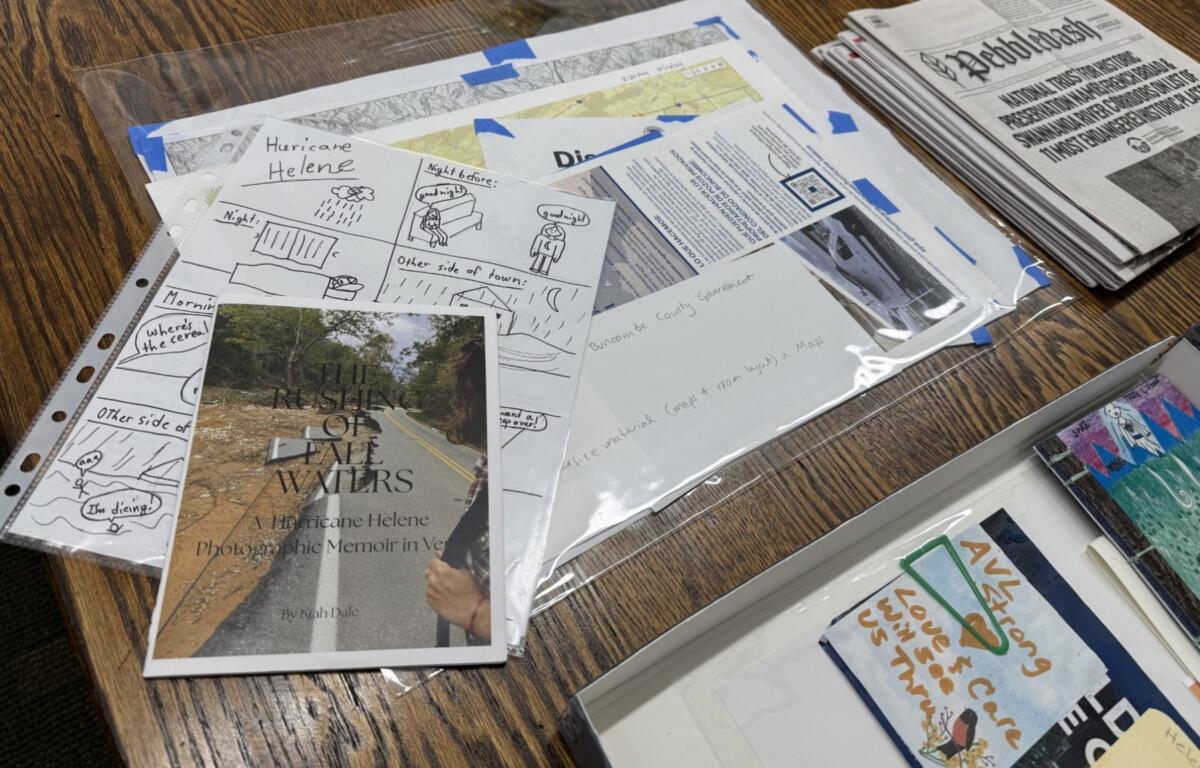
“Come Hell or High Water” — Buncombe County Special Collections and community partners created an expansive digital archive of Helene’s impact. The project collects oral histories, photographs, videos, personal accounts, music, poetry, documentaries and other records from across Western North Carolina. The collection also includes historical flood records and scientific and environmental information intended to put Helene into a broader context.
Mountain Gateway Museum Helene Oral Histories — The Old Fort museum launched an effort to record the experiences of people who witnessed Helene and its aftermath. The oral histories are being preserved through the N.C. State Archives for future research.
Other oral-history efforts preserved through the “Come Hell or High Water” archive include projects by the Asheville Museum of Science, Madison County Public Library, Warren Wilson College and other community groups.
Art and photography
“Asheville Strong: Celebrating Art and Community After Hurricane Helene” — The Asheville Art Museum presented the exhibition from February through May 2025, featuring artists who live and work throughout the Helene-affected Appalachian region. The non-juried show was intended in part to give artists affected by the disaster a place to show and sell their work.
“Postdiluvian” — Tracey Morgan Gallery in Asheville opened 2025 with an exhibition featuring 20 Western North Carolina artists. The works were made in reaction to Helene, recovered after the flooding or took on new meaning after the disaster.
UNC Asheville’s Helene Exhibition — Fifty-three students, faculty members and alumni participated in a 2025 exhibition at the university’s S. Tucker Cooke Gallery. The works addressed the devastation, recovery and issues the storm brought to the surface.
“Fragments of Hope” — Cowee School Arts and Heritage Center in Macon County presented the exhibition in spring 2025, featuring artwork responding to Helene along with drone photographs showing the storm’s impact around Franklin.
“Swannanoan Silt: Photographs by Isaac King” — In addition to the film project, Buncombe County Special Collections exhibited nine of King’s gelatin silver photographs in 2025. The original film was developed using contaminated French Broad and Swannanoa river water collected after Helene, leaving physical effects from the water on the images.
“Layers of Loss and Impact: Exploring the Effects of Hurricane Helene in Appalachia” — UNC Asheville photography student Natalie Akins exhibited a body of work in March 2026 examining Helene’s effects on Southern Appalachian communities and landscapes and the region’s recovery.
“Contemplating Helene: Art after the Storm” — Black Mountain Center for the Arts marked Helene’s second anniversary in September 2026 with an exhibition asking Western North Carolina artists to explore how the storm affected them and their work. Pieces ranged across painting, photography, fiber, mixed media, ceramics, metal, wood and other forms.
“Turning the Page on Helene” — The community-based art project uses altered books to preserve people’s experiences of the storm and their hopes for recovery. Participants create pages that are combined into collective books, and workshops have been held around Western North Carolina.
Dance and performance
“Appalachian Phoenix” — Terpsicorps Theatre of Dance built the production around real stories of Western North Carolinians who helped others after Helene. The company collected accounts of first responders, volunteers, nonprofit workers, business owners and others and transformed those stories through dance, music and design.
The projects are not a complete accounting of everything created in response to Helene. New work continues to appear, and archives such as “Come Hell or High Water” are still collecting songs, poems, photographs, oral histories, videos and other material from people across Western North Carolina.